Mechanical Movement
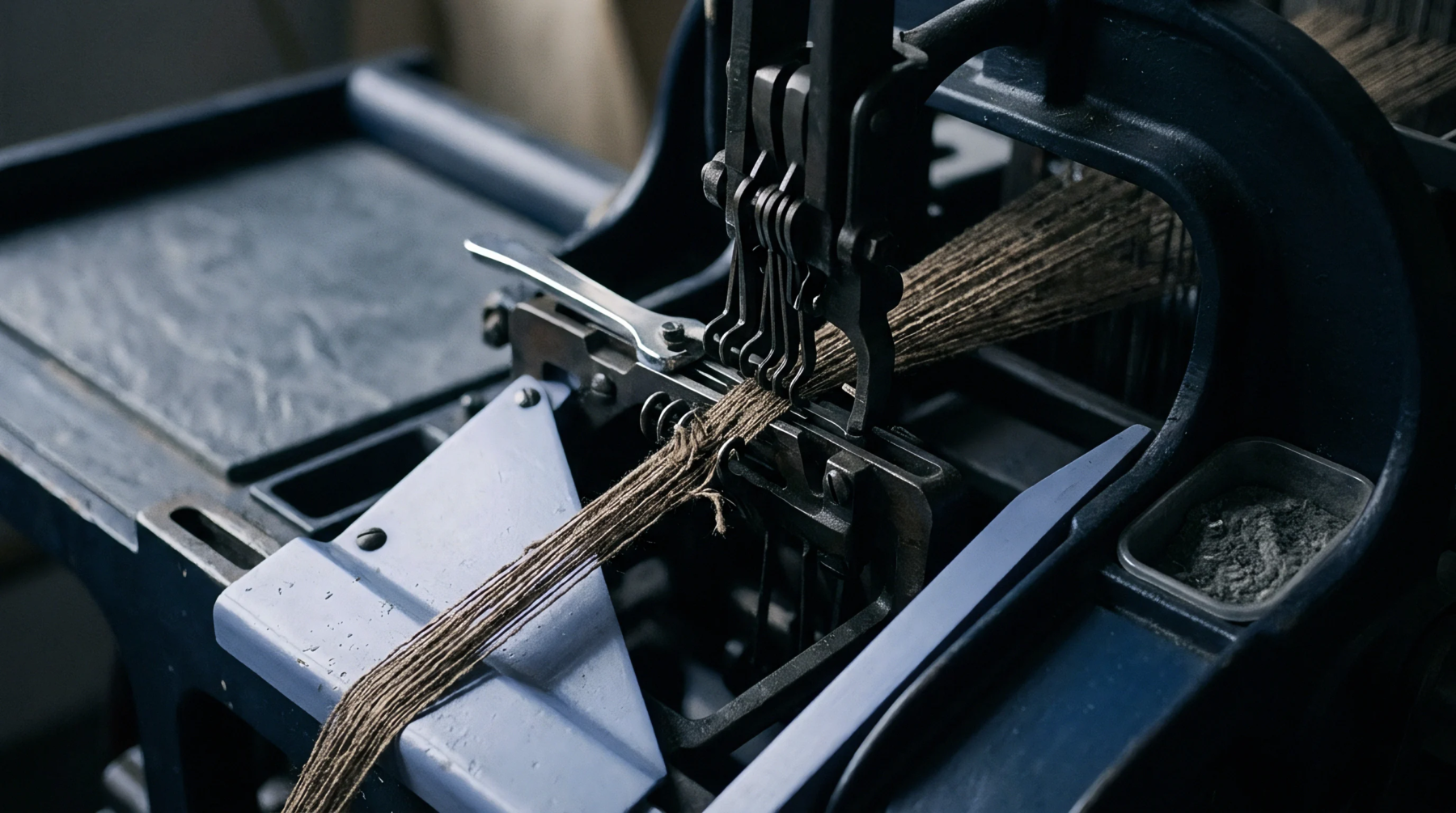
Flax fibre processing requires the transition of carded materials from the delivery cylinder of one machine to the feed mechanism of the subsequent carding or drawing frame. A sliver transfer accomplishes this motion by maintaining constant tension to prevent thinning or structural breakage. This operation determines the consistency of the web density before it enters the drafting zone.
Control Precision
Maintaining alignment of the fibre bundle remains necessary to prevent excessive draw or entanglement. Engineers monitor the velocity synchronization between the two mechanical units to ensure that no slack develops in the continuous ribbon. The resulting consistency serves as the baseline for the final yarn count recorded on the production control sheet.
Deviations in this mechanical coordination lead to variations in the linear density of the finished output. Constant tension is required for the integrity of the material flow.
Operational Boundary
Successful execution depends upon the precise spacing between the exit point of the initial machine and the intake nip of the receiver. This distance accounts for the elasticity of the flax fibres under the specific processing environment of the mill. If the spacing exceeds the average fibre length, the material loses its structural coherence and breaks.
When the spacing is insufficient, the material bunches and creates uneven spots in the draft. Performance of this transfer dictates the overall efficiency of the spinning line.