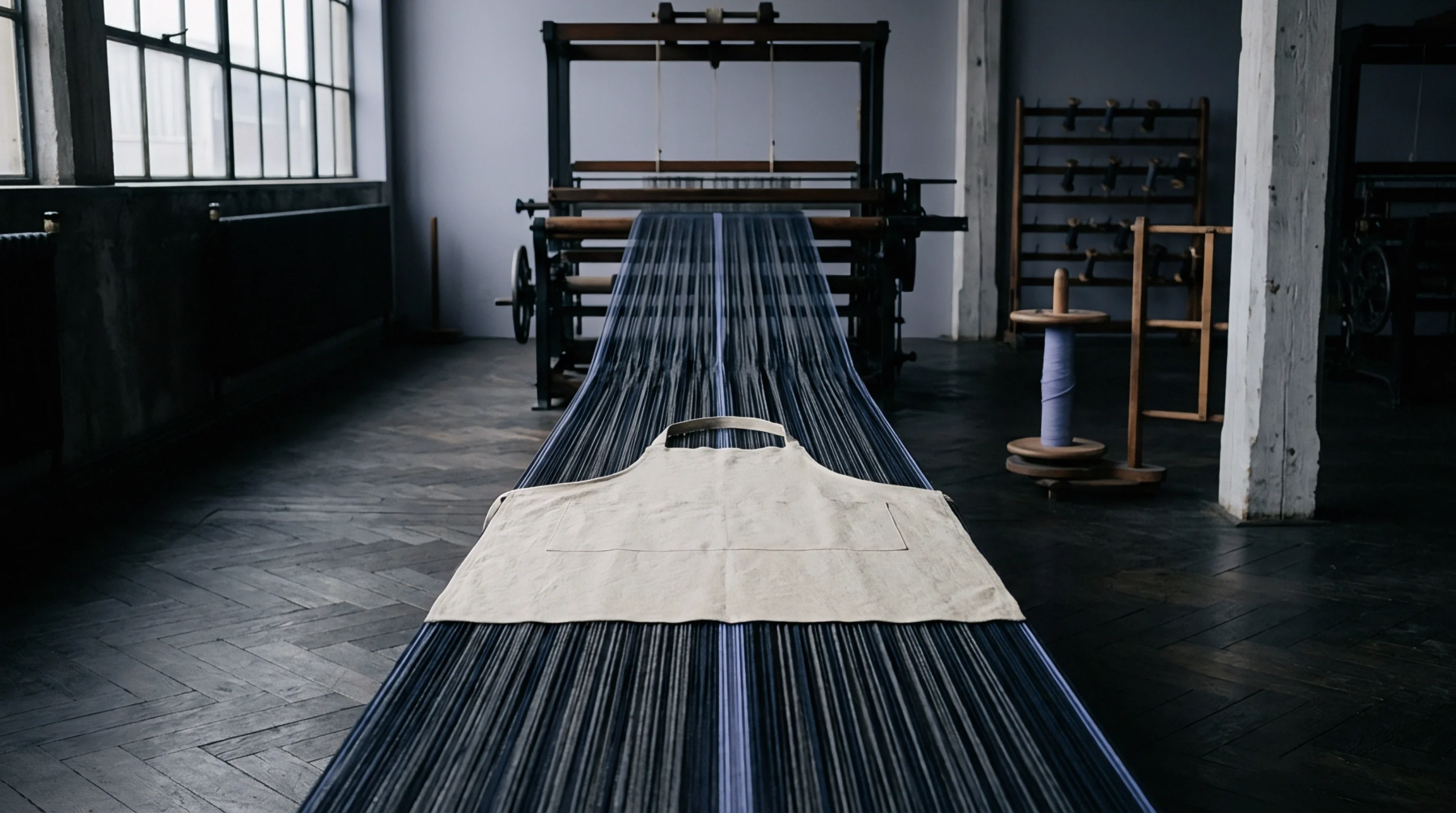
Warp Path
Pattern diversity in woven textiles is achieved by splitting the warp sheet into multiple levels during the loom cycle to accommodate secondary weft insertions. The use of secondary shed diversion allows yarn paths to be temporarily redirected to create separate openings for accent threads or borders. This technique expands the design options of standard looms without requiring complex jacquard heads.
Mechanical Diversion
Auxiliary harnesses or tucking needles control this action by pulling specific warp yarns away from the primary line of shed division. As the main harnesses rise, the secondary shed diversion holds back selvage or contrast yarns to form a smaller, secondary opening where a separate shuttle can deposit thick linen slub yarn. The mechanism depends on specialized tension bars that prevent these diverted yarns from stretching or snapping under the multi-level strain.
This process must run in perfect synchronization with the beat-up motion of the reed to avoid fabric buckling.
Selvage Control
Reinforced edges on heavy linen fabrics rely heavily on this mechanical division during high-speed production. If the tension on the diverted yarns is not adjusted, the secondary shed diversion can cause the fabric edges to pucker or pull inward. The loom must be monitored continuously to ensure even weft insertion along the entire fabric width.