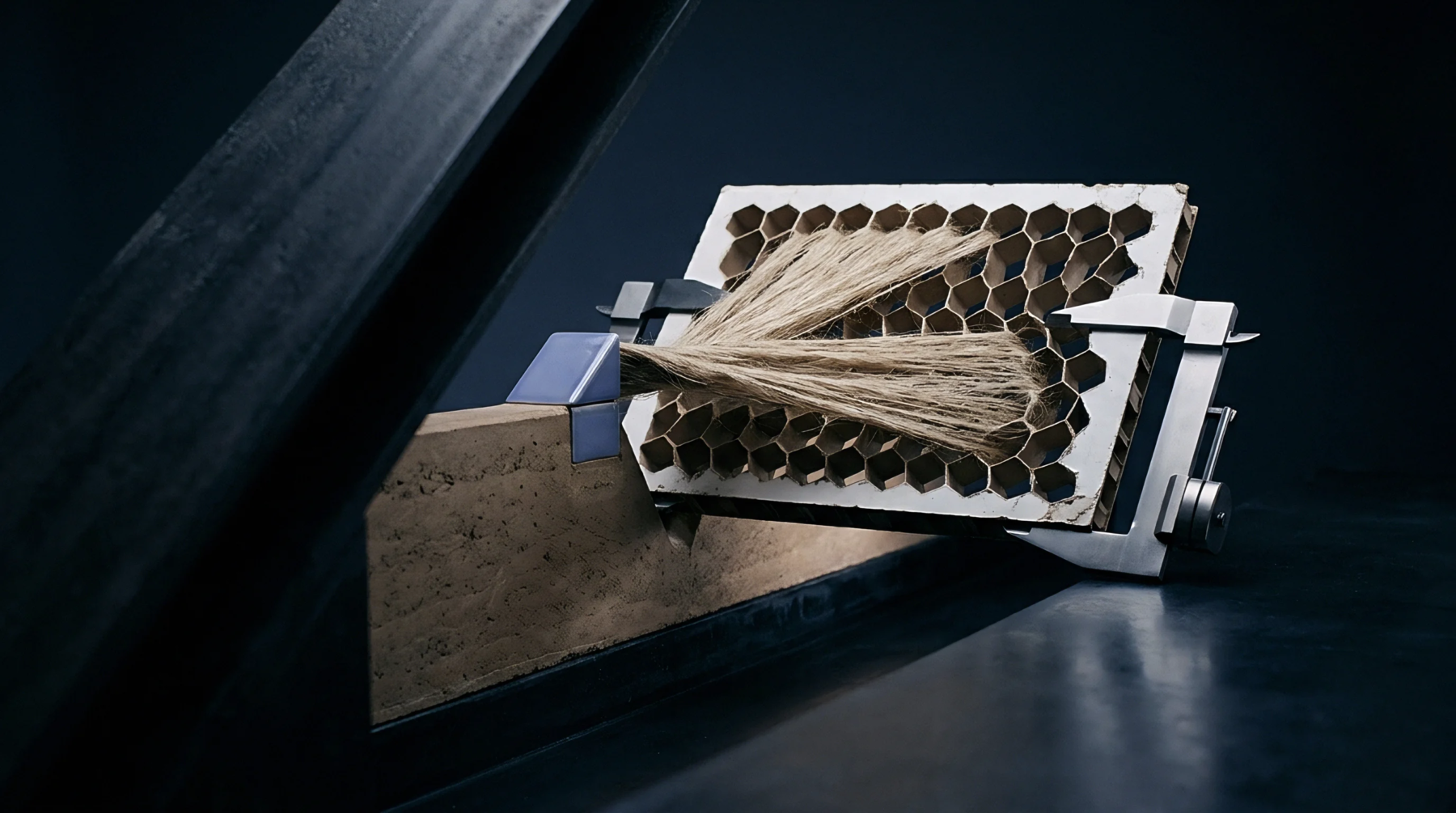
Fiber Recovery
Proportional yield of marketable long line flax and short tow extracted from straw following mechanical decortication defines processing efficiency. Calculating the scutching outturn establishes the mass percentage of clean fiber recovered relative to the input weight of retted straw. Breaking rollers crush the inner woody shive before rotating scutching turbines beat the stems to release the clean fibers.
Higher recovery rates signify effective retting and precise mechanical blade settings. Processing mills track this yield to assess crop quality and optimize extraction line configurations. Low yields indicate over-retting, excessive mechanical violence, or brittle straw conditions.
Extraction Mechanics
Straw bundles pass through multiple pairs of fluted breaking rollers that fracture the woody core into small fragments called shives. Broken stems then advance into the scutching zone, where bladed drums rotating at regulated speeds strike the hanging straw against scutching plates. This mechanical action peels long line fibers away from the fragmented shive, which drops through grid bars beneath the machine.
Short, tangled fibers that tear away during beating are vacuumed into secondary collection systems as scutching tow. Scutching outturn separates into long line yield, tow yield, and waste percentage containing shive and dust. Typical well-managed European and Chinese industrial operations achieve long line yields between ten and sixteen percent of straw weight.
Scutching tow accounts for an additional six to ten percent depending on straw maturity. Operating turbine clearance too close to the beating plate fractures long bundles, shifting mass from high-value long line to low-value tow.
Economic Determination
Commercial profitability of agricultural decortication plants rests directly on the ratio of long line fiber extracted per ton of processed straw. Raw straw purchase contracts often feature quality premiums tied to test-batch scutching performance on pilot extraction units. Mill receiving yards log lot yields on processing tally sheets to track field varieties and drying methods.
High fiber yields lower overall raw material costs per kilogram of spinning-grade line flax delivered to preparation departments.