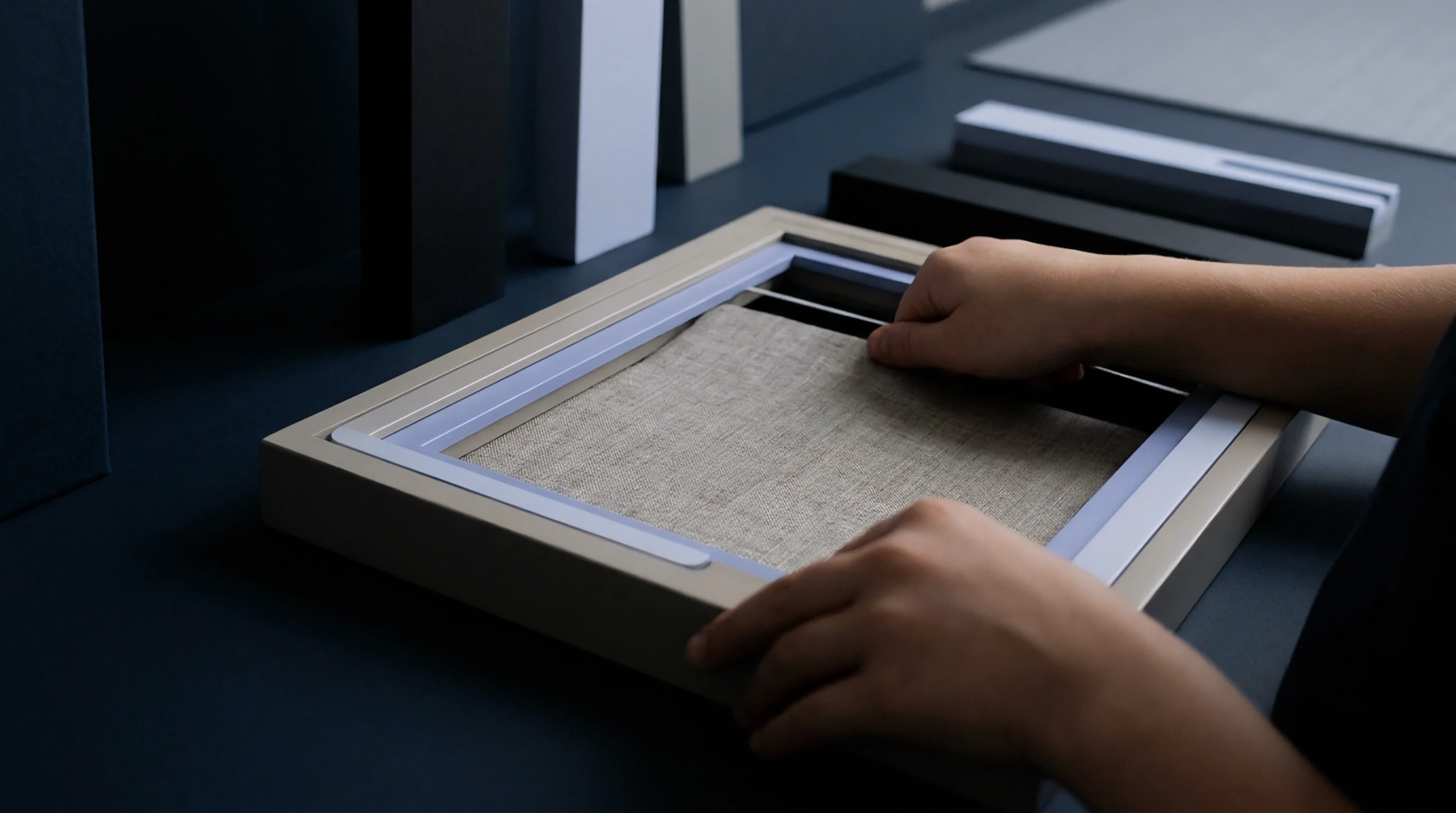
Defect Formation
Visual defect auditing identifies localized build-up of size material and loose fiber lint on loom reed wires. The occurrence of reed accumulation measures the rate at which foreign debris collects between dents, obstructing free warp movement and causing warp end abrasion. Fabric quality inspection logs record resulting defect frequencies alongside reed cleaning intervals.
Clean reed spaces permit uniform warp spacing and flat fabric surfaces.
Friction Mechanism
Reciprocating beat-up actions force warp threads back and forth through fine metal reed gaps thousands of times per hour. Abrasion strips residual sizing agent and loose flax microfibrils from the warp yarn surface. This debris forms sticky deposits inside the reed dents, narrowing the available passage for adjacent warp ends.
As reed accumulation increases, passing warp yarns experience higher mechanical friction, leading to severe fuzzing and frequent warp breakages. Unchecked accumulation causes continuous warp-way streaks in the woven fabric, rendering the roll secondary grade. Loom fixers clean reed wires using solvent-assisted air lances or ultrasonic cleaning baths during warp beam changes.
Proper sizing formulation with anti-static lubricants reduces the rate of deposit formation on stainless steel reed surfaces.
Prevention Standard
Fabric grading codes categorize warp streaks caused by reed deposits as major visual defects. Detection of three consecutive defective warp streaks triggers immediate reed cleaning and loom recalibration.