Quality Threshold
Industrial quality thresholds define the maximum allowable variation in the number of weft yarns per unit of length. The pick density tolerance ensures that the finished cloth meets the structural requirements of the buyer without compromising the visual appearance. Most international standards allow for a small percentage of deviation from the nominal pick count to account for mechanical fluctuations.
Loom Regulation
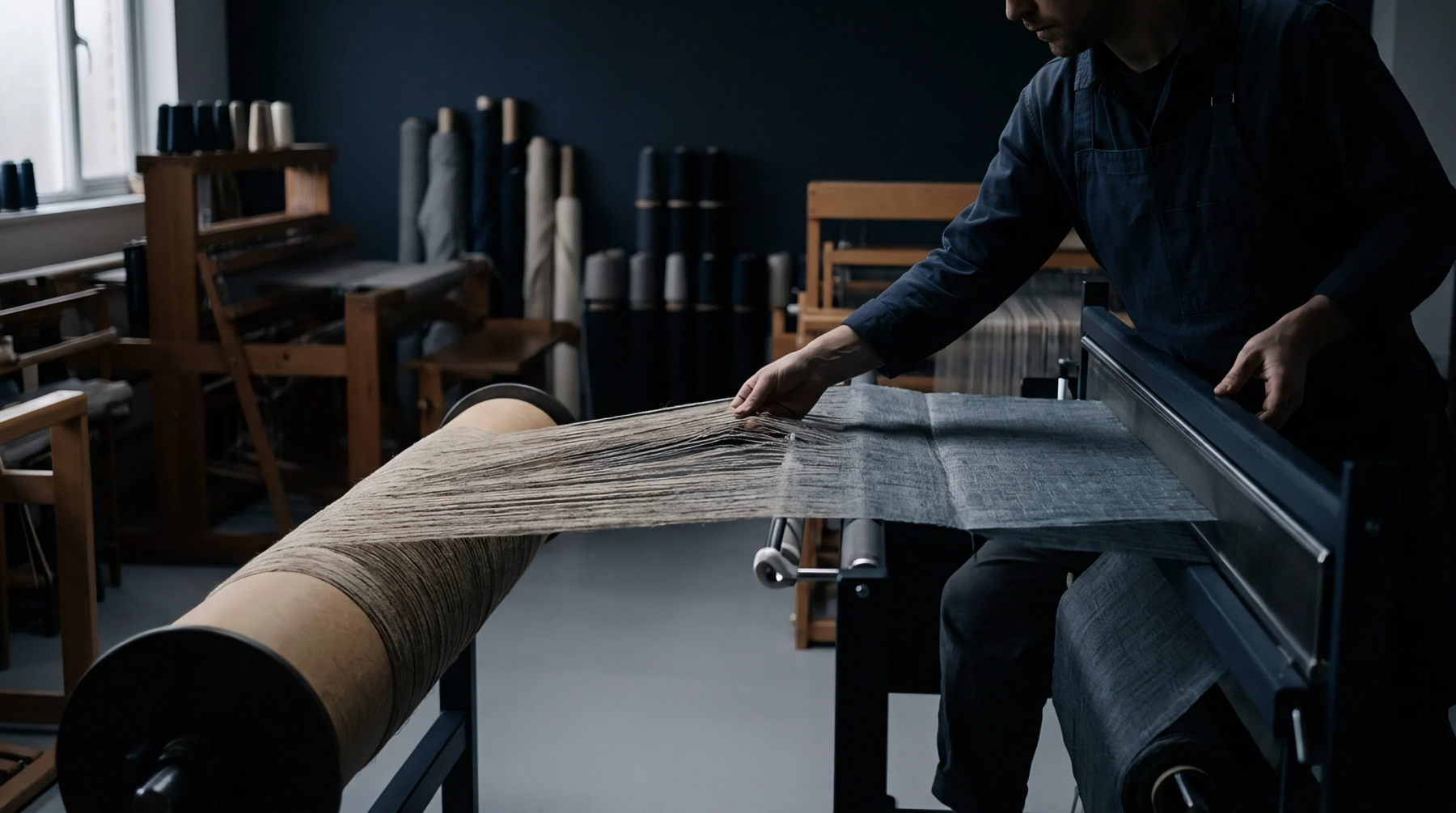
Electronic take-up motions provide the primary means of controlling the spacing of the weft during the weaving process. Maintaining the pick density tolerance requires constant tension on the fabric roll and precise synchronization of the sley motion. If the take-up speed varies, the resulting fabric will show bands of different densities known as set marks.
Inspection Protocol
Quality control teams measure the number of picks at multiple points across a finished roll to verify compliance with the production order. When the pick density tolerance is exceeded, the roll may be downgraded or rejected if the deviation affects the weight or shrinkage properties of the linen. This measurement is recorded in the final inspection report and serves as a guarantee of the weaving consistency.
Automated scanning systems now allow mills to monitor these levels in real-time as the fabric is being formed. Adherence to these limits is a primary requirement for all high-grade linen exports.