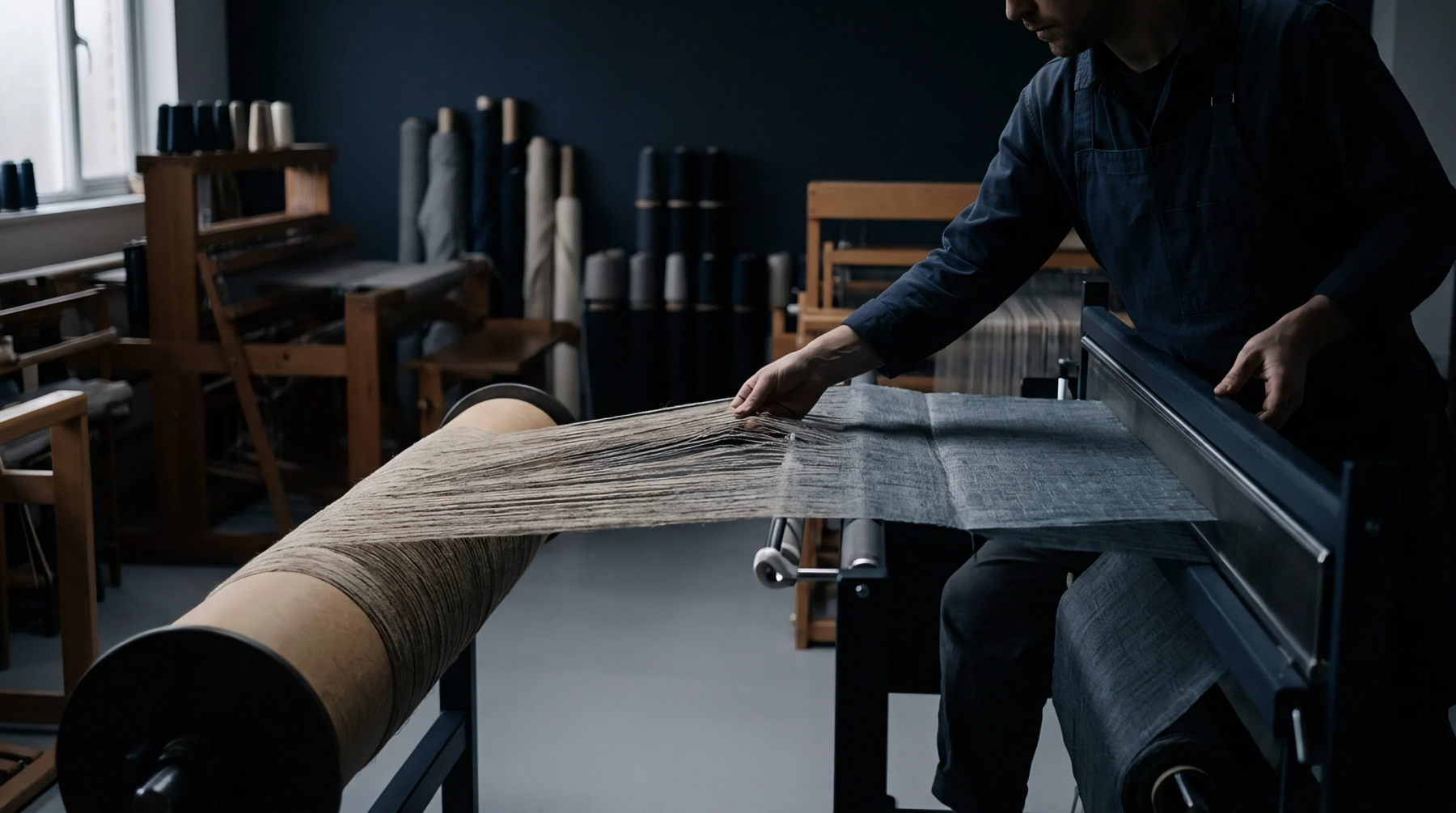
Propulsion Method
Rapid propulsion systems utilize flexible or rigid tapes to transport filling yarn through the warp shed at elevated velocities. Modern high-speed rapier insertion allows linen mills to achieve production rates that were previously impossible with traditional shuttle technology. The system balances the acceleration of the gripper with the physical strength of the flax fibre.
Kinetic Load
Kinetic loads created by the movement of the mechanical components generate high inertia that the loom frame must absorb. During high-speed rapier insertion, the stresses on the drive gears and the tape itself increase exponentially with every additional meter per second of velocity. Controlling these forces is necessary to prevent premature fatigue of the carbon composite materials.
Fibre Integrity
Careful management of the yarn path reduces the friction applied to the weft during the rapid transit across the loom. Because high-speed rapier insertion can subject delicate linen yarns to high tension spikes, the use of electronic weft feeders is mandatory to regulate the supply. The interaction between the gripper surface and the yarn must be smooth to avoid stripping the outer pectins of the flax fibre.
This method remains the standard for versatile linen production where quality and volume are equally prioritized. Maintaining optimal timing between the shed opening and the gripper entry ensures the yarn is never pinched by the moving warp.