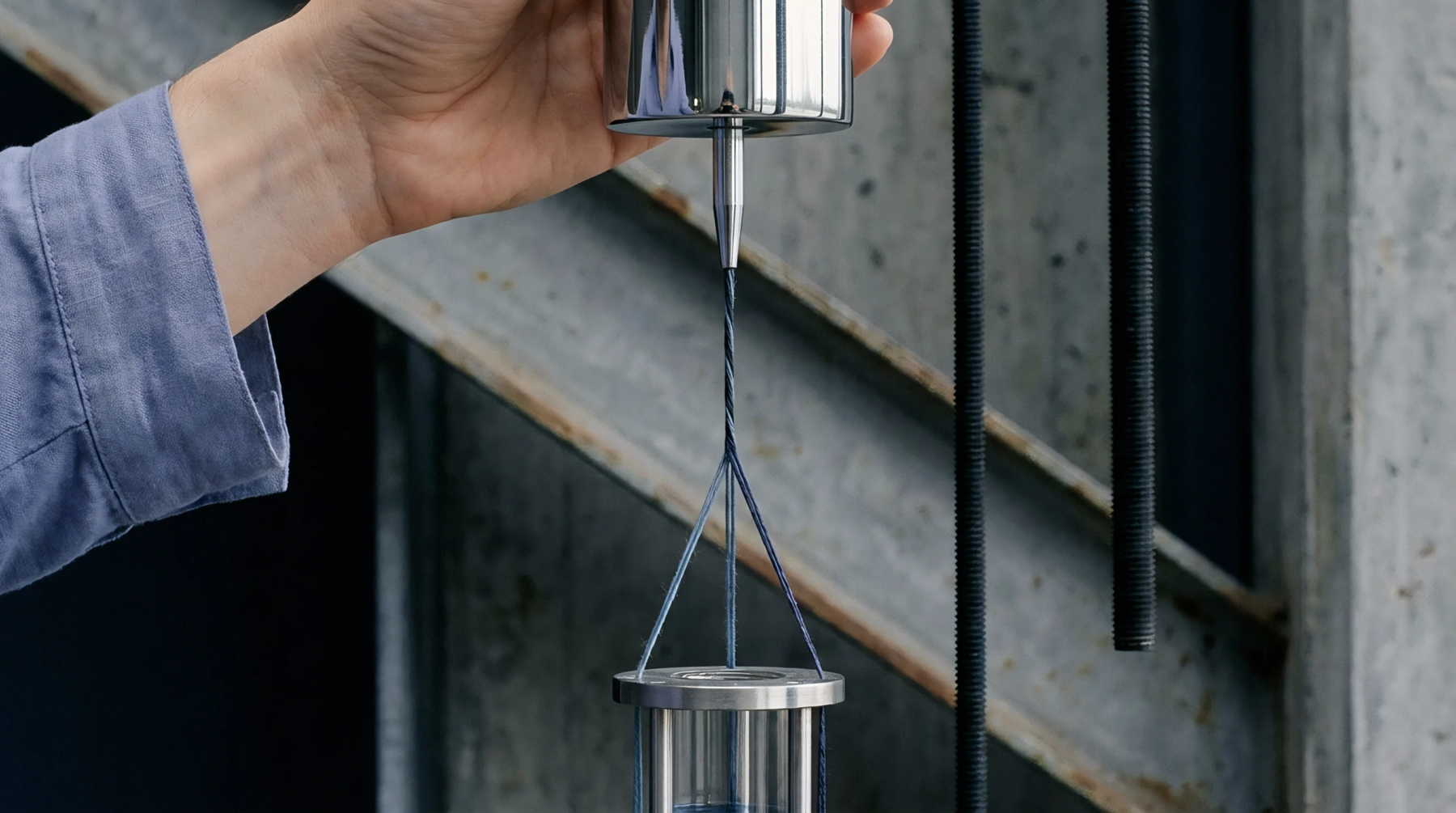
Fiber Degradation
Tensile relaxation within flax yarn batches occurs when spinning frames hold raw strands under constant extension prior to boiling off natural gums. Peak stress relaxation measures the maximum decay of internal resistance within a wet-spun roving during the initial five minutes of dwell time before the drawing frame releases the nip rollers. Chinese export spinning mills record this force reduction on the daily quality docket to verify that retting water temperature remained stable across the previous shift.
Operators calculate the gradient from the maximum load recorded at the instant of grip closure down to the residual tension plateau. High molecular orientation within the cellulose chains yields a steeper descent curve during this holding phase, whereas under-retted flax fibers exhibit sluggish molecular realignment. Mill technicians track this measurement against standard humidity curves inside the climate controlled spinning floor because ambient moisture variations alter the relaxation rate of pectin binders.
Acceptance thresholds established by foreign linen buyers demand that the measured force decay stays within fixed tolerances so the subsequent yarn twist remains uniform throughout the weaving shed.
Twist Permanence
Molecular friction inside the internal matrix dampens the recovery forces after the drafting rollers withdraw their grip from the strand. Peak stress relaxation dictates the degree of permanent set acquired by the wet yarn before it enters the heated drying cylinders of the finishing range. Factory supervisors adjust the dwell timer on the roving frame whenever the recorded force drop exceeds the baseline specified in the technical delivery schedule.
Insufficient tension decay during the holding stage leaves locked elastic energy inside the flax ribbon that causes subsequent kinking during high speed bobbin winding. Conversely an excessive reduction in internal tension points to over-retted material that lacks the tensile strength required for dense warp beam preparation. Laboratory technicians verify this mechanical behavior by subjecting standard roving samples to step strain deformation inside a constant rate of extension tester.
Weaving Tolerance
Fabric quality grades depend directly upon the uniformity of residual yarn tension achieved during the preceding preparation stages. Peak stress relaxation influences warp line tension during the shedding motion on air jet looms because unrelaxed internal forces create uneven shedding geometries across the harness frames. Export contracts distinguish between raw fiber classification grades and finished woven cloth density standards by referencing the mechanical stability tests conducted on the sizing machine.
Quality control inspectors reject weaving lots whenever the recorded tension decay falls outside the acceptable window because erratic relaxation behavior produces visible streaks in the dyed linen fabric. Modern spinning operations maintain strict oversight of this mechanical property to prevent warp breakage during high speed industrial weaving runs.