Dimensional Contraction
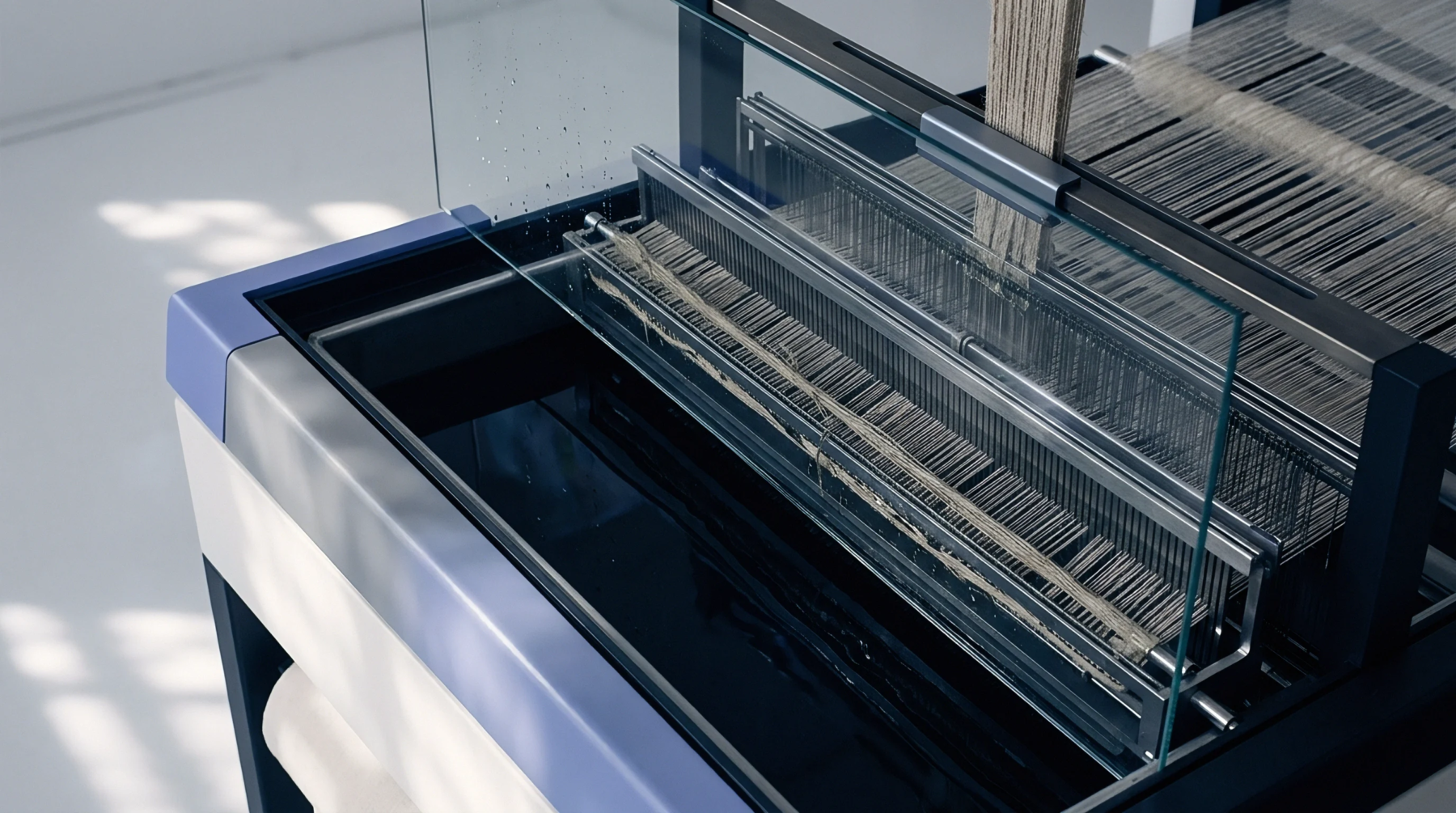
Dimensional contraction occurring when freshly woven fabric is released from loom tension and relaxed under ambient mill conditions measures the immediate structural relaxation of warp and weft yarns. Mill technicians measure off loom shrinkage to establish grey cloth width and pick density target allowances prior to full-scale finishing operations. The physical contraction alters yarn spacing as mechanical warp tension drops from high weaving levels down to zero.
Flax fibres exhibit higher wet modulus and lower elastic recovery than cotton, causing significant structural rearrangement during the initial tension release off the loom frame.
Finishing Allowance
Loom settings must compensate for expected dimensional shifts to ensure finished linen fabrics achieve target trade specifications. Weaving master planners calculate total shrinkage allowances by combining initial off loom shrinkage values with downstream wet processing and bleaching contraction metrics. If off loom shrinkage exceeds calculated limits, warp ends per centimeter increase beyond specification, producing an overly dense, heavy fabric that fails customer weight parameters.
Conversely, insufficient off loom shrinkage leaves the weave structure loose, leading to excessive residual shrinkage during customer garment washing cycles. Mill laboratory technicians take swatch measurements immediately after doffing fabric rolls to verify that gray cloth dimensions fall within established tolerance bands.
Tension Relaxation
High warp tension during high-speed air-jet or rapier weaving temporarily stretches linen yarns beyond their stable relaxed geometry. Once tension drops upon roll removal, internal fibre stress forces yarn crimp to increase immediately.