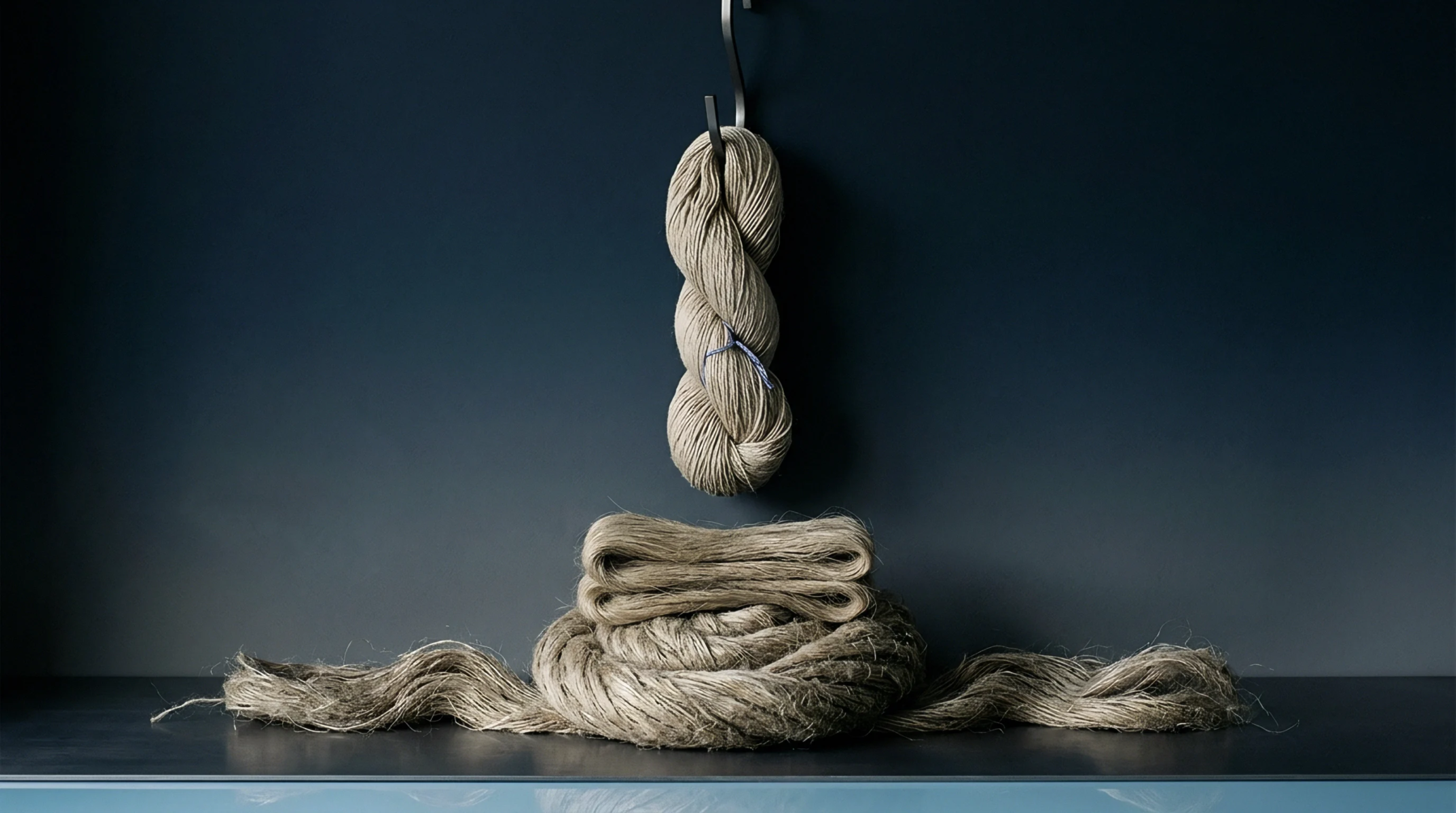
Spinning Variance
Variance within a linen yarn production batch registers through NeL Yarn Count Deviation, a specific mathematical dispersion measurement that records how far individual bobbin samples stray from the nominal linear density standard established by the spinning mill. Chinese flax mills calculate this metric during final ring frame testing before the yarn moves to the weaving shed or commercial export packing. The calculation relies on weighing fixed lengths of spun yarn conditioned under standard atmospheric moisture levels, then comparing those mass values against the contractual ticket count.
This calculation stops applying once the yarn leaves the spinning facility and enters sizing machines, because wet processing alters the linear density through applied tension and added starches. Spinners record these figures in the batch inspection log, a mandatory document that travels with every pallet of yarn dispatched to downstream weavers.
Count Tolerance
Commercial acceptance depends on how tightly the mill controls NeL Yarn Count Deviation against both internal production limits and buyer specifications. International flax trading standards separate raw fibre grades from finished fabric grades, meaning a spinning lot may satisfy the former while failing the latter if the linear irregularity exceeds agreed tolerances. Mills enforce their own internal limits to prevent excessive drafting faults during spinning, whereas buyers set stricter acceptance thresholds to avoid uneven dye uptake in the final woven cloth.
A high dispersion reading signals drafting instability on the drawing frames, which produces thin spots that snap during high speed weaving and thick slubs that ruin the appearance of dyed linen fabric. Auditors inspect the dispersion logs during mill quality reviews to verify that the reported variance figures match the physical reality of stored yarn bobbins.
Quality Impact
Excessive irregularity degrades the tensile strength of the woven fabric and creates unsightly streaks after piece dyeing. Weavers reject yarn lots showing high NeL Yarn Count Deviation because uneven linear density causes variable warp tension on the loom, leading to frequent thread breakages and lowered weaving efficiency. Laboratory technicians determine the severity of the defect by testing multiple skeins drawn randomly from different spindles across the entire spinning frame.
Lower dispersion values guarantee uniform fabric weight per square metre, which directly satisfies export requirements for high end linen garments and household textiles. Precise control over linear density variance remains the primary technical determinant of commercial success in premium flax spinning operations.