Warp Tension
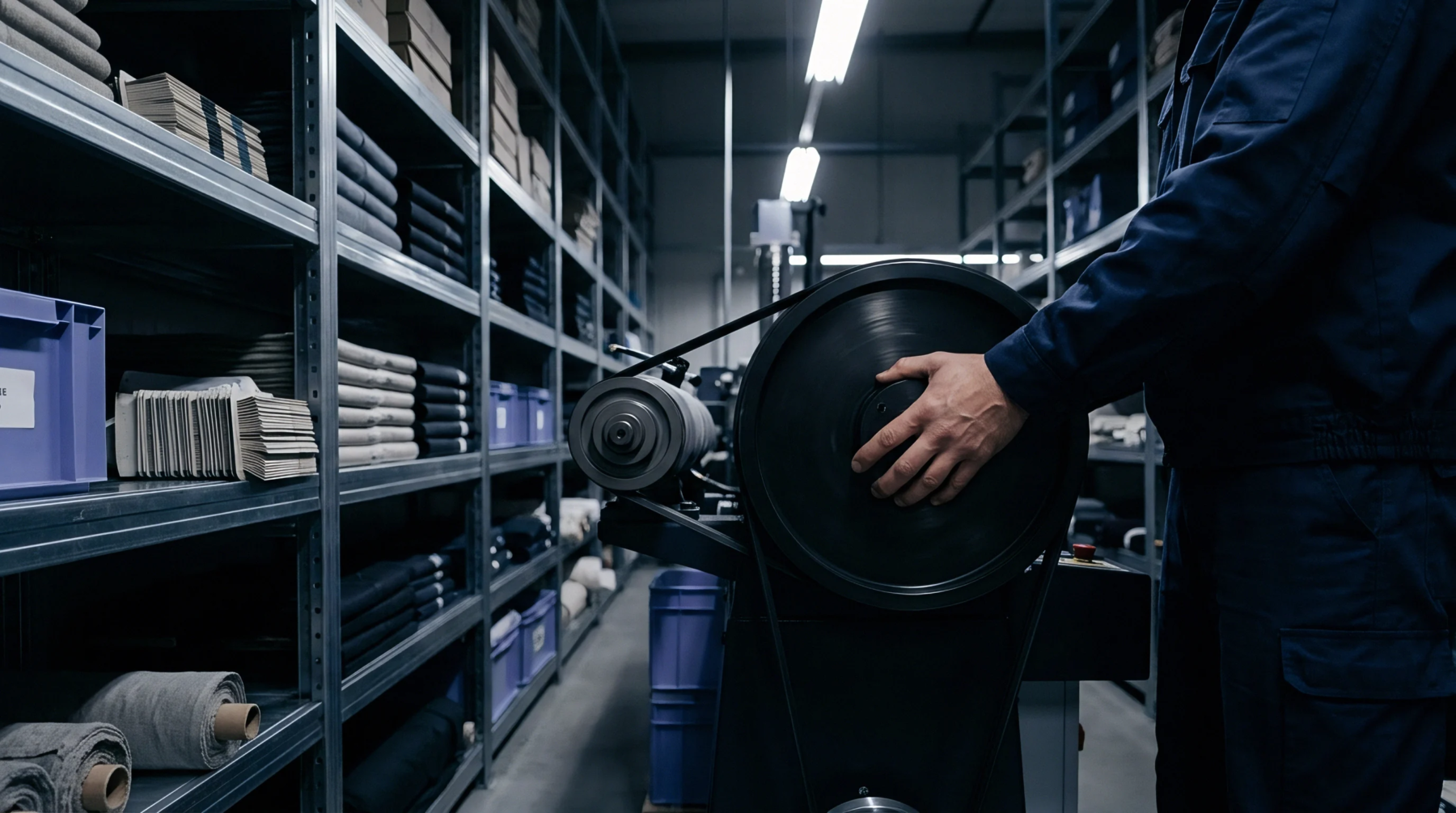
Tension loss during loom operation defines this phenomenon. Let-off creep occurs when the warp beam mechanism allows the yarn to slacken incrementally while the loom remains in a paused state. This unintended movement disrupts the exact force applied to the threads before the next pick is inserted.
Mechanical resistance in the let-off braking system prevents this deviation from damaging the fabric structure. If the friction fails to hold, the fabric width fluctuates as the tension profile shifts across the width of the piece.
Dimensional Accuracy
Control of this variance remains a primary concern for quality assurance teams reviewing finished textile batches. Inspectors check for this condition by measuring the distance between warp ends across the total width of the loom state fabric before any finishing process occurs. Deviations beyond established mill tolerances for width indicate that the let-off sensors or the braking bands require immediate calibration.
Consistency in the holding pressure ensures the yarn maintains the correct density throughout the weaving cycle. Regular adjustment cycles maintain the integrity of the warp tension against the demands of high speed production equipment.
Manufacturing Constraint
Yarn elasticity influences the degree of deformation observed when the beam stops or slows. Heavier flax counts resist this shifting more effectively than lighter, finer filaments which stretch under minimal force. Engineers quantify the deviation by comparing the actual beam position against the expected output calibrated by the loom control computer.
When the difference falls outside the permitted range, the mechanical drive receives a corrective signal to compensate for the lost tension. Proper calibration of the let-off assembly maintains fabric uniformity across long production runs.