Frictional Resistance
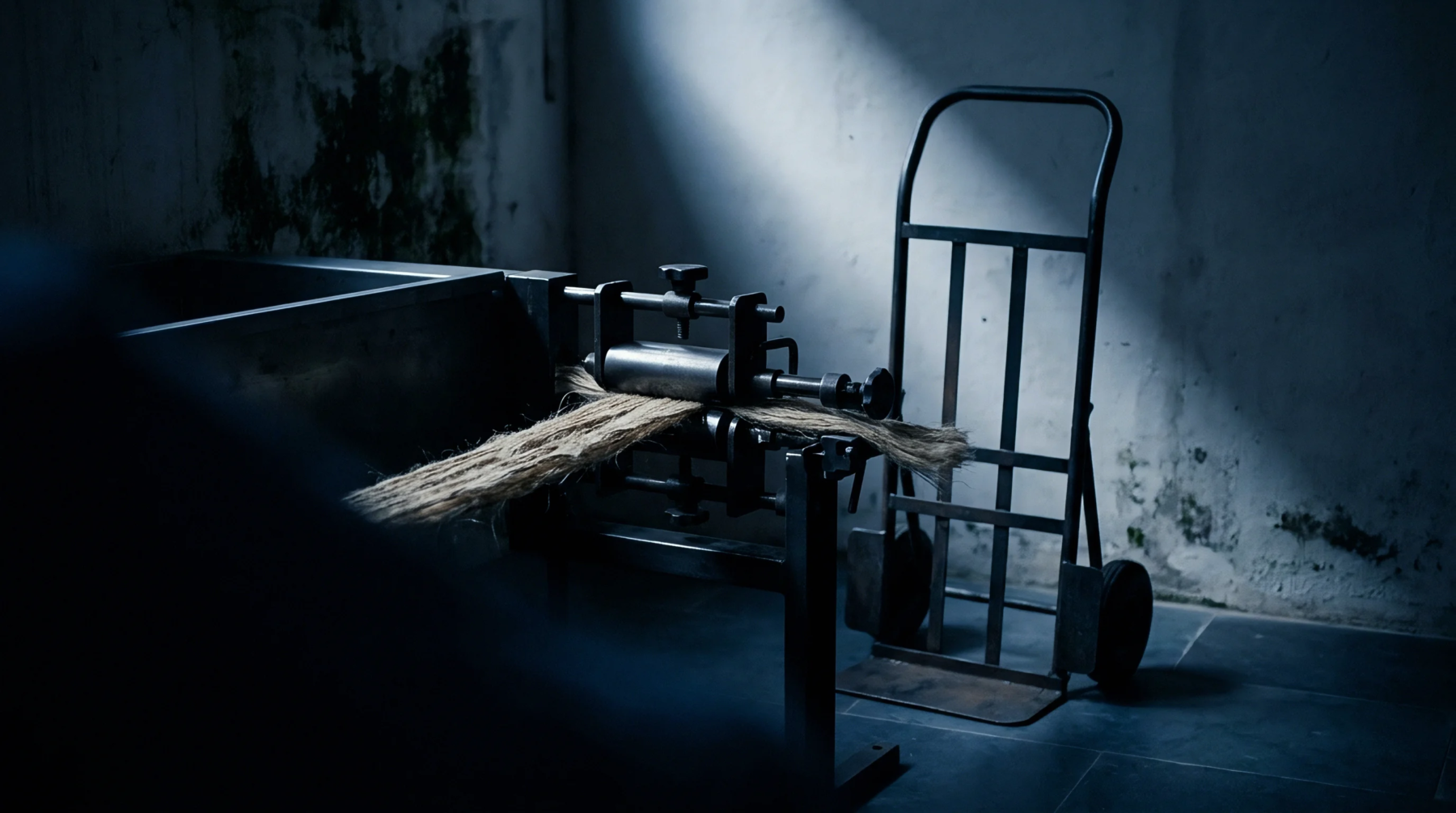
Frictional force generated between adjacent filaments resists the relative motion of the bundles as they pass through processing machinery. Managing inter-fibre shear is necessary during the drafting stage to prevent the sliver from breaking or bunching. The natural waxes and pectins on the surface of the flax provide the necessary lubrication for these movements.
Drafting Resistance
Rollers exert a pulling force that must overcome the internal friction holding the bundles together. If the inter-fibre shear is too high, the drafting rollers may fail to pull the fibres apart, resulting in a choked machine or uneven yarn. Conversely, if the friction is too low, the fibres slide too easily and the sliver loses its cohesion.
Wetting the flax reduces this resistance by softening the pectic substances that bind the individual cells. Operators adjust the pressure on the top rollers to compensate for variations in the surface roughness of the raw material.
Structural Cohesion
Stability of the spun yarn depends on the grip between the twisted filaments. High inter-fibre shear contributes to the tensile strength of the final yarn by preventing the fibres from slipping out of the twist under load. This property defines the durability of the woven linen cloth.