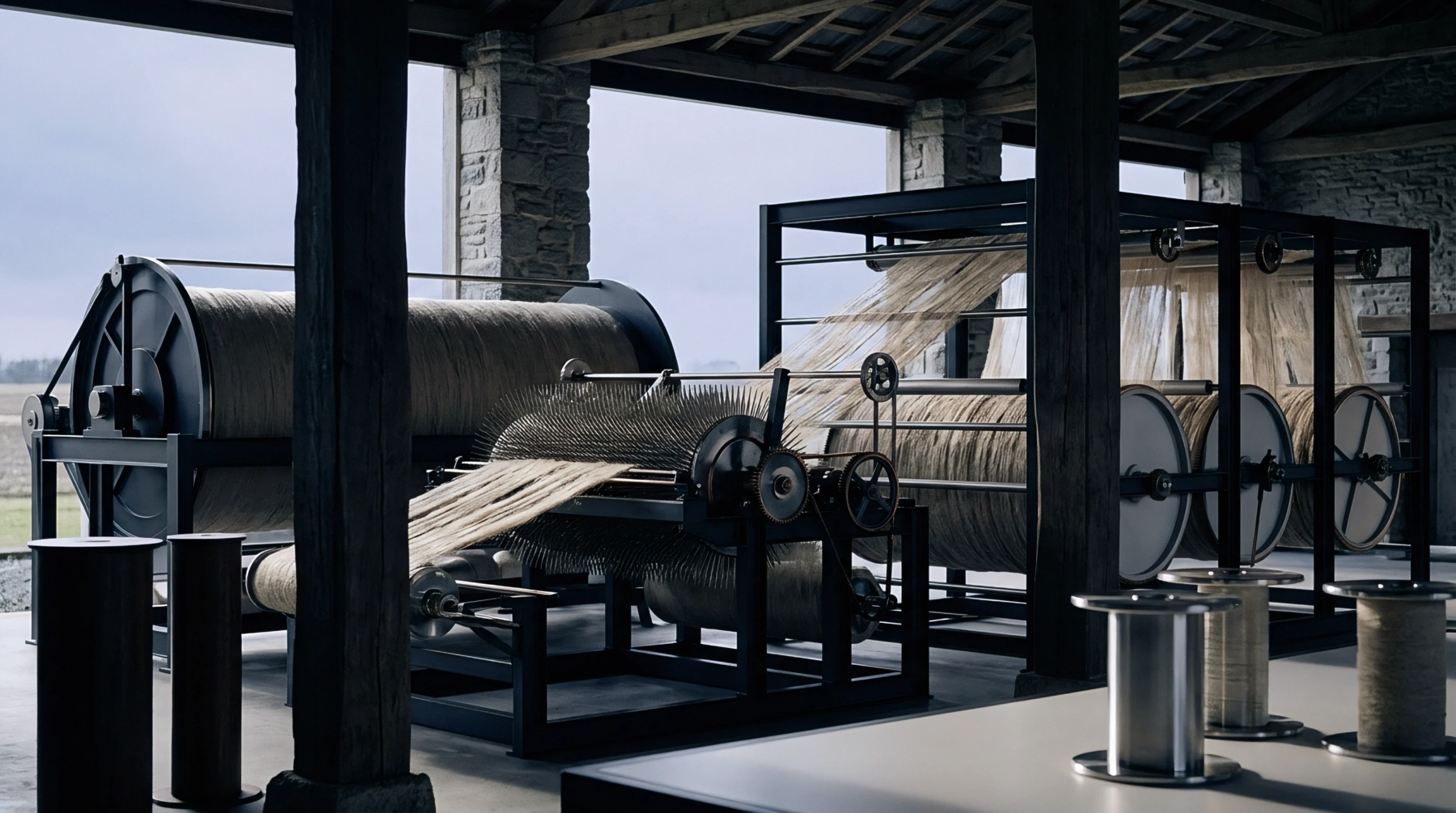
Hydraulic Force
Fluid velocity gradients generated across liquid boundary layers produce mechanical cutting and dragging forces against submerged solid surfaces. In yarn wet spinning troughs and wet finishing operations, hydrodynamic shear pulls against the hydrated peripheral fibrils of traveling flax bundles. The phenomenon operates within viscous fluid dynamics where liquid velocity differences across narrow channel openings generate shear stresses proportional to dynamic viscosity and velocity slope.
These hydraulic stresses cease where fluid motion equals the axial traveling speed of the yarn, neutralizing relative surface momentum.
Fibril Displacement
Wet ring spinning frames draw treated flax roving through hot water troughs positioned directly above drafting rollers. Intense hydrodynamic shear created by yarn movement through restricted fluid guides dislodges softened surface pectins and re-aligns protruding microfibrils along the strand axis. Submerged grooved pulleys accelerate fluid flow around passing roving strands, washing out broken cellulosic debris while consolidating the wet core bundle.
Excessive fluid turbulence tears loose bundle fragments prematurely, which elevates bath contamination and produces uneven strand cross-sections. Regulating fluid flow rates inside the immersion trough prevents liquid turbulence from destabilizing roving tension before top drafting nip engagement.
Yarn Smoothness
Finishing plants utilize fluid shear inside continuous rope-washing machinery to scrub surface impurities and residual spinning residues from linen fabrics. Moderate hydrodynamic shear polishes the exterior face of flax yarns without damaging the structural core of interlaced technical filaments. Insufficient liquid drag leaves loose hairs extended from the yarn body, causing elevated hairiness values and shedding during loom operations.
Excessive drag stresses wet technical fibers beyond their elastic thresholds, which induces localized tensile rupture and generates fabric surface streaks. Precise control of fluid shear during wet processing establishes consistent yarn hairiness metrics and improves clean appearance across finished linen piece goods.