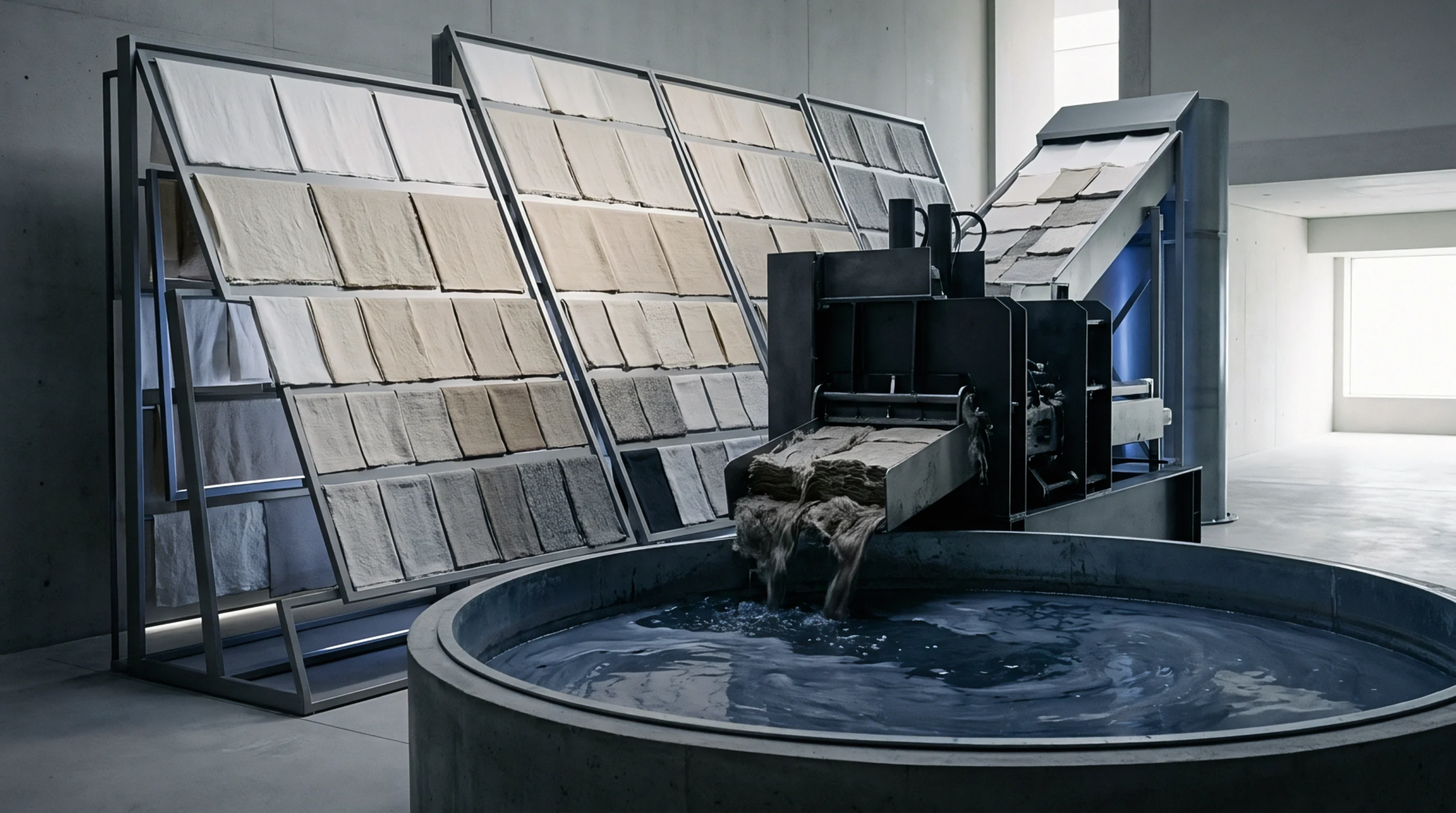
Extraction Mechanism
Extraction of pectin and hemicellulose occurs when flax rove passes through an elevated temperature bath prior to drawing and twisting. Through hot water trough leaching, the naturally occurring gums that bind flax fibers together are softened, allowing the fiber bundles to draft smoothly into a fine yarn. This softens the lignin and pectin without degrading the cellulose structure of the flax.
Spinning Performance Benefit
Spinning frame performance relies on the uniform release of these binding agents during the wet spinning process. If the water temperature drops, the fibers do not draft evenly, resulting in thick and thin places in the finished linen yarn. Conversely, excessively high temperatures or prolonged exposure can lead to over-leaching, which weakens the fibers and increases yarn breakage.
Correct management of the leaching stage ensures that the resulting yarn has high tensile strength and a smooth, even surface.
Water Quality Parameter
Water chemistry and renewal rates within the trough are monitored to prevent the re-deposition of dissolved organic matter onto the yarn. As the flax rove passes through the bath, the accumulation of leached substances can discolor the yarn or alter its dye uptake in subsequent finishing stages. Regular overflow and freshwater replenishment are maintained to keep the concentration of dissolved solids below specified limits.
This continuous renewal process ensures consistent yarn color, reduces the risk of bacterial growth in the troughs, and prevents chemical buildup on the spinning rollers. Operators measure the concentration of dissolved solids at regular intervals to determine the optimal water exchange rate for different flax grades.