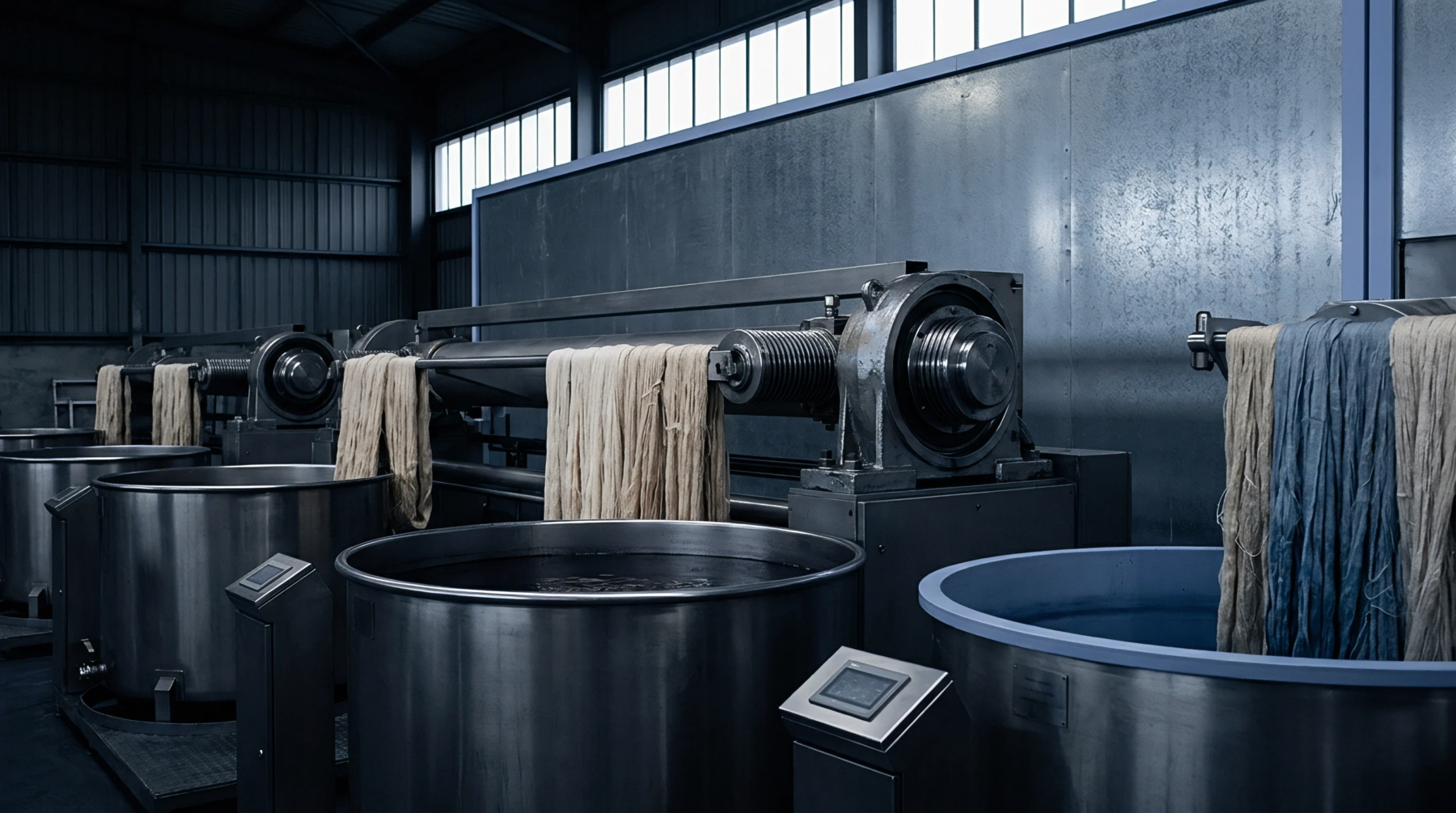
Thermal Solubilization
Wet spinning of long-staple linen relies on controlled thermal extraction inside water troughs to soften inter-fibre binder compounds before drafting. Passing unspun roving through liquid baths maintained between fifty and seventy degrees Celsius induces hot trough pectin extraction, which solubilizes the calcium pectate complexes holding ultimate flax cells together. This thermal treatment reduces inter-fibre friction, allowing individual fibrils to glide smoothly past each other between the drafting rollers without breaking.
Roving speed, bath length and water temperature collectively dictate the chemical dissolution rate. Inadequate immersion time leaves bundle structures rigid, causing premature yarn breakage and coarse yarn variations.
Drafting Attenuation
Submersion in the heated bath transforms the physical properties of the sliver, enabling the production of fine linen counts above Nm 39. As hot trough pectin extraction weakens the natural plant glues, drawing rollers operate with reduced nip pressures, elongating the strand into a uniform single yarn. Spinners monitor water alkalinity, mineral content, immersion depth and circulation velocity to prevent localized pectin buildup in the bath.
Fresh demineralized water replenishes the trough continuously to maintain steady extraction efficiency across production shifts.
Quality Tradeoff
Excessive extraction weakens the mechanical framework of the yarn, lowering dry tenacity and creating excessive hairy fuzz on spun bobbins. The process parameter ceases to apply in dry-spun tow operations or semi-wet spinning setups where fibres draft in their raw state. Finished yarn testing on standard lea strength testers verifies whether thermal exposure produced the intended count without degrading cellulose strands.