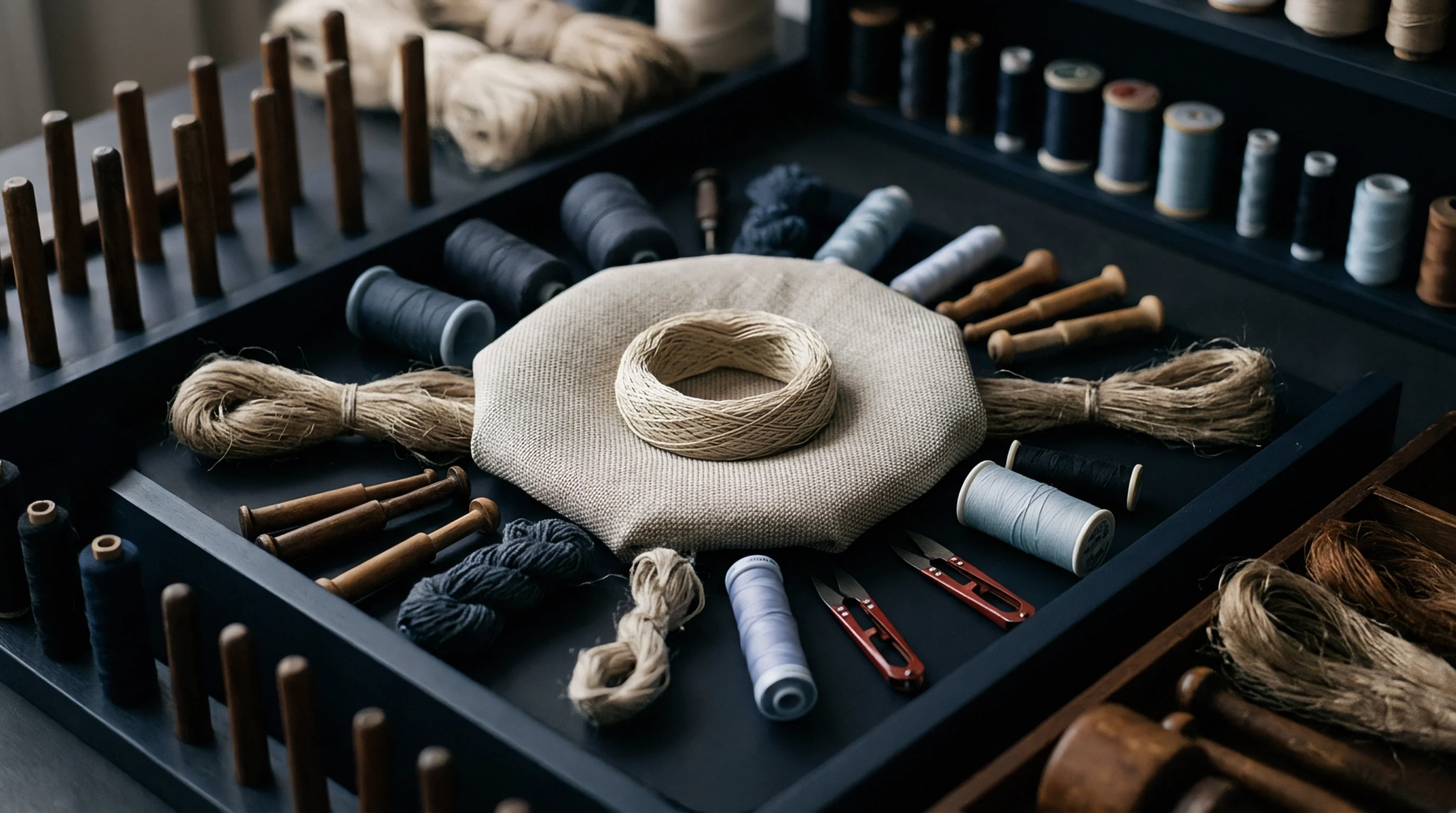
Raw Material
Coarse cellulose filaments recovered from the carding and combing of bast fibres represent a major source of secondary spinning stock. This material is spun into hemp tow yarn, which typically exhibits a higher number of slubs and lower tensile strength than line yarn. The stock serves as a cost-effective alternative for heavy textiles where high irregularity is acceptable.
Weavers utilize this material primarily for manufacturing heavy sacking or packing cloth.
Spinning Action
Processing the short filaments requires specialized draft rollers and intensive cleaning to remove woody core fragments. The carded stock passes through multiple drawing frames to align the irregular fibres before the material enters the spinning frame where twists are inserted. Wet spinning techniques are often applied to soften the lignified gums and produce a smoother, more compact yarn structure.
This wet processing stage uses heated water baths to gelatinize the pectin binders, allowing the fibres to slide and consolidate. The resulting hemp tow yarn achieves the minimum cohesion required to withstand the high mechanical tension of modern shuttleless looms.
Product Specification
Mill quality logs track the twist per meter and the linear density to ensure the batch conforms to the contractual agreement. The final testing sheet registers the dry breaking force and the coefficient of variation in mass. When the hairiness exceeds the buyer limit, the lot must be reclassified for domestic consumption rather than export.
Each shipment of hemp tow yarn must carry a certificate of conformity detailing these mechanical properties.