Spinning Irregularity
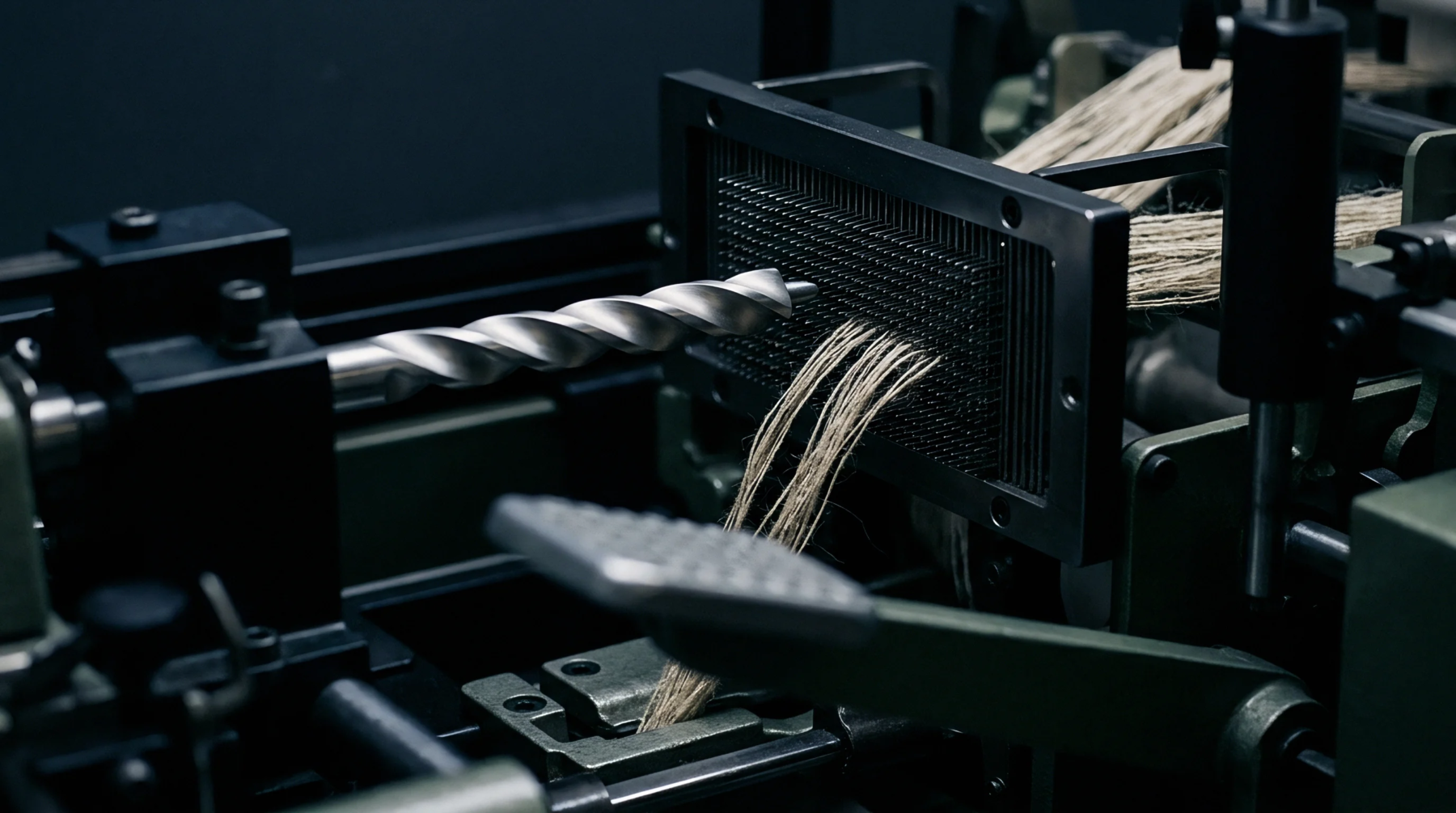
The uncontrolled movement of untwisted fiber bundles between the drafting rollers of a spinning frame creates variation in yarn thickness. This draft failure is called floating bundle slippage and occurs when the fiber length exceeds the nip distance or when gripping pressure is inadequate. It results in drafting waves that weaken the yarn structure.
The defect is particularly common when processing long-staple flax.
Draft Mechanism
The drafting zone must exert constant control over the fibers to ensure a uniform reduction of the strand weight. During floating bundle slippage, shorter fibers within the bundle lose contact with both the feed and draw rollers, causing them to move at random speeds. This uncontrolled movement gathers fiber clumps that are pulled forward together, forming a thick spot followed by a thin spot.
To prevent this, mills adjust the draft settings and use pin control systems to guide the fibers. Proper pressure on the top rollers also minimizes the occurrence of these draft variations.
Quality Defect
The uneven yarn produced by this mechanical failure has poor tensile strength and breaks easily during winding and weaving. Because floating bundle slippage alters the density of the yarn, the resulting fabric will show uneven dyeing and structural gaps. This leads to high waste rates and lower factory efficiency.
The yarn must be rejected if the drafting wave exceeds the limits set by the buyer.