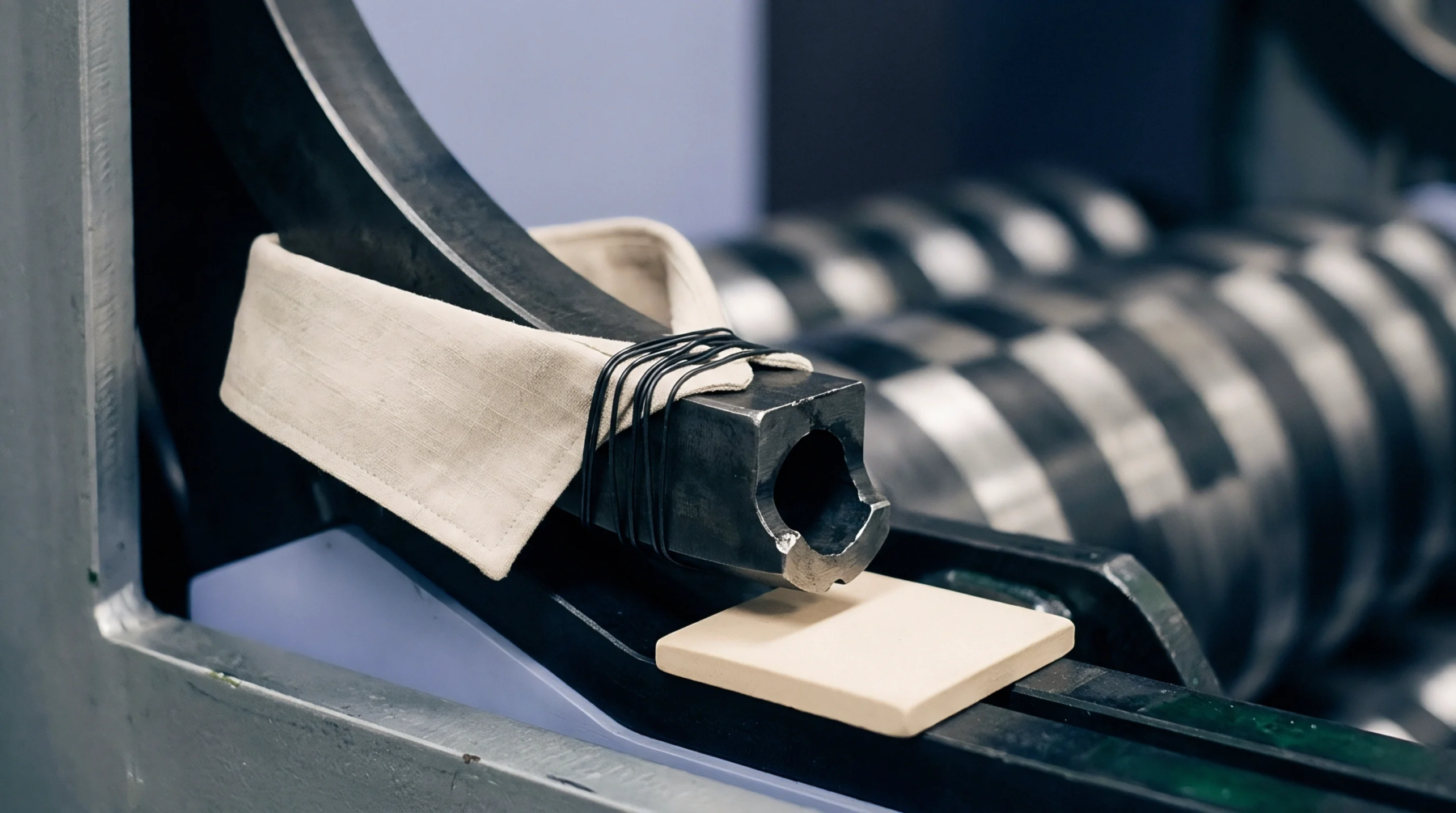
Mechanical Tension
Vertical metal components apply specific loads to individual flax yarns during the warping process to maintain uniform density across the loom. A drop wire weight serves to prevent tangles and breakages by keeping every strand under constant tension as it moves from the creel to the beam. Proper calibration of these calibrated pieces ensures that the tension remains consistent across thousands of ends, preventing uneven shrinkage during subsequent finishing stages.
Constant vertical force acts upon the wire eyelet to signal an automatic stop if a yarn snaps or slackens beyond tolerance.
Calibration Standard
Mills verify these components through periodic mass measurements to confirm compliance with technical specifications regarding force output. Each drop wire weight undergoes testing to ensure the mass matches the required tension profile for the specific linen yarn diameter being processed. Supervisors record these validation checks in the machine maintenance log to maintain traceability and ensure that downstream fabric quality meets buyer acceptance criteria.
Failure to maintain these mass tolerances leads to inconsistent fabric appearance and rejected batches.
Operational Variance
Variations in ambient humidity inside the weaving shed alter the friction coefficient of the flax, requiring adjustments to the tension settings applied by the weight. Heavier counts necessitate higher vertical force to maintain stability, while finer yarns demand lower settings to avoid fiber damage during high speed mechanical transport. Technicians adjust the positioning of the wire on the rod to modify the leverage and final tension applied to the warp end without replacing the hardware entirely.
Fine adjustments in this area define the structural integrity and uniformity of high quality linen cloth.