Particulate Accumulation
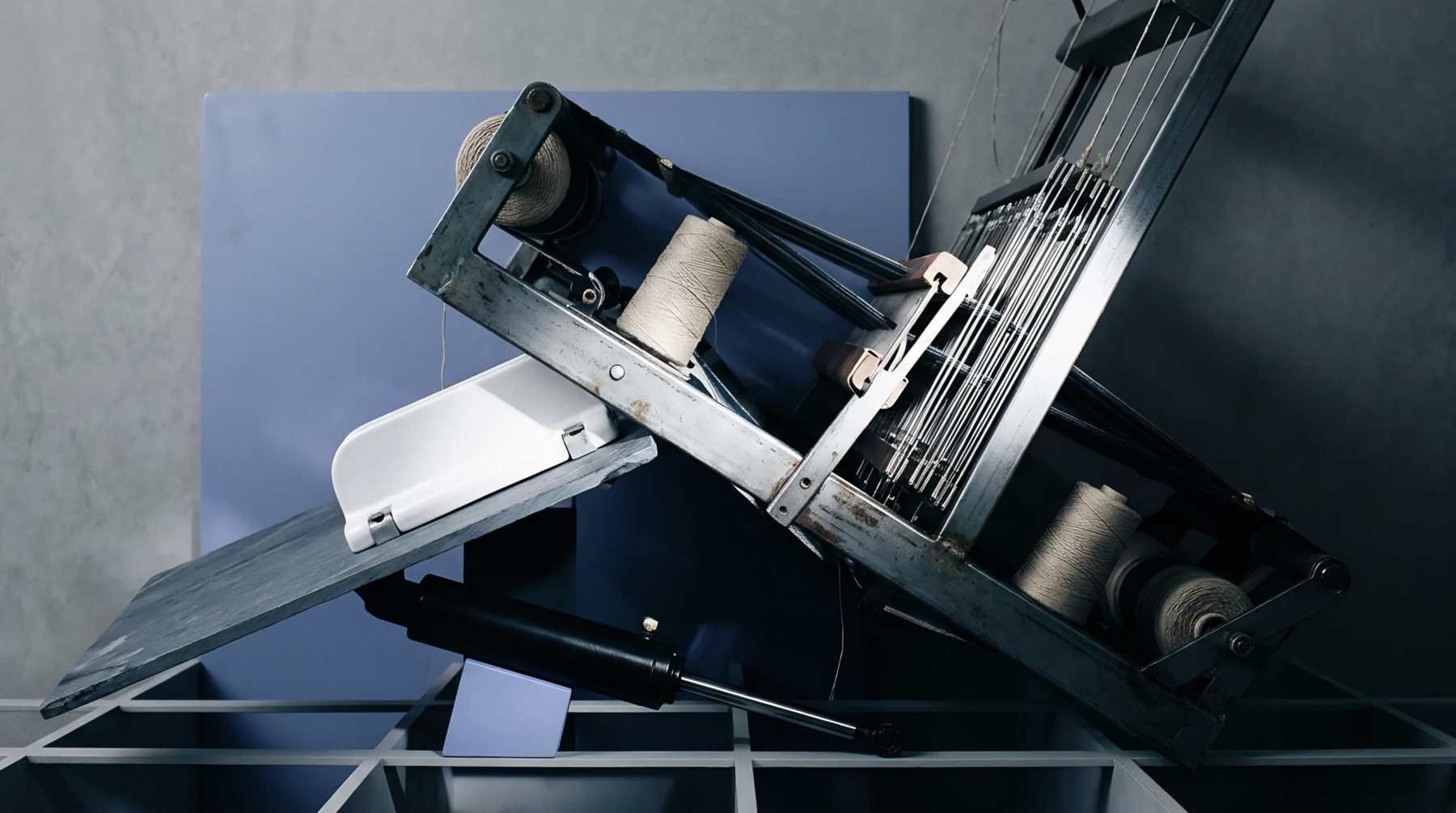
Surface debris settles on the stop-motion sensors of a loom when fine flax fragments and sizing particles are released during weaving. Routine drop wire dusting prevents these particles from interfering with the electrical contact required to stop the machine when a warp thread breaks. This maintenance task is performed at set intervals during the weaving of a single beam.
It ensures that the automated safety systems remain responsive to yarn failures.
Mechanical Interference
As the warp yarns move back and forth, they shed small amounts of cellulose and starch. These particles collect in the eyes and slots of the drop wires, which are the thin metal plates hanging on each thread. If drop wire dusting is neglected, the build-up of debris can prevent a wire from falling when the yarn snaps.
This failure allows the loom to continue running with a missing thread, creating a long flaw known as a thin place in the linen cloth. Compressed air or soft brushes are used to clear the debris without bending the delicate metal components. Clean wires slide freely on the yarn and react instantly to a loss of tension.
Fabric Integrity
High-grade export fabrics must be free of structural defects. Effective drop wire dusting reduces the number of missed breakages that require manual repair after the cloth is woven. This contributes to the overall grading of the finished roll.