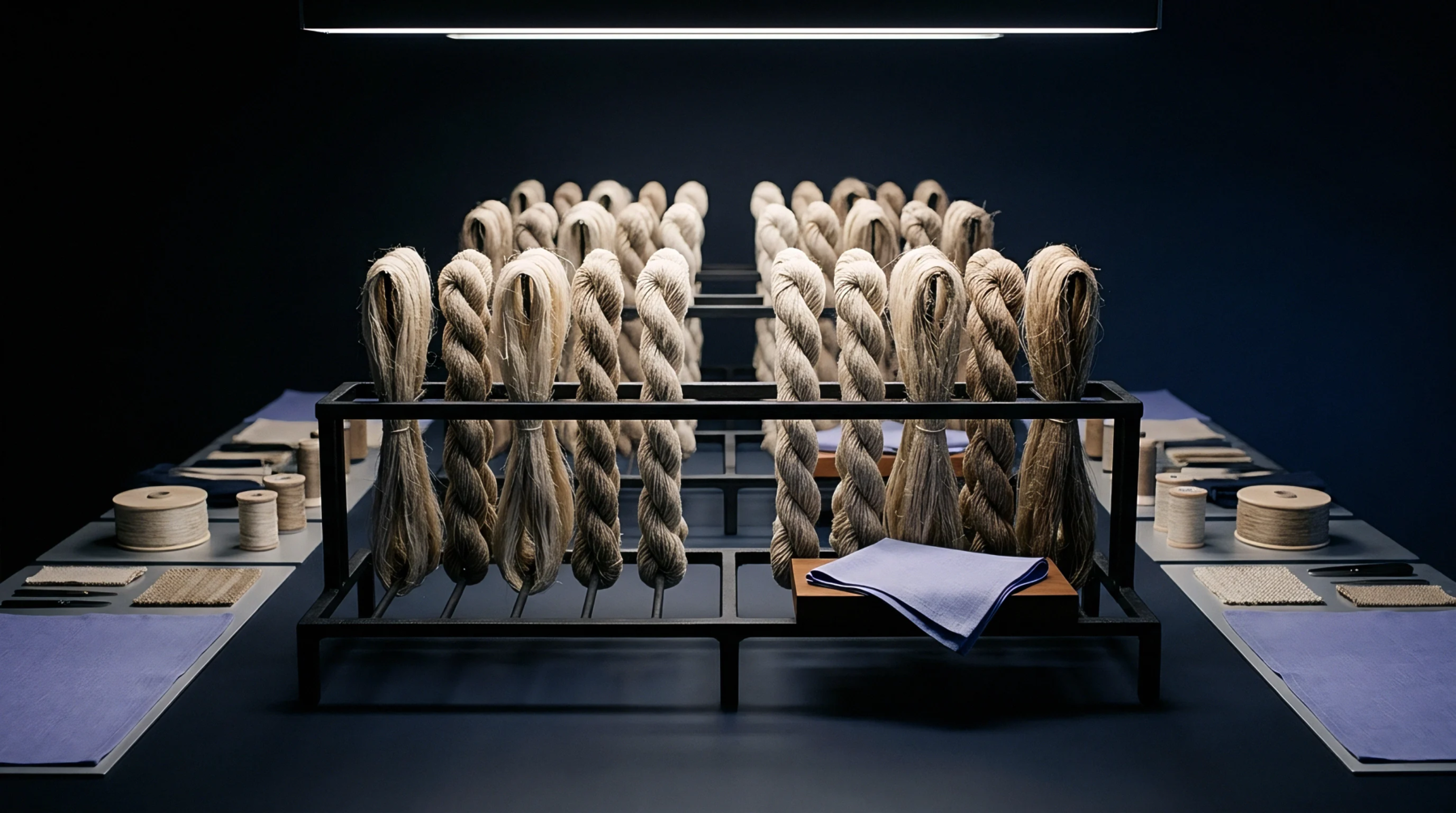
Friction Control
Attenuation stages between drawing rollers require precise calibration of inter-fiber friction to prevent drafting waves or sliver rupture. Implementing drafting force optimization allows spinning mills to determine the exact nip pressure and gill bar speed required for consistent sliver linear density. Measurements register the resistance exerted by flax fiber bundles as they slide past one another under controlled roller pressure.
Calibration limits are reached when drafting forces equal the cohesive limit of the sliver, beyond which fiber breakage occurs.
Attenuation Profile
Tensile forces measured across drawing zones provide direct feedback regarding fiber cohesion and lubricant distribution. During wet and dry flax spinning, drafting force optimization balances inter-fiber friction against applied mechanical draft ratios. If the applied force exceeds fiber bundle cohesion, sliver drafting becomes irregular, generating periodic weight variations known as drafting waves.
Conversely, insufficient force permits thick fiber clumps to pass through unattenuated, creating slubs in final yarn packages. Mill control systems adjust back-roller pressure and ratch settings to maintain force readings within pre-determined tolerance windows. Optimization parameters vary between flax varieties based on fiber length distribution and pectin content, requiring distinct force settings for wet-spun and dry-spun flax qualities.
Yarn Uniformity
Controlled attenuation directly correlates with reduced mass variation in spun linen yarns. Continuous monitoring through drafting force optimization ensures that mass variation indices remain within commercial yarn specifications. The optimization routine concludes once stable force profiles are established across all spinning positions.