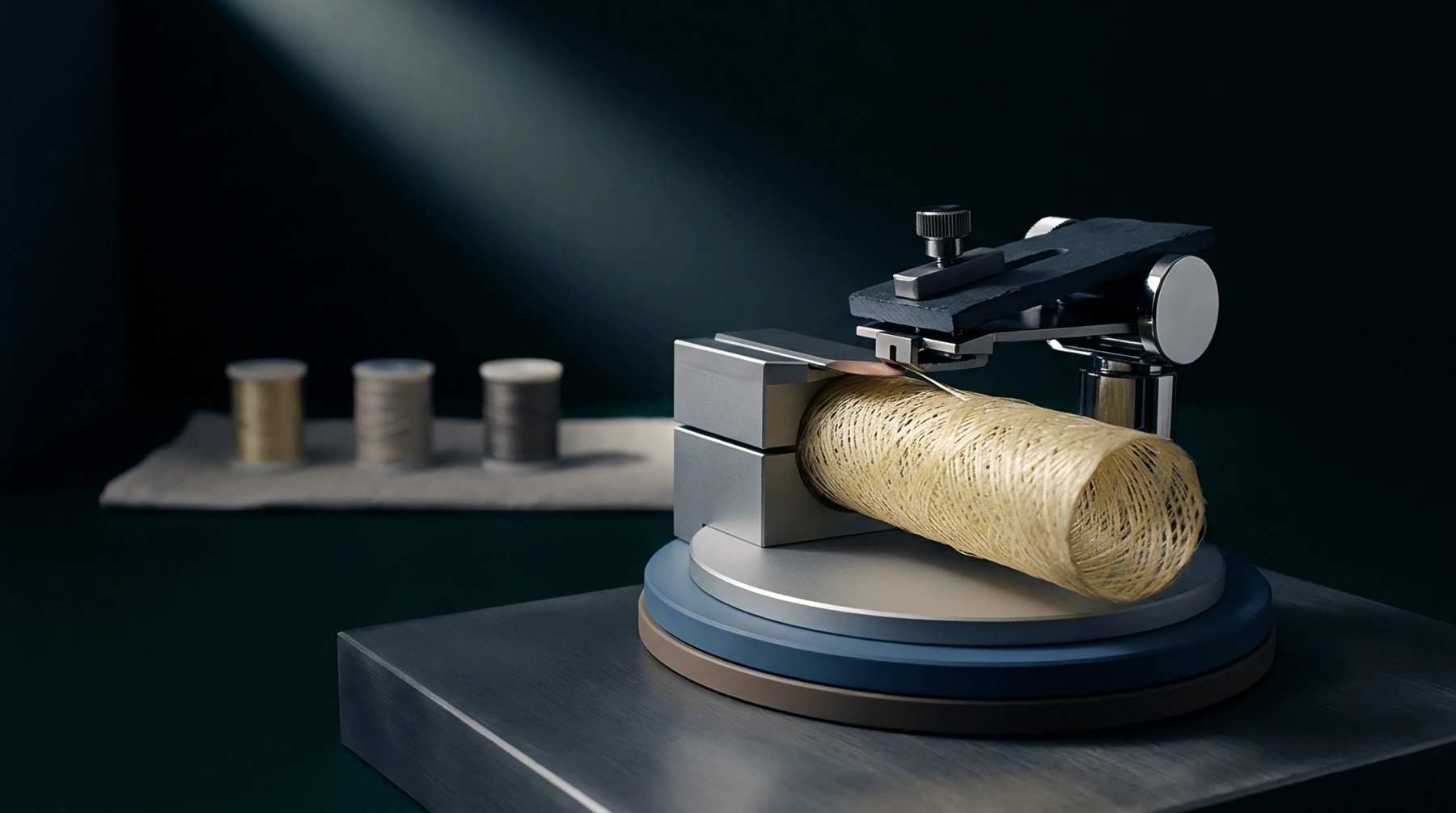
Structural Irregularity
Woven fabric irregularities arise during mechanical reed movements when warp ends shift laterally out of their designated parallel alignment. Such anomalies, recorded as density distortion faults, appear as unevenly spaced gaps or dense bands across the face of finished linen cloth. The fabric inspection certificate lists these occurrences as critical defects if they exceed specified frequencies.
Mill personnel measure the distance between warp threads to verify structure.
Mechanical Displacement
Warp yarn slippage occurs when the abrasive force of the weft insertion exceeds the holding friction of the tension system. This localized displacement causes adjacent yarns to cluster together and leave open bands in the weave. In high-speed rapier looms, the impact of the reed during beat-up intensifies this movement.
Uncontrolled yarn movement during this stage alters the local pick count of the fabric. The defect is particularly common when processing smooth linen yarns of high count. If unchecked, the subsequent wet finishing processes of bleaching and calendering accentuate the uneven thread density, rendering the fabric unsuitable for premium apparel.
Quality Grading
Acceptance thresholds dictate the allowable frequency of these gaps before a roll is downgraded. Buyers from international trading houses check these figures against the contract specifications. The mill standard permits three minor faults, whereas the buyer acceptance criteria reject any roll with major open bands.