Kinematic Phase
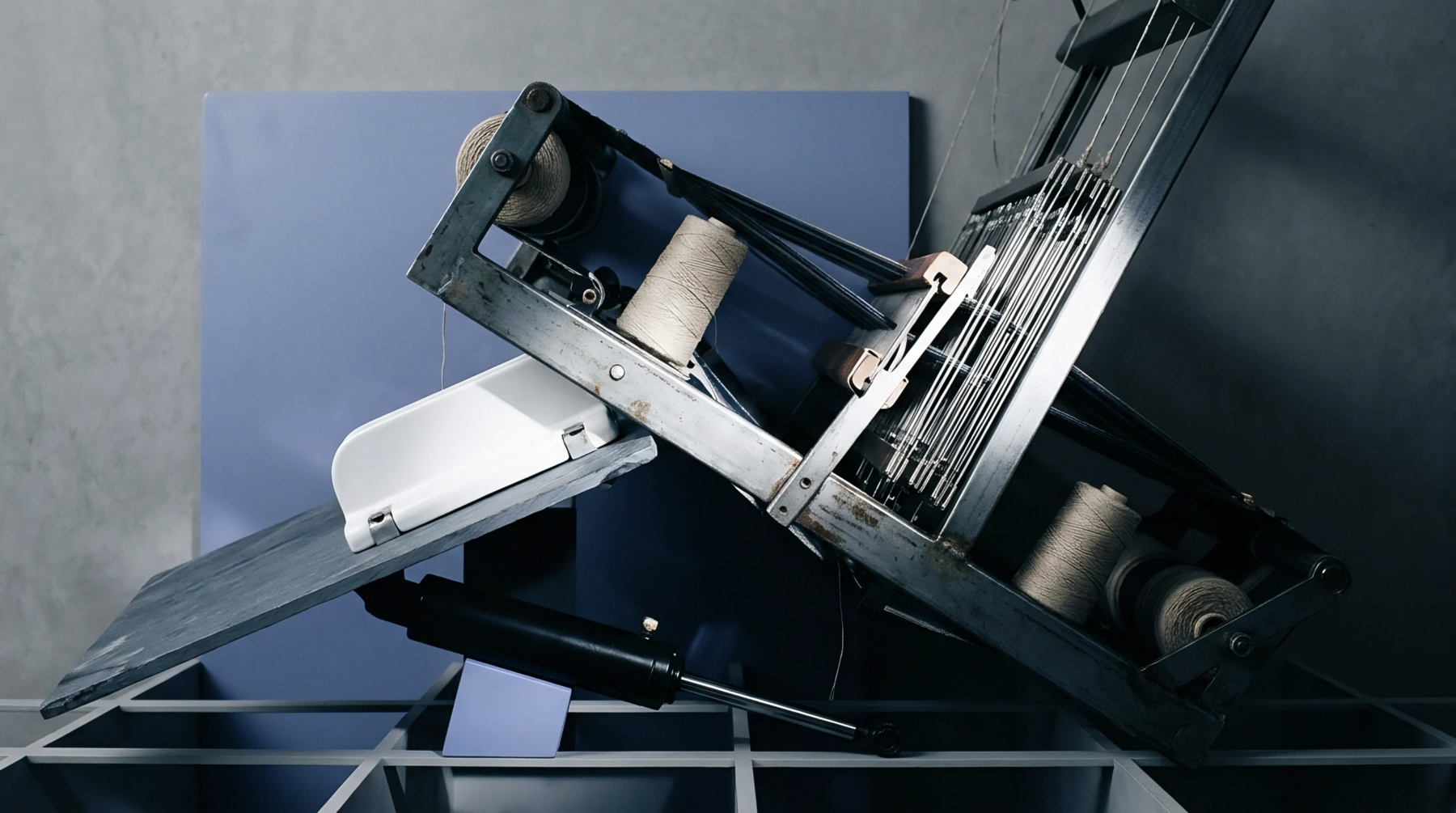
Reciprocating warp movement defines the geometric clearance created by heald frame lifts for weft insertion. Regular cyclic shedding opens and closes the warp shed at fixed angular intervals during main shaft rotation. Loom timing diagrams map the movement of warp threads between upper and lower dwell positions.
Proper phase alignment ensures clean shed opening before the shuttle or rapier enters the warp sheet.
Stress Accumulation
Repeated bending and axial pulling forces generate peak stress levels in flax yarns during high-speed loom operation. As cyclic shedding raises and lowers thousands of warp threads hundreds of times per minute, friction against heald eyes strips surface wax and weakens spun flax bundles. Flax fibres possess low elasticity compared to synthetic filaments, making them susceptible to tension spikes during shed opening.
Equalizing warp tension across the harness frame mitigates localized yarn fatigue and reduces warp breakage rates during long weaving runs. Excess tension causes micro-flaws to propagate into structural breaks, while insufficient tension yields loose sheds that snag incoming weft yarn.
Clearance Threshold
Physical height boundaries govern shed geometry to permit unobstructed passage of insertion elements. Mill specifications define minimum shed opening angles based on yarn hairiness and loom width. Inadequate clearance creates friction between top and bottom warp sheets, leading to mispicks in coarse linen fabrics.