Kinetic Load
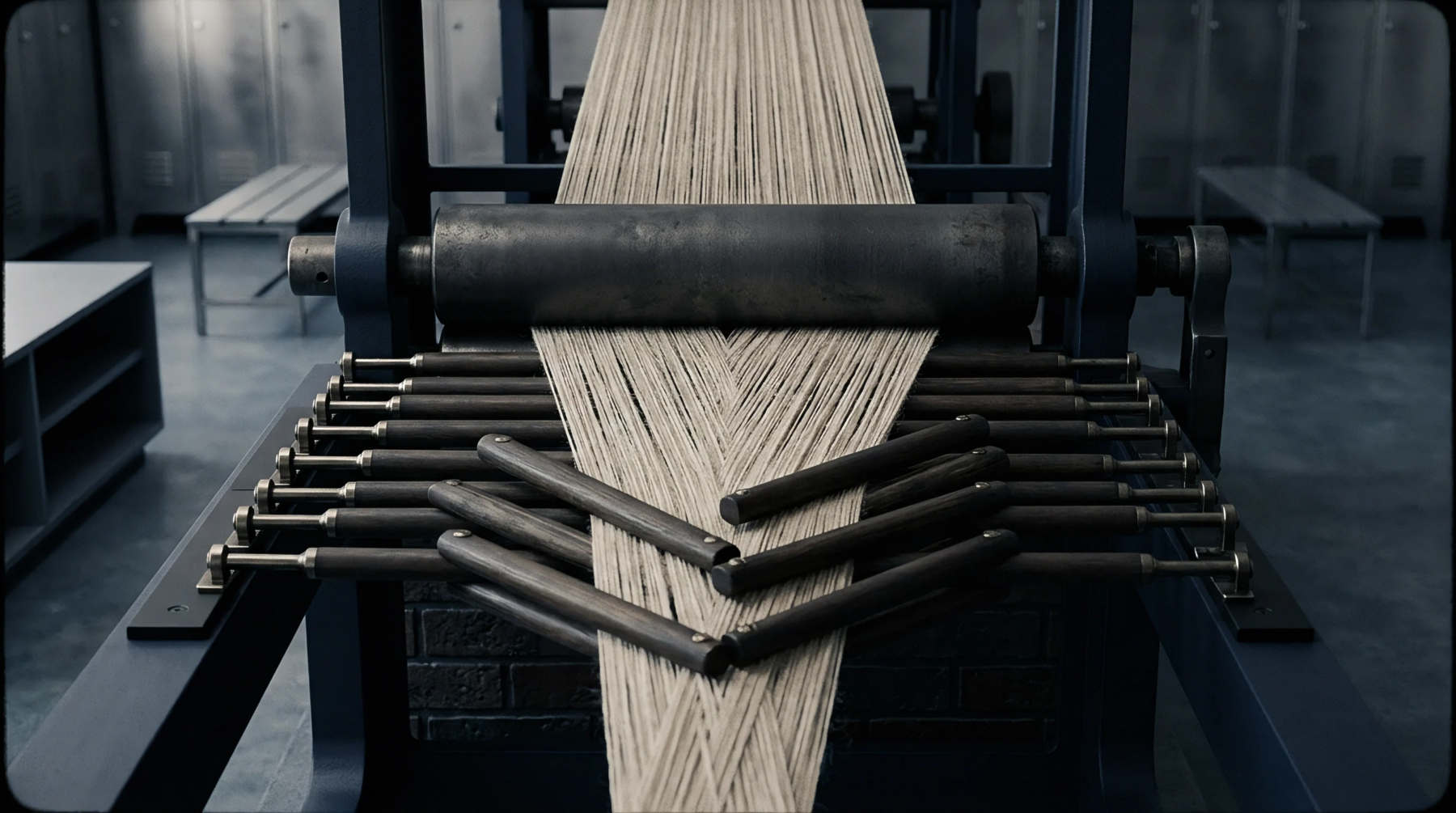
Mechanical tensile load maintained along harness cords governs shedding motion and heddle return in jacquard cloth production. Harness cord tension maintains positive control over individual heddles as linen warp yarns separate during shed cycles. Maintaining appropriate tautness counters the dead weight of lingoes suspended below the warp sheet while resisting cyclic acceleration peaks during high-speed shed changes.
The term stops applying beyond flexible mechanical linkages, excluding rigid heald frame drives or pneumatic shedding actuators.
Harness Stability
Improper force balancing across harness cords distorts shed geometry and produces uneven clearance across dense linen fabrics. Slack cords fail to lift dense wet-spun linen warps cleanly, causing insertion mispicks that ruin fabric face regularity. Excessive cord tension accelerates cord sheath abrasion against the comber board, snapping cords and causing dropped pattern elements mid-production.
Calibration Parameter
Electronic tensiometers and hand-held mechanical gauges quantify harness load levels during loom setup and scheduled overhauls. Technicians calibrate cord tension to match the specific areal density of the linen fabric construction, accommodating the substantial resistance generated by dense reed setups. Mill floor records document uniform tension values across all jacquard repeat sections, whereas buyer quality inspectors examine greige cloth under inspection lights to catch uneven shed marks caused by cord tension drifts.
Maintenance teams replace sagging elastomeric connection links immediately when measured tension deviates by more than five percent from machine specifications.