Fiber Alignment
Laboratory conditioning of scutched flax strands ensures uniform density and alignment before tensile strength measurements commence. Accurate bundle specimen preparation requires operators to comb out short fibers and debris from the parallel flax bundles. This step isolates long line flax fibers to ensure that the subsequent test measures the true break resistance of the sample.
Uncombed materials yield highly variable results during tensile stress trials. The operator extracts a subset of fibers weighing between ninety and one hundred and twenty milligrams, then trims the bundle to a precise length of fifteen millimeters using a specialized double-bladed cutter.
Clamping Force
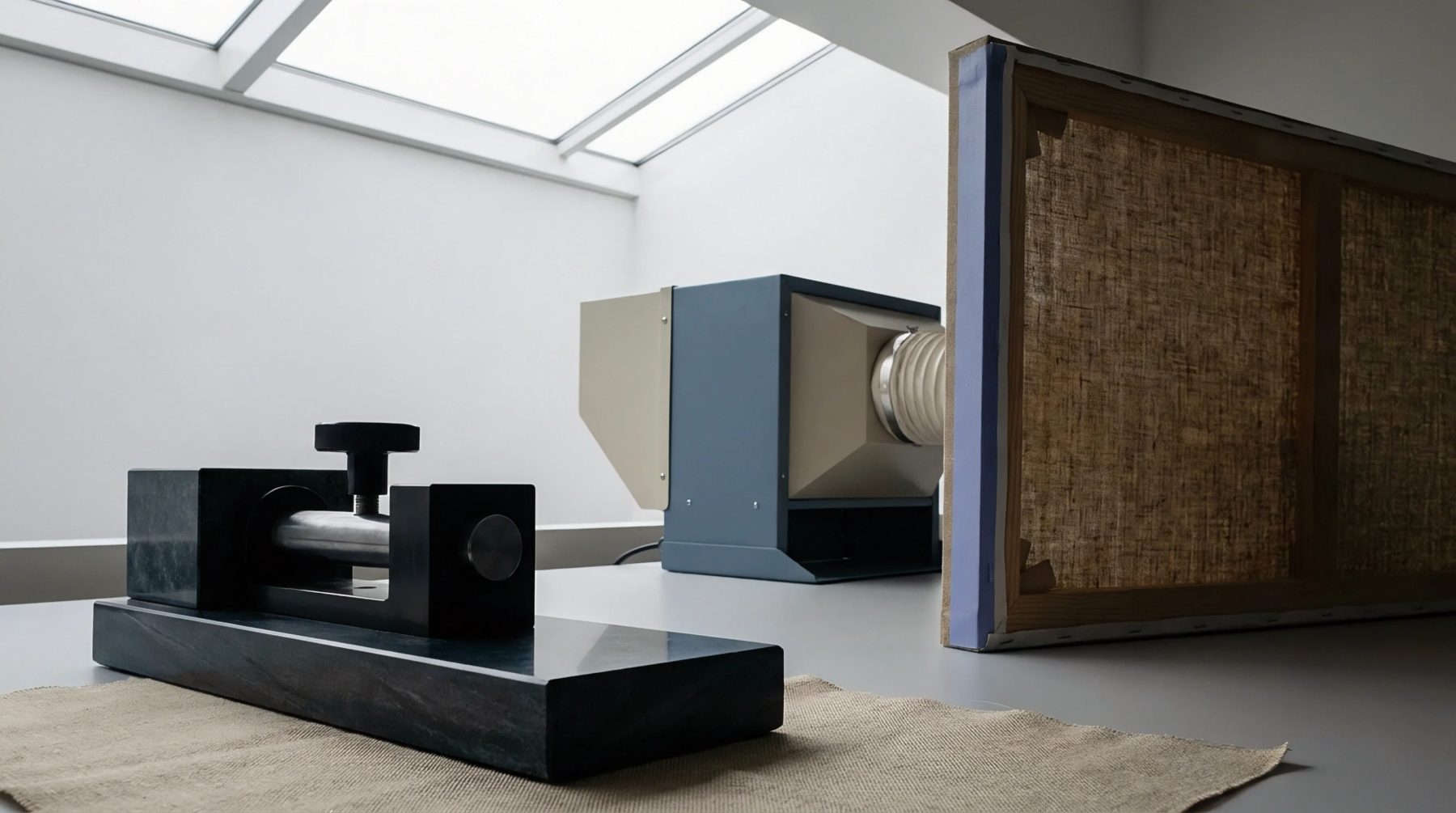
Precise placement of the prepared bundle within the test jaws prevents slippage and premature breakages during the pulling phase. The press clamps must apply a uniform pressure of approximately ten bars to the aligned flax strands. If the grip is too loose, the fibers slide out, which produces false readings.
Too much pressure crushes the fibers at the boundary line, which triggers an early fracture. Testing machines measure the force required to break the clamped fibers, which indicates the spinning utility of the batch.
Moisture Equilibration
Relative humidity levels must remain at sixty-five percent for at least twenty-four hours before testing occurs. Fibers respond quickly to moisture changes, so maintaining this climate prevents the flax from becoming brittle. Drought conditions lower the recorded tenacity of the fibers, whereas excess humidity artificially boosts the elongation value.
Testing laboratories document the atmospheric conditions alongside the final breaking load to ensure auditability for the yarn purchaser.