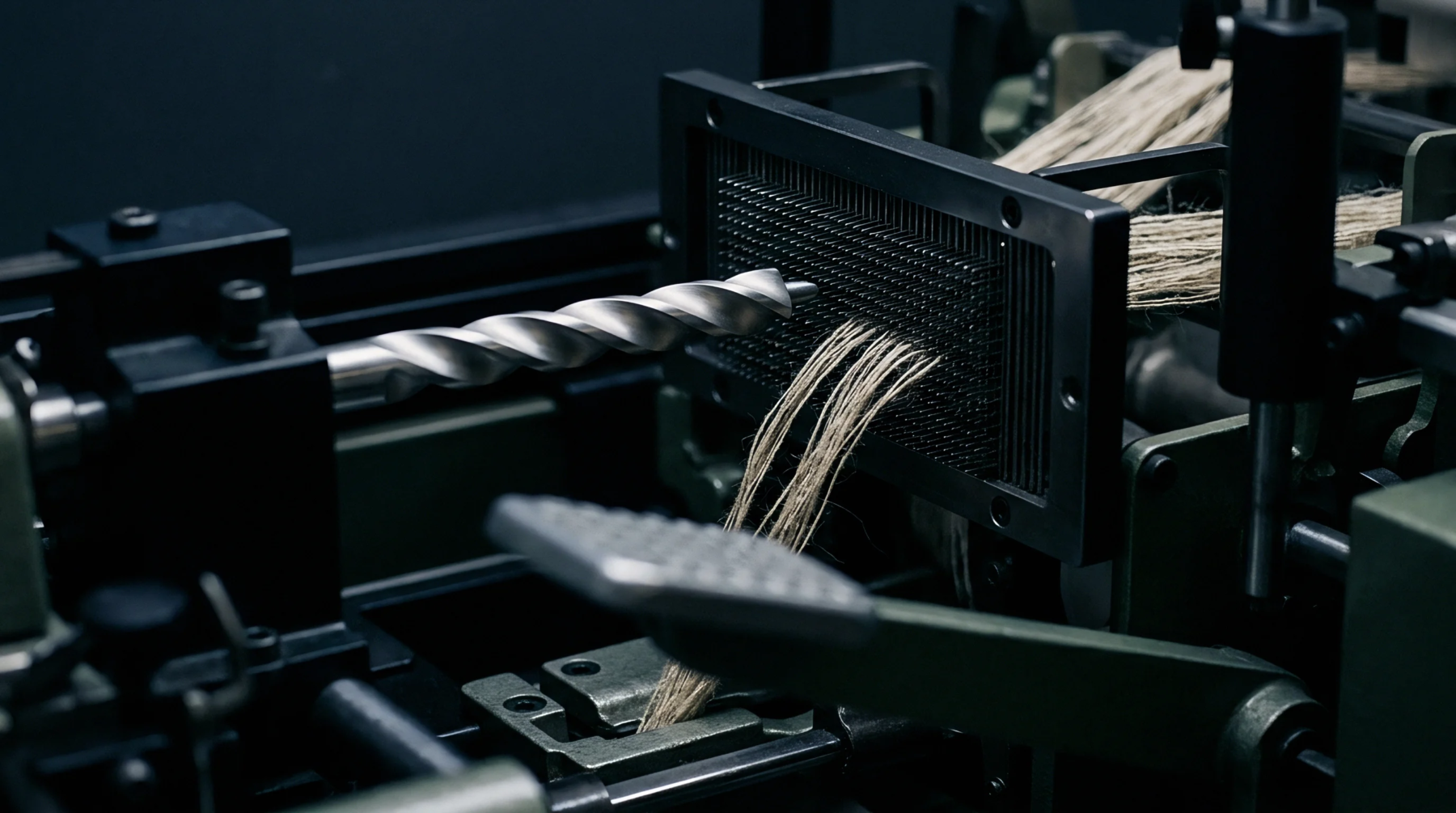
Drafting Mechanism
Spinning preparation requires the sequential alignment and attenuation of combed flax strands to produce a uniform intermediate assembly. Through bast fibre drawing, coarse flax bundles pass between pairs of rollers rotating at different surface speeds to reduce the linear density of the material. This action progressively straightens the long fibers and reduces the cross-sectional variations of the sliver before the roving stage.
Sliver Levelness
Quality control in linen mills depends on the consistency of the delivered sliver to avoid thin places in the final yarn. The outcome of bast fibre drawing directly affects the count strength product of spun yarn because uneven drafting introduces periodic mass variations. These variations are tracked using capacitance testing or mass variation charts to adjust the draft ratio at the draw frame.
Fiber Parallelism
Friction between individual flax fibers is governed by the natural waxes and pectins that bind the cellular structure together. Achieving optimal fiber parallelisation in bast fibre drawing requires precise control of temperature and relative humidity to prevent fiber breakage. Insufficient moisture causes the fibers to fly and cling to the leather or rubber aprons of the drafting zone, which degrades the strand.
Dry conditions also increase electrostatic charges that make the fibers repel each other and disrupt the strand.