Mechanical Boundary
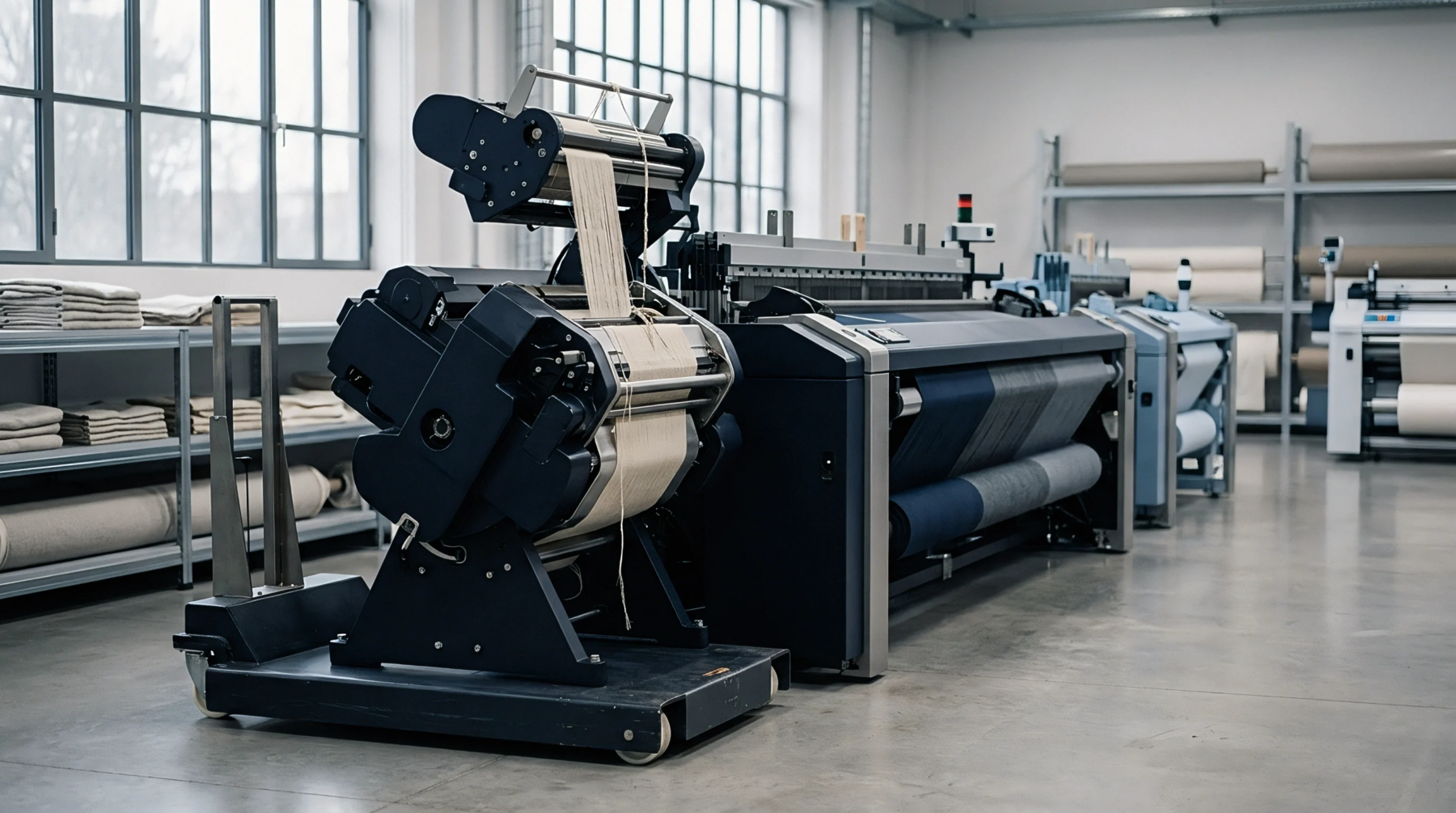
Air jet nozzle track clearance defines the precise physical gap between pneumatic propulsion guides and moving warp ends during weft insertion in high speed flax weaving. Jiangsu textile inspection bureaus record this spatial parameter in the daily loom calibration log to maintain uniform pick density across heavy linen sheeting. Flax yarns demand exact trajectory control because natural bast fibres possess irregular surface hairiness that causes high friction drag inside the shed.
Technicians measure this distance using calibrated feeler gauges before the reed strikes the fell line, ensuring that compressed air pulses project the pick without deflecting adjacent threads. Operational limits apply strictly to pneumatic insertion mechanisms running on rapier looms adapted for pure linen yarns, whereas rigid projectile frames rely on mechanical grippers that eliminate pneumatic guidance entirely. Proper calibration prevents weft misalignments while faulty alignment produces broken filaments along the selvage.
Pneumatic Tolerance
Air jet nozzle track clearance governs the velocity profile of the weft carrier as pressurized air streams propel the yarn across the warp sheet. Mill floor supervisors test fiber grade consistency by running sample batches through the pneumatic channels, noting that coarse bast fibers require wider air gaps than fine combed flax to prevent fiber snarling. Fabric grade standards dictate that excessive nozzle separation causes jet dispersion, which drops insertion velocity and leaves thin spots in the finished linen cloth.
Conversely, narrow gaps generate turbulent air vortices that abrade the delicate surface of the flax yarn, leaving fuzzy patches on the woven surface. Mill specifications override buyer acceptance criteria when mechanical wear enlarges the metal aperture, forcing operators to replace the nozzle assembly long before the buyer notices surface irregularities.
Inspection Protocol
Air jet nozzle track clearance appears on the monthly loom maintenance audit as a mandatory check item performed by senior weaving technicians. Quality control inspectors verify these measurements against the mill internal standard rather than the external export specification, because internal tolerances anticipate thermal expansion during continuous mill shifts. Uncalibrated gauges introduce systematic errors into the audit, leading inspectors to misjudge the mechanical alignment of the pneumatic manifold.
Worn carriage guides alter the trajectory of the air stream during high speed operation, causing uneven weft insertion that ruins the final batch of export grade linen fabric. Precise gap maintenance remains the primary mechanical safeguard against warp breakage in industrial linen production.