Moisture Regain Adjustments during Commercial Fabric Mass Testing
Commercial mass calculations adjust gross fabric weight using oven-dry testing and standard regain percentages to prevent paying for transit moisture.

Equilibrium
High ambient moisture causes textile material to absorb water vapor until atmospheric balance occurs. Woven cloth stored in a humid port terminal gains measurable mass compared to the same roll stored in a dry inland warehouse. In commercial transactions where fabric sells by weight or where specified mass per unit area determines custom duties, unadjusted ambient mass leads directly to financial distortion.
Liquid trade operates on adjusted dry weight plus standard regain allowances so buyers pay for clean fiber rather than trapped air moisture.
Fiber Sorption Physics and Standard Allowance
Cellulosic structural chains draw water molecules directly into amorphous inter-crystallite zones. Linen fibers possess high regain values due to accessible hydroxyl groups in flax cellulose. Cotton holds less bound water under identical atmospheric vapor pressure.
Synthetic polymers present contrasting behavior: polyester absorbs minimal moisture, while viscose rayon exhibits high regain figures due to regenerated cellulose structure. Water alters cloth mass.
Standard regain represents an agreed percentage added to the oven-dry weight of a textile material to calculate its commercial mass. International standards establish fixed commercial regain percentages for trade settlement. Flax yarn carries an official commercial regain of twelve percent in woven structures.
Combed cotton yarn carries eight and one-half percent. Wool yarn in woven fabric carries thirteen percent. Synthetic filaments run between zero and one and one-half percent.
| Fiber Type | Official Regain (%) | Standard Regain Limit Range (%) | Commercial Weight Adjustment Factor |
|---|---|---|---|
| Flax (Linen Woven) | 12.00 | 11.50 – 12.50 | 1.1200 |
| Cotton (Carded/Combed) | 8.50 | 8.00 – 9.00 | 1.0850 |
| Viscose Rayon | 13.00 | 12.50 – 13.50 | 1.1300 |
| Wool (Woven Fabric) | 13.00 | 12.50 – 13.50 | 1.1300 |
| Polyester (Filament/Staple) | 0.40 | 0.30 – 0.50 | 1.0040 |
When cloth construction incorporates blended yarns, calculation of the composite commercial regain requires proportional weighting based on dry fiber components. A plain weave fabric constructed from fifty percent flax and fifty percent combed cotton does not use a flat average. Linen holds bound water.
The calculation applies exact oven-dry proportions to establish the combined commercial regain allowance.
Relative vapor pressure shifts stored roll weight without changing fiber count or loom construction.
Standard Atmospheric Conditioning Baseline
Testing facilities maintain twenty degrees Celsius and sixty-five percent relative humidity to normalize moisture content prior to mass measurements. ISO 139 specifies tolerances of plus or minus two degrees Celsius and plus or minus four percent relative humidity for commercial testing rooms. Fabric rolls taken directly from shipping containers must undergo full pre-conditioning to reach equilibrium.
Rapid testing without conditioning yields erratic results that fail under laboratory audit.
Conditioning rate depends on yarn density, pick count, cover factor, and roll tightness. A loose tabby weave of one hundred twenty grams per square metre reaches ambient moisture balance within twenty-four hours. A dense four-hundred-gram twill or damask structure wrapped tightly on a hard paper tube takes up to seventy-two hours for core humidity to match the testing environment.
Ambient humidity shifts scale values.
- Unconditioned Receiving Mass introduces ambient shipping humidity into the bill of lading, creating artificial weight fluctuations up to four percent on natural fibers.
- Incorrect Baseline Assumptions treat raw mill weight as final mass, ignoring sizing compounds and absorbed ambient moisture.
- Oven Temperature Fluctuations outside the standard operating window alter structural degradation rates and produce invalid dry weights.
- Non-Standard Atmosphere Exposure during transfer from conditioning room to analytical scale shifts measured sample weight within seconds.
A buyer who measures incoming roll weights without confirming internal core moisture status inevitably pays for water weight during rainy shipping cycles.

Scales
Precision gravimetric instruments record gross roll weights upon delivery at the warehouse receiving dock. Raw weight readings include true fiber mass, non-fibrous additions, and variable water content absorbed from transit environments. Determining true commercial mass demands systematic laboratory drying under controlled thermal conditions.
Oven Dry Mass Determination Procedures
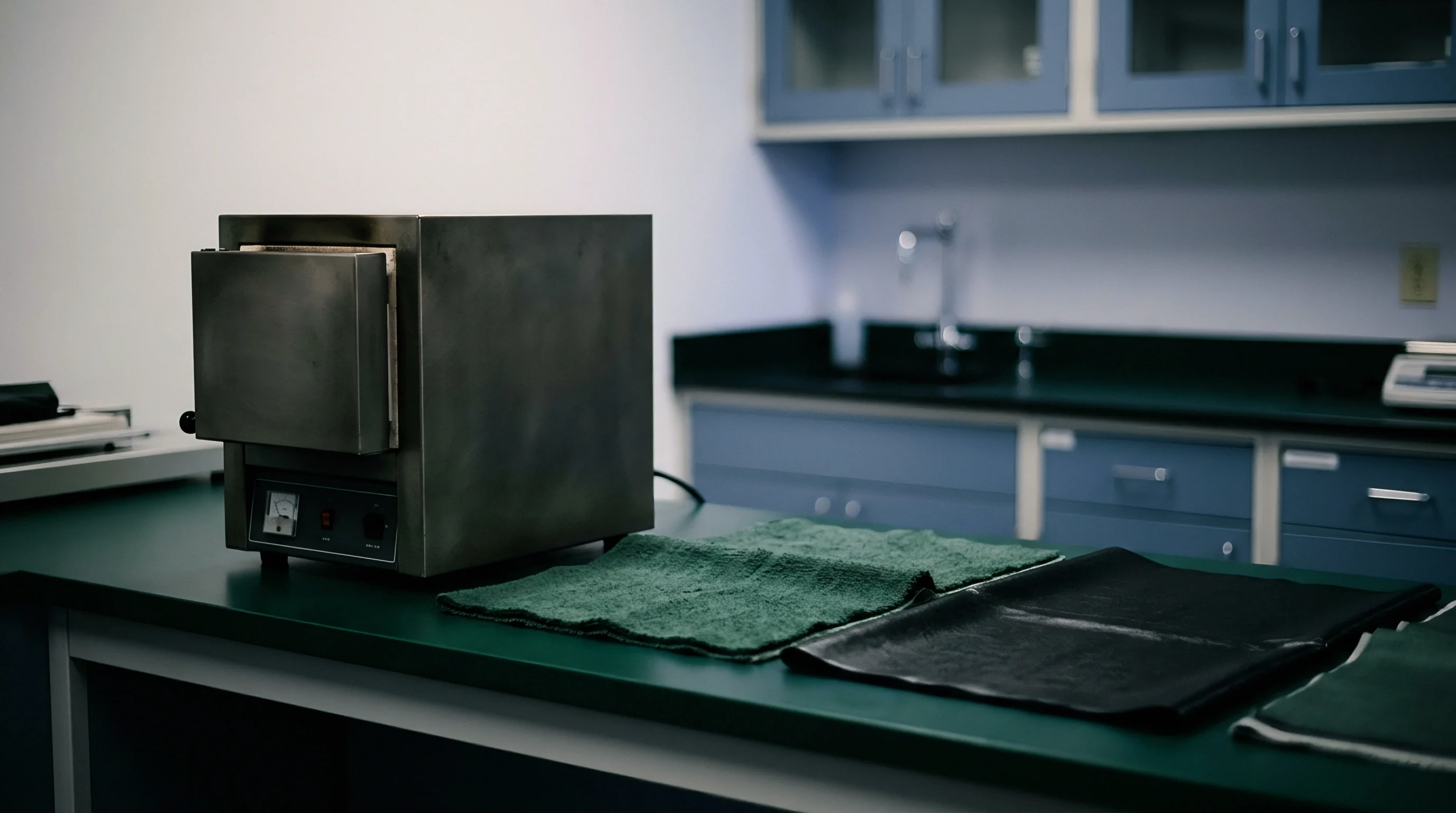
Ventilated drying chambers operating at one hundred five degrees Celsius evaporate volatile moisture until sample weights stabilize. ISO 6348 and ASTM D2495 define exact parameters for specimen preparation, weighing containers, and heating duration. The laboratory cuts specimen swatches from positions free of selvedge distortions and oil stains.
- Cut representative fabric specimens totaling at least fifty grams from three distinct locations across the roll width, excluding five centimeters from edges.
- Place specimens inside pre-weighed airtight tared weighing bottles to record initial as-received mass on an analytical balance reading to zero point zero zero one grams.
- Transfer unstopped weighing bottles into a ventilated drying oven maintained at one hundred five degrees Celsius plus or minus two degrees.
- Dry specimens for two hours, then weigh at twenty-minute intervals until consecutive weighings show less than zero point one percent mass change.
- Cool sealed weighing bottles inside a desiccator containing active silica gel for forty-five minutes before recording final dry mass.
Dry mass forms the base. Removing all water allows direct calculation of absolute dry fiber weight, providing the single stable reference figure for commercial adjustment.
Oven dry testing at one hundred five degrees Celsius requires specimen mass stability within zero point one percent across consecutive weighing intervals.

Moisture Content Relative to Moisture Regain
Commercial trade protocols separate total weight percentage from dry-base mathematical ratios. Moisture content calculates water mass as a percentage of initial wet mass. Moisture regain calculates water mass as a percentage of dry fiber mass.
Confusing these two parameters distorts financial calculations by significant percentages on high-regain fibers like flax and viscose.
Regain scales with relative vapor. If a fabric sample weighs one hundred ten grams as received and yields one hundred grams after oven drying, the moisture mass is ten grams. The moisture content equals ten divided by one hundred ten, which yields nine point zero nine percent.
The moisture regain equals ten divided by one hundred, which yields ten point zero zero percent. Substituting moisture content for moisture regain understates fabric commercial mass and shortchanges the supplier.
Fibers absorb ambient vapor. When non-fibrous materials like starch sizing, paraffin wax, or mechanical spinning oils remain on greige fabric, drying alone fails to reveal true fiber mass. Standard test protocols require solvent extraction prior to oven drying when sizing content exceeds one percent of total fabric mass.
Skipping solvent extraction leaves sizing mass categorized as fiber, artificially raising the landed cost per true fiber kilogram.
Failure to dry specimens to constant weight leaves residual moisture inside dense yarn cores, leading directly to overstated dry mass figures that distort commercial invoice adjustments across entire shipments.

Invoice
Financial settlement of bulk cloth consignments depends on standardized commercial mass calculations rather than raw scale weights. Purchasing agreements specify net delivered mass calculated by applying official regain allowances to verified oven-dry fiber mass. This system ensures buyers pay for consistent fiber mass regardless of relative humidity shifts during transit.

Commercial Mass Calculation Formulae
Official net mass derives from clean dry weight multiplied by one plus the official percentage allowance divided by one hundred. The governing mathematical formula expresses commercial mass as clean oven-dry mass multiplied by one hundred plus standard commercial regain, divided by one hundred. When sizing or finish allowances apply, the equation expands to incorporate those non-fibrous weight corrections directly.
Consider the core equation for clean commercial mass:
Commercial Mass = Oven Dry Mass (100 + Standard Regain %) / 100
When cloth contains removable sizing compounds, clean dry mass replaces total dry mass:
Clean Dry Mass = Total Oven Dry Mass (100 – Sizing Percentage) / 100
Standard sales contracts specify commercial mass adjustment whenever delivered moisture content varies by more than zero point five percent from official regain.

Worked Batch Settlement Calculation
Consider a twenty-thousand-kilogram shipment of blended grey linen and cotton plain weave cloth arriving at a port warehouse. The contract specifies fifty percent flax yarn and fifty percent combed cotton yarn by dry mass. The agreed contract price stands at eight Euros per commercial kilogram.
The fabric as-received gross scale weight registers exactly twenty-thousand kilograms at the dock.
Laboratory testing of representative samples taken under ISO 5084 produces the following parameters:
As-received sample mass: 500.00 grams. Oven-dry sample mass after drying: 442.48 grams. Solvent extraction dry sample mass: 433.63 grams (revealing 2.00% removable sizing content).
Measured moisture mass: 57.52 grams. As-received moisture regain: 57.52 / 442.48 = 13.00%.
Composite standard commercial regain calculation: Flax proportion: 50% with 12.00% regain. Cotton proportion: 50% with 8.50% regain. Composite Standard Regain = (0.50 12.00) + (0.50 8.50) = 6.00 + 4.25 = 10.25%.
| Calculation Stage | Mass Basis (kg) | Effective Regain / Allowance | Invoice Value (€ @ €8.00/kg) | Variance from Dock Weight (€) |
|---|---|---|---|---|
| Raw Dock Receiving Scale | 20,000.00 | 13.00% (Unadjusted Actual) | €160,000.00 | Baseline |
| Oven-Dry Fiber + Size | 17,699.20 | 0.00% (Zero Moisture) | €141,593.60 | -€18,406.40 |
| Clean Oven-Dry Fiber | 17,345.22 | 0.00% (Clean Dry) | €138,761.76 | -€21,238.24 |
| Commercial Mass (Clean Dry + Standard Regain) | 19,123.11 | 10.25% (Composite Standard) | €152,984.88 | -€7,015.12 |
The scale records raw weight. Relying on raw dock scale weight results in an overpayment of seven thousand fifteen Euros and twelve cents. The supplier shipped water weight in excess of standard regain plus two percent uncredited sizing compounds.
Standard regain fixes landed cost.
Contracts incorporating ISO 6348 clause 4.2 allow buyers to issue immediate debit notes for weight shortfalls exceeding zero point five percent of total consignment mass.


Hysteresis
Sorption behavior varies depending on whether a textile sample approaches balance from a wet state or a dry state. A fabric conditioning down from ninety percent ambient relative humidity retains more water than the same fabric conditioning up from thirty percent relative humidity to sixty-five percent relative humidity. This difference creates a measurable gap between absorption and desorption equilibrium curves.
Fabric conditioning down from humid shipping conditions holds up to one point five percent more moisture than fabric conditioning up to standard climate.
Why Does Desorption Lag Ambient Humidity Drops?
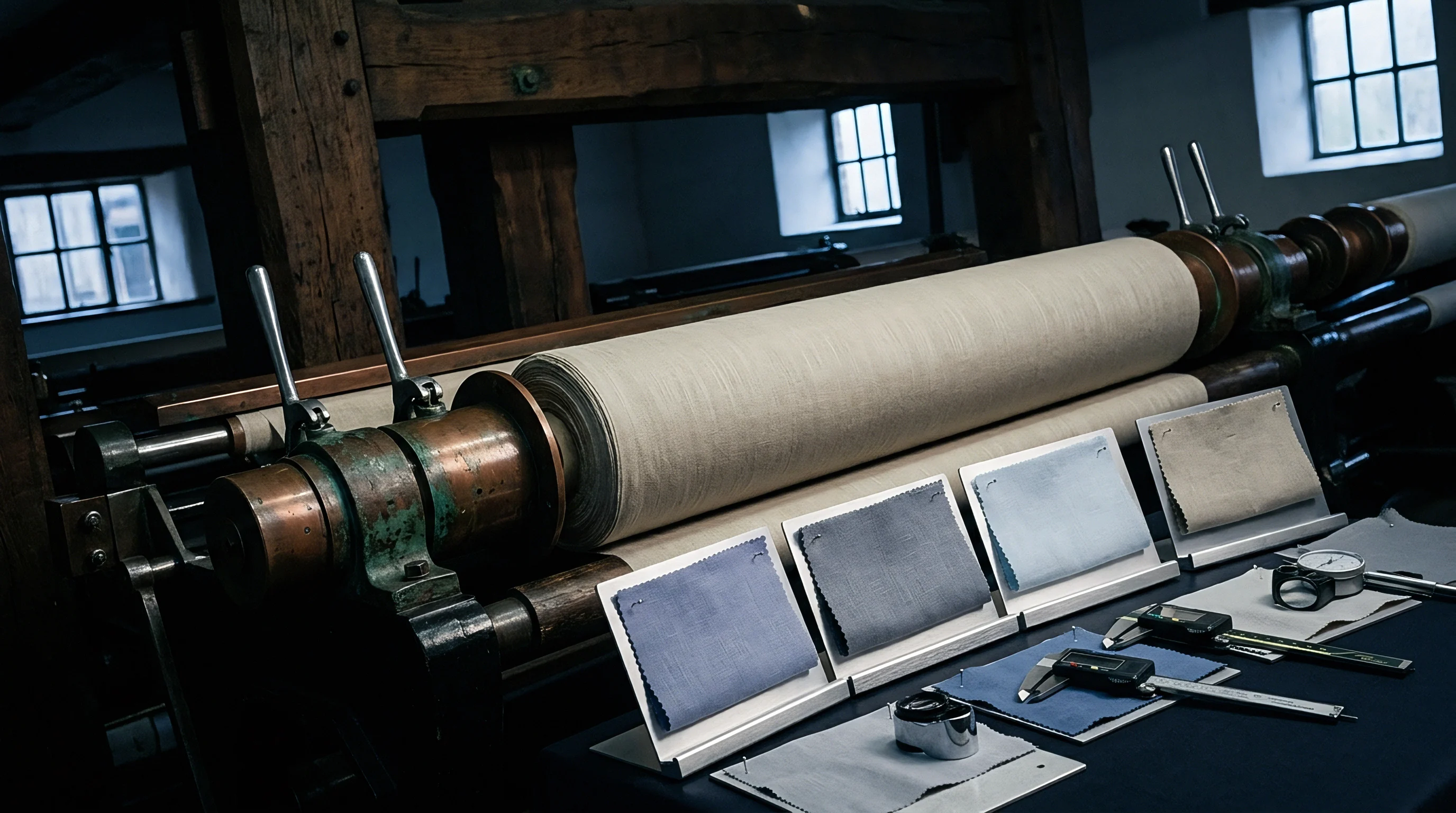
Water molecules bound inside internal pore structures release slowly due to capillary retention forces. The internal hydroxyl binding sites form secondary hydrogen bonds during drying that resist re-hydration during subsequent wetting. Desorption lags absorption curves.
For flax and viscose yarns, the hysteresis gap reaches one point two to one point eight percent moisture regain at standard climate sixty-five percent relative humidity. A roll shipped from high-humidity sea freight holds excess moisture even after forty-eight hours in a conditioning room if ambient conditioning occurs without prior pre-drying. Standards mandate pre-conditioning specimens in low humidity between ten and twenty-five percent relative humidity at fifty degrees Celsius before standard room exposure.

Shed Sampling and Field Meter Calibration
Handheld electrical resistance probes offer rapid moisture estimates across full rolls before laboratory verification occurs. Pin-type probes measure dielectric constant changes across fabric layers. Field meters read accurately only when calibrated against specific fiber blends, yarn counts, and weave structures.
A meter calibrated for pure cotton undercounts moisture content when applied to heavy flax canvas. Dense weave geometries alter contact pressure between probe pins and fiber surfaces, skewing electrical resistance readings. Sizing additions alter dry mass.
Field meters serve as screening tools rather than invoice settlement instruments.
- Consignment Identification Data specifying mill origin, loom lot numbers, roll IDs, and gross dock weights.
- Environmental Test Logs recording temperature and relative humidity continuously throughout the forty-eight-hour conditioning cycle.
- Oven Drying Data Sheets listing initial wet mass, intermediate interval weighings, constant dry mass, and tare weights.
- Solvent Extraction Analysis Results documenting non-fibrous removable sizing and oil content percentage.
- Final Commercial Weight Equations showing clean dry mass calculations, composite regain additions, and net invoice adjustment figures.
Suppliers frequently claim that weight loss during verification reflects over-drying in test ovens rather than excess moisture in delivered rolls.

Arbitration
Contractual claims regarding weight shortfalls demand standardized laboratory referee testing protocols. When buyer scale readings conflict with seller invoice mass, independent accredited laboratories take authority over sampling and testing. Settling commercial disputes requires absolute adherence to standard sampling protocols to ensure results hold under legal scrutiny.

Contractual Tolerance Thresholds
Commercial cloth purchase agreements stipulate allowable weight variance boundaries before financial penalties apply. Standard contracts allow a tolerance of plus or minus one percent on commercial mass calculations to account for normal sampling variation. Scale errors compound across shipments.
Variances inside the tolerance band require no invoice adjustment. When mass shortfalls exceed one percent, commercial adjustment applies to the full calculated difference rather than just the excess over tolerance. Clear contract phrasing prevents disputes regarding whether penalties apply from zero or from the tolerance threshold.
Referee testing settles mass claims. Clean dry weight anchors payment.
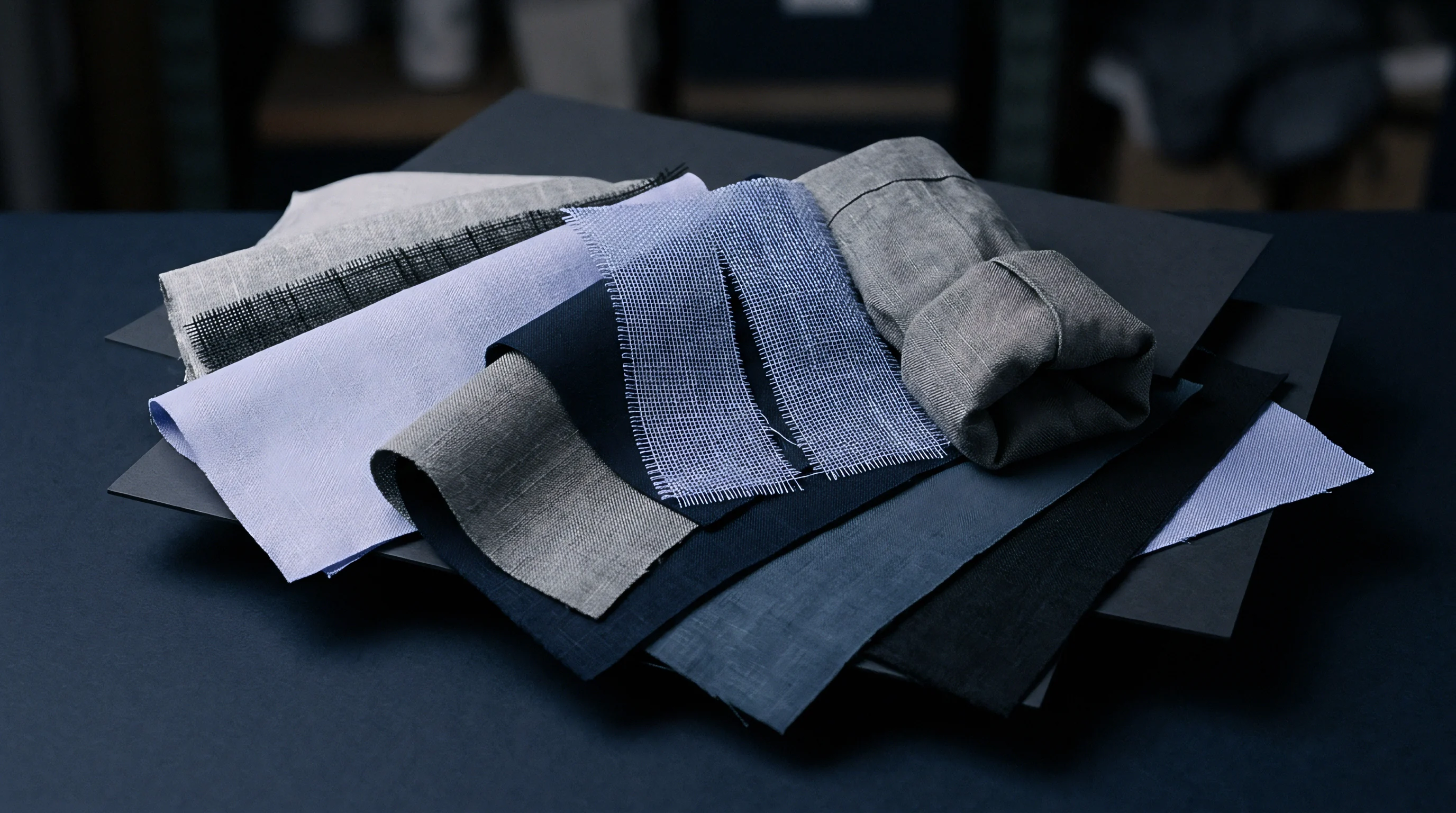
Referee Laboratory Protocols
Independent testing facilities take blind specimen cuts from disputed rolls under strict chain-of-custody rules. ISO 5084 requires selecting ten percent of rolls in a shipment, taking cuts at least one metre from roll ends. Specimens travel to the referee facility in vapor-sealed foil packaging to prevent moisture exchange during transit.
The referee laboratory performs dual testing: oven drying under ISO 6348 and quantitative fiber analysis under ISO 1833. The resulting report establishes definitive clean dry mass, true fiber composition, and adjusted commercial mass. Costs of referee testing fall on the party whose claimed mass deviates furthest from certified referee results.
Commercial purchase orders specify that referee laboratory findings bind both parties as final settlement of fabric mass disputes.