Modelling Dynamic Load Profiles in Broad Jacquard Loom Harnesses
Calibrating spring constants to peripheral cord splay prevents asymmetric heddle wear and maintains shed opening integrity across wide jacquards at high speeds.

Mass
Electronic jacquard shedding mechanisms operating across widths exceeding three metres accelerate thousands of individual mechanical linkages simultaneously. Each individual drop line combines a braided cord, an eyelet, a lingo or return spring, and the moving warp yarn itself. At 550 picks per minute, the sum of these tiny components creates immense inertial resistance against the overhead knife block.
Loom builders specify total machine load ratings based on average open-shed configurations, yet broad installations deviate sharply from standard factory test conditions. When weaving dense linen or heavy furnishings, individual yarn tension during shed formation adds directly to the dead weight of the suspended components. The knife lifting mechanism feels every gram multiplied by the instantaneous acceleration curve of the drive eccentric.
Peak lifting resistance exceeds static assembly weight by 340 percent when shedding linen warps at 600 picks per minute.
Warp tension fluctuates with the interlacing structure. A high-density plain ground demands high lifting energy because half the warp ends raise on every single pick. Float-heavy damask structures distribute this resistance irregularly, creating asymmetric mechanical stress across the machine frame.
The suspended array comprises several distinct weight components:
- Upper harness cords transmit vertical stroke directly from the overhead selection hooks down to the distribution board.
- Braided lower suspensions pass through the perforated comber board and endure continuous flexural fatigue against the guide holes.
- Metallic mail eyelets support the warp yarn directly while contributing concentrated lumped weight to the center of the vertical linkage.
- Helical return springs maintain line tension during the downward stroke, replacing traditional lead weights on modern high-speed machinery.
Selecting oversized return springs creates severe parasitic resistance during the upward knife stroke. When spring rates exceed the minimum retraction threshold, the overhead drive motor draws excessive current and generates destructive thermal buildup in the oil sumps while cords stretch under peak accelerations. Undersized springs cause floating healds and catastrophic warp end tangles during shed closure.
Shedding line components that carry uncalculated dead weight stretch past their elastic limit within three months of continuous operation, warping the shed geometry and triggering persistent mispicks across the entire width.
Stroke
Vertical travel of the knife carriage establishes the clear clearance required for rapier or air-jet weft insertion. High-speed broad looms limit this vertical displacement to between 50 and 115 millimetres to control peak inertial forces. Each millimetre added to the vertical displacement increases both velocity and acceleration exponentially at fixed machine speeds.
Kinematic drive geometries utilize either complementary conjugate cams or electronic servo drives to govern knife acceleration. A pure sinusoidal acceleration profile yields smooth motion inversion at the expense of higher intermediate velocity. Cycloidal and modified trapezoidal profiles compress peak acceleration into specific cycle intervals, giving warp yarns longer dwell time at the open shed position while increasing instantaneous shock on the suspension cords.
| Loom Speed | Lift Displacement | Max Velocity | Peak Acceleration | Calculated Cord Tension |
|---|---|---|---|---|
| 450 rpm | 65 mm | 1.53 m/s | 72.2 m/s² | 1.85 N |
| 450 rpm | 95 mm | 2.24 m/s | 105.5 m/s² | 2.48 N |
| 550 rpm | 65 mm | 1.87 m/s | 107.8 m/s² | 2.52 N |
| 550 rpm | 95 mm | 2.73 m/s | 157.6 m/s² | 3.45 N |
| 650 rpm | 65 mm | 2.21 m/s | 150.5 m/s² | 3.31 N |
| 650 rpm | 95 mm | 3.23 m/s | 220.0 m/s² | 4.62 N |
Downwards motion depends entirely on spring contraction rather than knife drive engagement. When the downward acceleration of the knife carriage outpaces the natural contraction rate of the spring, the cord momentarily loses tension. Heavier springs counter this by raising drive torque, but any slack cords slap against adjacent elements, causing erratic yarn placement and accelerating surface abrasion.
Longer dwell times produce stable weft insertion windows while increasing instantaneous shock on every lower suspension point.
Spring tension also counteracts the natural deflection of the warp sheet. A dense warp shed demands sufficient spring resistance to pull the downward warp ends through the taut horizontal web without hesitation. The mechanical behavior shifts across the weaving width as warp angles diverge from the machine centerline toward the selvages.
- Knife stroke amplitude determines the ultimate opening height and dictates the absolute velocity profile of every attached linkage.
- Elastic cord elongation absorbs a proportion of the programmed stroke, reducing the realized shed height at the mail eyelet.
- Yarn sheet resistance exerts counter-acting lateral and vertical forces as warp ends shear past one another during shed inversion.
- Dwell angle duration holds the shed stationary during weft insertion, concentrating flexural strain on cord segments resting inside comber board perforations.
Because viscoelastic cords deform under cyclic shock loads, the relationship between knife stroke amplitude and net mail displacement remains non-linear throughout high-speed cycles, leaving uneven sheds visible in the greige cloth.
Shed height set past the minimum clearance required for the weft insertion carrier guarantees premature cord fatigue.
Splay
Angular divergence between the centralized overhead jacquard head and the expansive comber board produces severe lateral friction in broad installations. On a 380-centimetre machine, the overhead knife block spans barely one metre, forcing peripheral cords to travel outward at angles reaching thirty-five degrees from vertical.
Frictional resistance through comber board perforations follows the capstan equation. As the cord exits the guide plate at an acute angle, contact pressure against the perforation edge multiplies. This normal force transforms simple tensile loads into intense localized friction, generating surface heat and scrubbing protective coatings off braided aramid or polyester cords until overheated eyelets cut continuous filaments.
| Nominal Width | Peripheral Splay | Normal Wall Force | Effective Friction Factor | Stroke Loss at Mail |
|---|---|---|---|---|
| 190 cm | 14.2 deg | 0.38 N | 1.08 | 2.1 mm |
| 280 cm | 22.6 deg | 0.72 N | 1.21 | 4.6 mm |
| 340 cm | 28.5 deg | 0.98 N | 1.37 | 7.2 mm |
| 380 cm | 34.1 deg | 1.24 N | 1.54 | 10.8 mm |
| Values calculated with 0.12 base friction coefficient and 3.0 N nominal cord tension at 550 rpm. | ||||
Repeated cycling against synthetic or vulcanized fiber comber boards cuts grooves into guide perforations while polyurethane jackets crack. Once a groove forms, the cord catches on motion reversal, retarding vertical descent, abrading aramid cores, and producing irregular warp sheds at the fabric margins.
Peripheral suspension cords on broad looms lose up to fifteen percent of their effective vertical stroke to lateral friction.
Unequal cord angles across the width create non-uniform shedding heights. Center cords run vertically, transferring knife motion directly to mail eyelets with minimal friction loss. Edge cords lose a substantial fraction of their displacement to elastic stretching along their extended, inclined path.
The resulting greige cloth exhibits tighter interlacing at the center and looser structure near the selvages unless compensated by differential comber board drilling or tailored spring rates.
- Capstan friction accumulation increases line drag exponentially as deflection angles widen toward outer machine frames.
- Perforation edge wear erodes guide holes into elliptical slits that pinch cord jackets during lateral vibrations.
- Asymmetric heating zones develop across outer comber board sections, altering synthetic cord modulus during continuous operating shifts.
- Differential line elongation causes outer warp ends to open late and close early relative to the center shed.
Edge breakage on broad installations stems as much from flawed comber geometry as from aggressive loom speed.

Impulse
Transient shock loads rock the entire mechanical superstructure during pattern changes where thousands of ends invert position simultaneously. When a dense damask pattern transitions from ground weave to satin figure, the sudden reallocation of lifting loads sends acoustic shock waves reverberating down the suspension lines as the springs attempt to damp cyclic rebound.
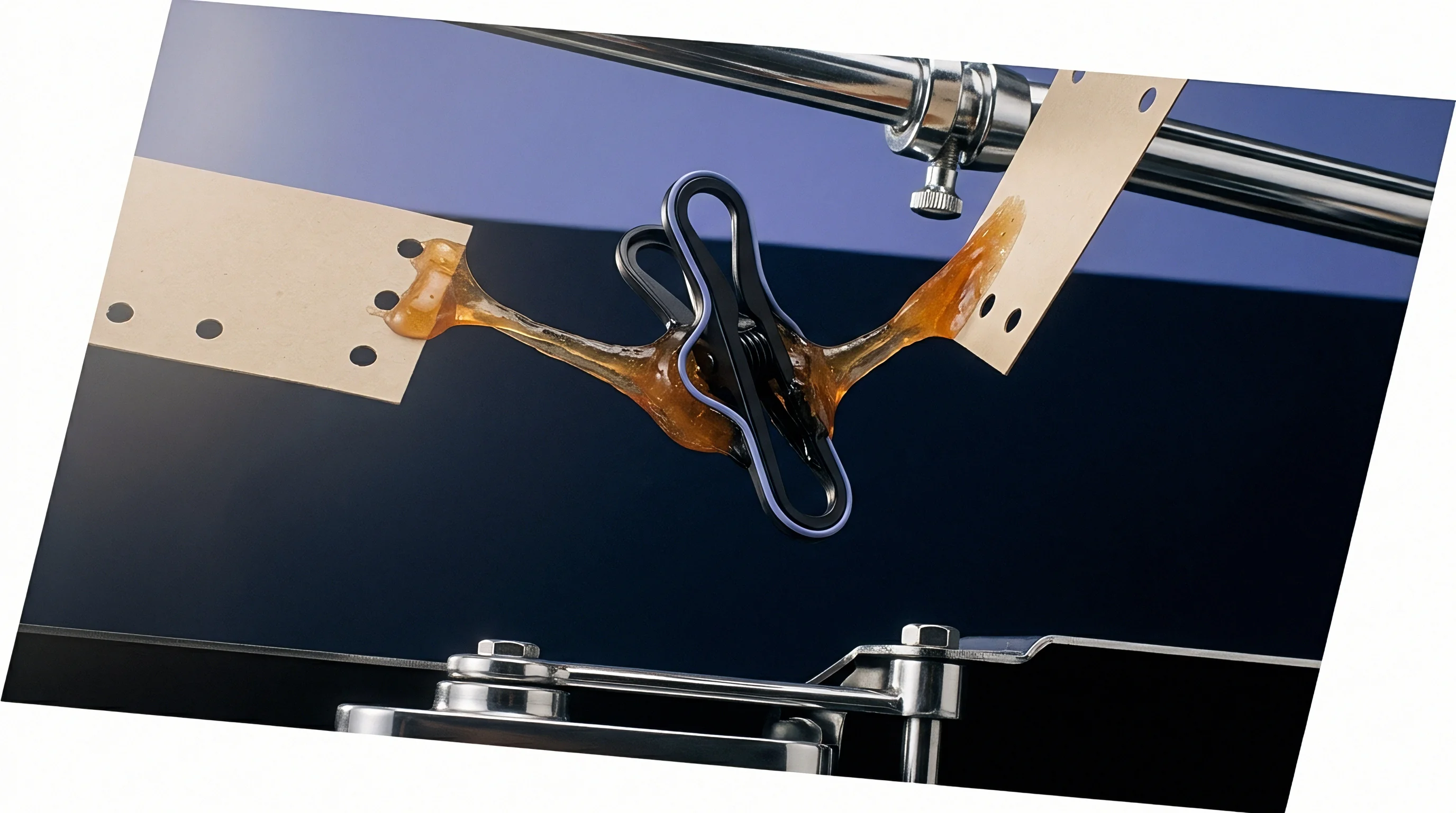
Resonant frequencies within the cord-spring mechanical system dictate the operational speed ceiling. Each cord functions as a distributed spring-mass damper characterized by natural harmonic nodes. When loom running speed excites a harmonic frequency, standing waves develop along the cord length.
The cord whips horizontally, causing adjacent lines to entangle and sawing through braided jackets within hours.

Will High Shedding Accelerations Sever Peripheral Cords?
During rapid shed inversion, peak downward acceleration can exceed gravitational acceleration and spring return velocity combined, dropping shed height as lines go momentarily slack. When the descending knife carriage reaches its stroke limit and arrests, the trailing assembly snaps taut against the bottom dead-center position with violent impact force.
A three-millimetre standing wave along a suspension cord increases localized bending stresses beyond the yield point of standard braided polyester.
Lumped-parameter mathematical representations treat the cord assembly as a series of discrete masses connected by linear springs and viscous dampers. Damping constants derived from static bench tests underestimate real-world dissipation because operating temperatures within dense cord bundles raise internal polymer damping, even while misaligned cords continue to wear comber perforations.
The precise point where chaotic line whipping transitions into predictable harmonic standing waves under varying mill temperature and humidity conditions remains an unsettled question across modern weaving sheds.
Fatigue
Repeated stress cycles degrade synthetic cord tensile strength through internal molecular slip and progressive fiber abrasion. A broad loom operating at 600 picks per minute subjects every individual linkage to 36,000 tension cycles per operating hour. Over a single production month, cords withstand more than twenty million violent cyclic extensions.
Aramid core filaments display exceptional initial tensile modulus, resisting elongation under heavy loads, yet aramid exhibits poor flexural endurance and fractures rapidly under repeated small-radius bending. High-tenacity polyester braids provide superior flex life but suffer from continuous viscoelastic creep, steadily lowering the mail eyelet position over thousands of operating hours and forcing tighter replacement schedules.
| Running Speed | Cord Service Life | Annual Replacement Downtime | Re-Rigging Labor Cost | Landed Metre Surcharge |
|---|---|---|---|---|
| 450 rpm | 18,000 hours | 72 hours | 4,200 USD | 0.04 USD |
| 550 rpm | 11,000 hours | 120 hours | 7,000 USD | 0.09 USD |
| 650 rpm | 6,200 hours | 216 hours | 12,600 USD | 0.21 USD |
When creep alters eyelet height by as little as three millimetres, passing weft insertion rapiers strike misaligned warp yarns, creating broken ends and false loom stops. Re-leveling a 15,360-end broad comber arrangement demands dozens of non-productive technician hours, directly degrading mill efficiency ratings and inflating weaving costs per linear metre.
Standard purchase contracts stipulating harness component replacement intervals must include explicit speed and width operational limits, or warranty claims for premature cord failure will be denied outright by machinery distributors.