Divergence Angle
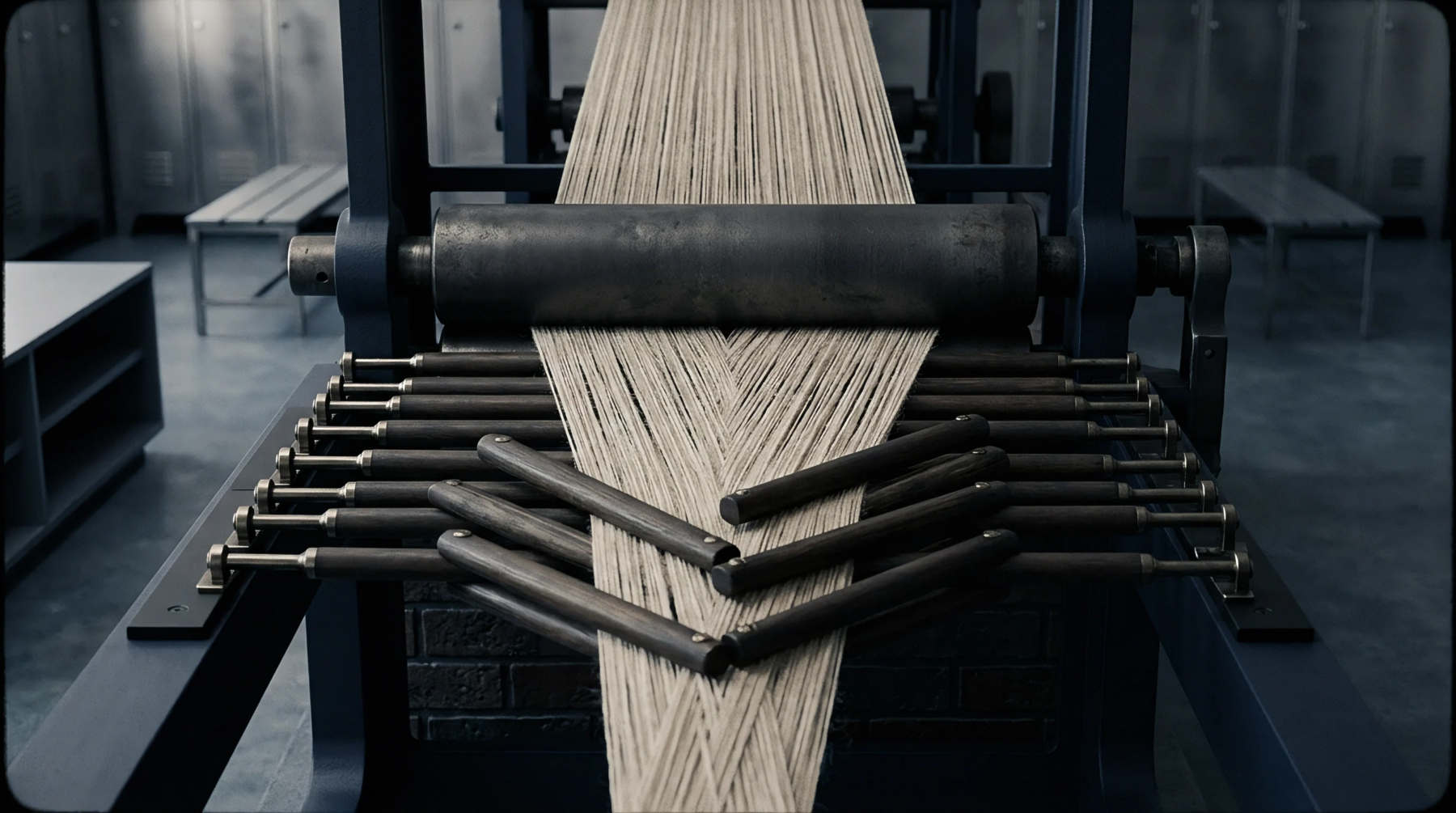
Angular deviation of harness cords or warp yarns as they pass from the guide board to the loom eyelets affects the lateral tension distribution across the fabric width. In jacquard installations for flax yarn processing, this splay angle determines the friction experienced by the cords during shed formation. If the angle is too wide, the cords rub heavily against the guide holes, increasing mechanical resistance.
This friction can lead to premature cord failure and uneven shed heights. Engineers measure this angle during the setup of the jacquard harness to ensure it does not exceed the recommended limits.
Friction Effect
Increased friction due to a high angle of divergence raises the temperature of the harness guide board. This heat buildup can melt synthetic harness cords or cause them to bind in the guides. The resulting uneven yarn movement creates tension anomalies in the warp sheet.
These anomalies lead to tension bands and other cosmetic defects in the finished linen fabric.
Structural Layout
Designing the loom layout to minimize the lateral spread of the harness cords reduces the severity of the divergence. This is achieved by increasing the height of the jacquard machine above the comber board. While this requires a taller mill ceiling, it significantly reduces the friction on the cords.
This layout adjustment is a standard practice in modern high-speed linen mills.