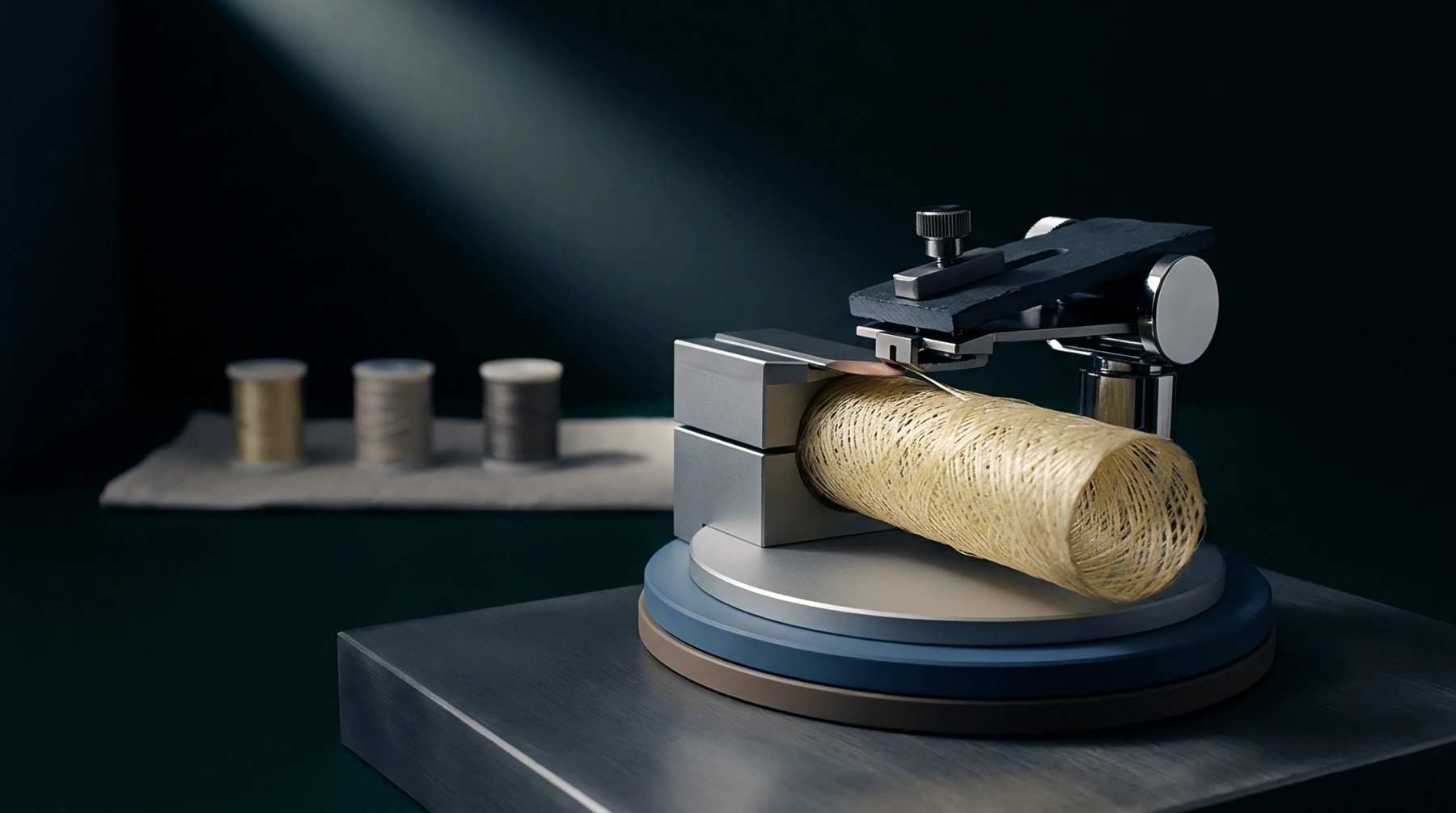
Quality Objective
Physical consolidation techniques applied to spun yarns lay down protruding fibre ends and embed loose fibrils into the yarn core structure. Warp preparation relies heavily on yarn hairiness reduction to prevent fuzz entanglement, end clinging and yarn breakdown during loom shed changes. Flax yarns, particularly those generated via dry spinning or carded tow systems, present prominent surface hairs due to stiff, coarse elementary fibres.
Suppressing these exterior fibres is mandatory to allow clean shed formation across dense reed layouts.
Mechanical Smoothing
Slashing zone configurations combine chemical binding and mechanical compression to smooth the bast yarn periphery. Size box squeeze rollers, adjusted to precise nip pressures between fifteen and twenty kilonewtons, flatten projecting fibre tails into the wet adhesive film. Adhesive formulations containing film-forming acrylic polymers and modified potato starches bond these hairs securely against the yarn stem before entering drying cylinders.
Achieving effective yarn hairiness reduction also requires separating wet yarn ends using lease rods immediately after the size box, preventing neighbouring yarns from bonding together into hairy bridges. Cold leasing after drying splits any remaining adhesive bonds without peeling hairs away from yarn bodies. In addition, yarn hairiness reduction depends on smooth ceramic eyelets, polished lease bars and controlled warp tension during beaming, because coarse guide surfaces strip dry sizing films and re-elevate fibres.
Inspection Metric
Optical hairiness testers evaluate warp yarn surfaces before delivery to the weaving room floor. Quality managers check the Zweigle hairiness index or Uster hairiness value, requiring a substantial decrease in hairs exceeding three millimetres on sized samples. Test certificates attach these hairiness counts to outgoing beam documentation to certify compliance with buyer specifications.