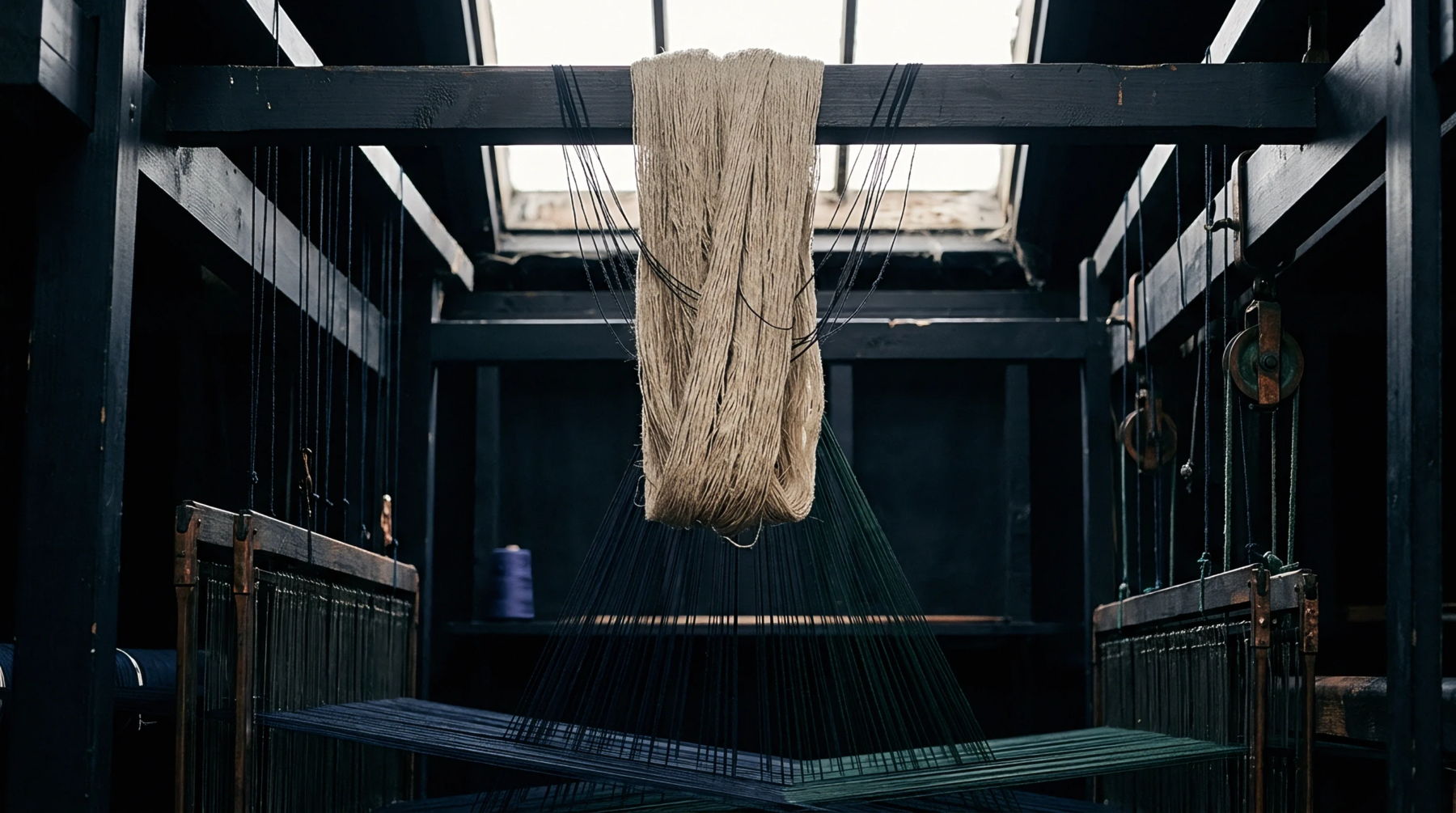
Stress Limit
Linen warp yarns must endure thousands of cyclical stretching and abrasion cycles during the shed opening on the loom. The warp fatigue limit represents the maximum level of repeated mechanical stress that a warp yarn can withstand before breaking. If the yarn is subjected to tension levels beyond this threshold, it will snap during weaving and cause the loom to stop.
The mill’s testing laboratory measures this threshold on specialized cyclic tensile testers before winding the warp beam.
Loom Performance
Flax yarns have very low elasticity, which makes them highly susceptible to cumulative damage under cyclical tension compared to synthetic fibres. Sizing agents such as starch are applied to the warp threads to increase their resistance to abrasion and extend their durability. When the yarn has a low threshold of fatigue, the loom must run at slower speeds to avoid frequent yarn breaks, which reduces the overall production efficiency of the weaving hall.
Inspectors record the frequency of warp breaks per ten thousand picks in the Warp Tension Test Log to track the quality of the sizing process. If the break rate is too high, the sizing formula is adjusted to add more protective polymer to the yarn surface. This adjustment is necessary to keep the loom operating at its optimal speed.
Acceptability Evaluation
Export buyers require that the warp yarn quality meets or exceeds the baseline threshold established for high-speed automated weaving. If the yarn tests show a fatigue resistance below the buyer’s acceptance criteria, the lot is downgraded to handloom use. The final yarn quality certificate includes the cyclic fatigue limit to demonstrate the yarn’s suitability for high-speed industrial looms.
This certificate is crucial for verifying compliance with international performance standards.