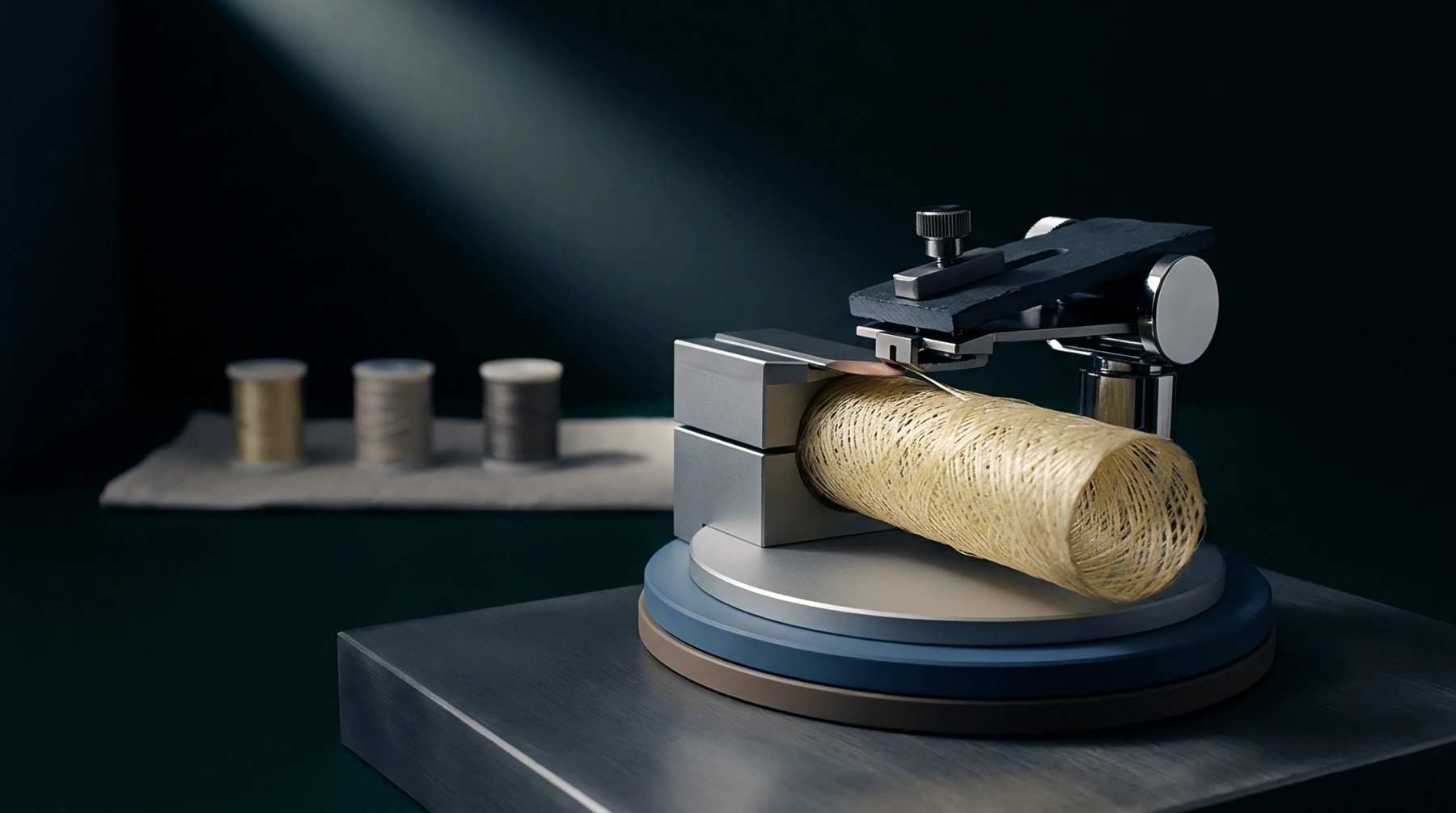
Loom Mechanism
Cylindrical gripping assemblies fitted with angled brass pins along fabric selvages maintain lateral tension to prevent cloth necking during loom beat-up operations. Loom technicians select the appropriate temple ring configuration based on fabric weight and the mechanical resistance of stiff flax fill threads. High filling yarn tensions create severe draw-in forces that pull selvage ends inward toward the reed center.
Loom setup charts specify pin count and ring angle for heavy linen plain structures.
Edge Control
Pin angles within the assembly grip fabric edges securely while allowing smooth forward cloth motion toward the take-up roll. An aggressive temple ring configuration prevents warp end breakage near selvages by counteracting heavy filling insertion tension. Fine linen fabrics require rubberized or fine-pin rings to prevent pin hole punctures along finished cloth borders.
Damaged or missing pins cause uneven edge tension, leading to bowed fill threads and selvage distortion. Operators inspect temple assemblies daily to remove fiber lint accumulation that impairs pin engagement. Proper edge control ensures stable fabric width across long production runs.
Structural Stability
Incorrect temple setup results in pin marks that permanently mar high-grade decorative linen fabrics. Adjusting temple ring configuration minimizes reed wear by holding warp ends parallel through the shed opening. Production documentation records temple ring specifications alongside density metrics for repeat orders.
Standardized loom settings ensure uniform fabric quality across multiple machines.