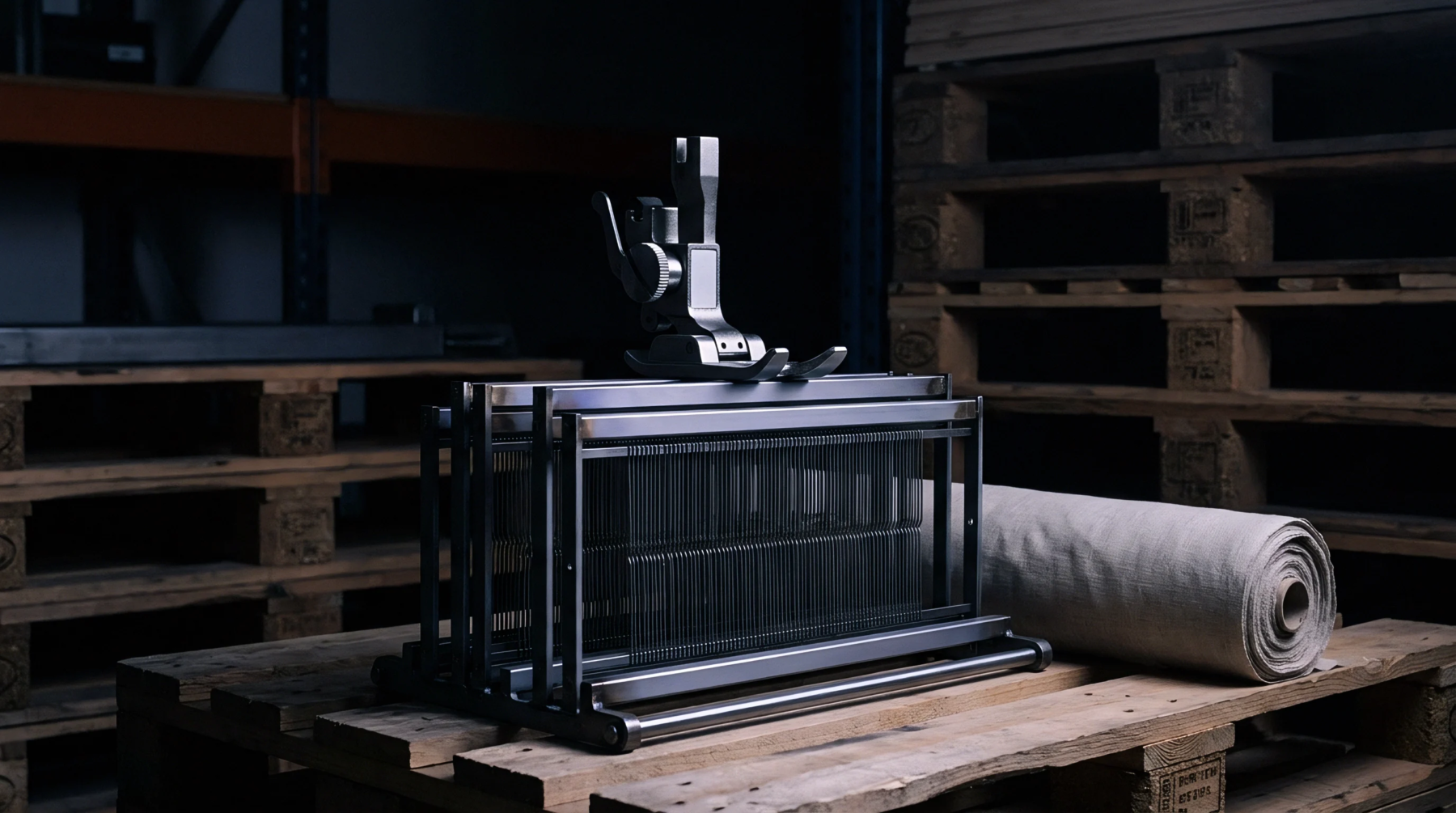
Pattern Unit
Fundamental pattern design units represent the minimum number of warp ends and weft picks required to form a complete interlacing system. Grid matrices mapping thread float intersections define the precise geometric boundaries of the fabric structure. A small structural repeat characterizes simple plain fabrics and twills, whereas complex damask linen structures demand large grids spanning hundreds of ends.
Pattern design software computes shedding sequences based on these core unit blocks. Correct pattern calculations ensure uniform fabric texture and balanced internal yarn tension across the cloth web.
Loom Setup
Drafting plans assign individual warp ends to specific harness frames based on pattern grid dimensions. Harness counts on rapier looms limit the maximum warp cycle size reachable without jacquard shedding heads. Cam mechanisms control frame movements for small repeating patterns.
Fabric Geometry
Dimensions of pattern units determine physical fabric properties including tear strength and dimensional stability under laundering. Small repeating units yield tight, rigid linen fabrics suitable for industrial utility goods and heavy upholstery materials. Large repeating units create flexible structures with longer float spans that enhance fabric drape and soft hand feel.
Weaving technicians verify repeat boundaries on off-loom greige inspection tables to prevent pattern distortion. Consistent grid repetition maintains structural uniformity throughout extended production runs.