Sequential Layout
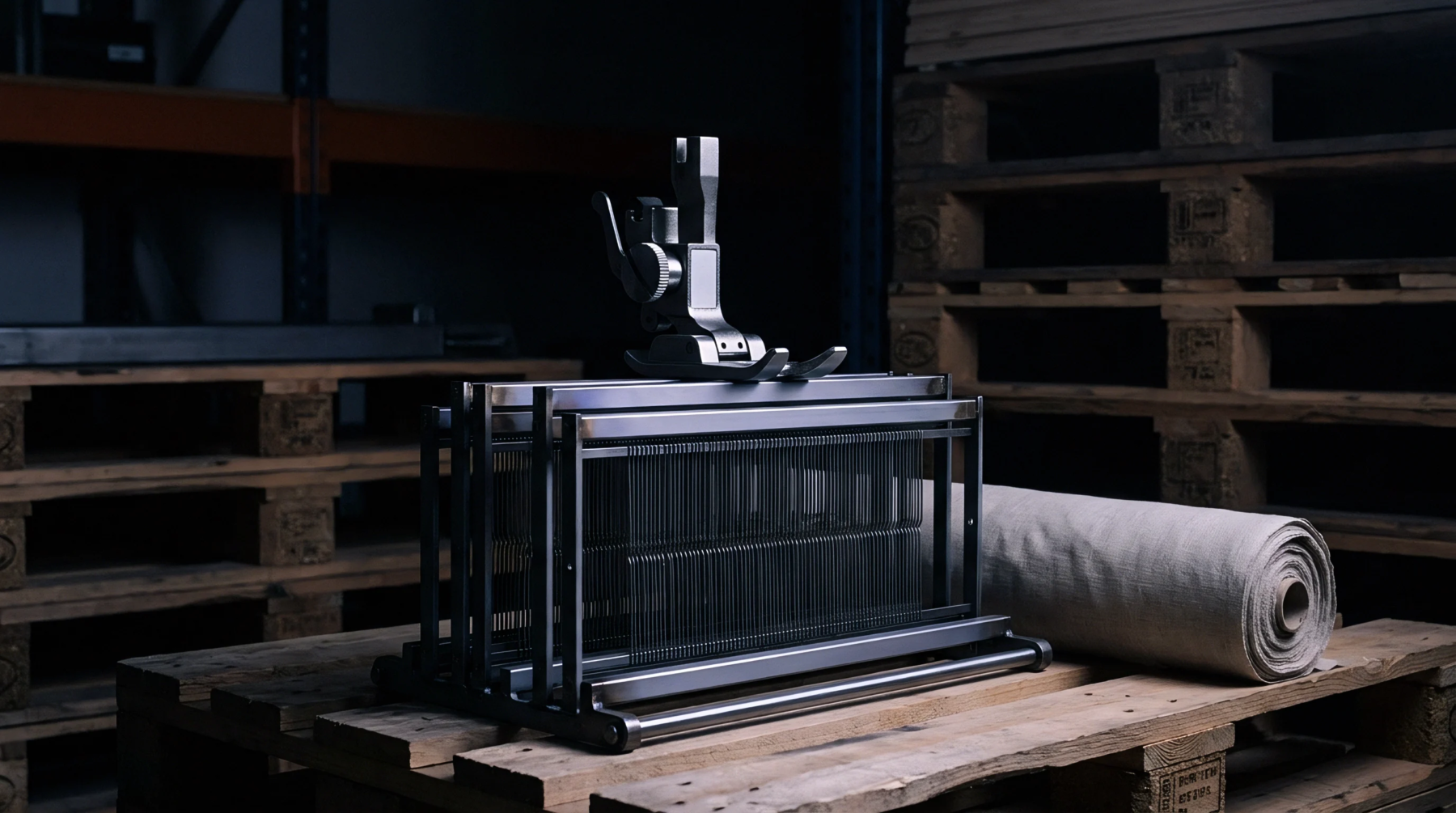
Direct, sequential connection of jacquard hooks to harness cords from one side of the comber board to the other allows for asymmetric patterns across the entire fabric width. This loom arrangement, known as the straight tie, links each hook to a single cord to provide independent control over every warp thread in the repeat. Technicians configure this layout for high-end linen where complex, non-repeating designs are required.
Pattern Routing
Establishing the connection involves running the cords in a direct one-to-one sequence across the warp sheet. The straight tie enables the weaver to execute intricate, irregular patterns because there is no mirroring or forced symmetry in the layout. While this setup demands a larger number of jacquard hooks, it prevents the design limitations associated with other harness arrangements.
To handle the high tension of flax warp yarns, each cord must be securely knotted and aligned through the comber board to avoid thread crossing or friction.
Production Cost
Setting up this harness configuration requires more time and greater technical precision than simpler symmetric ties. If the straight tie is not executed with uniform tension across all cords, the linen fabric will display uneven density and irregular pick spacing. Weaving mills register this configuration on the machine setup sheet for traceability and future replication.