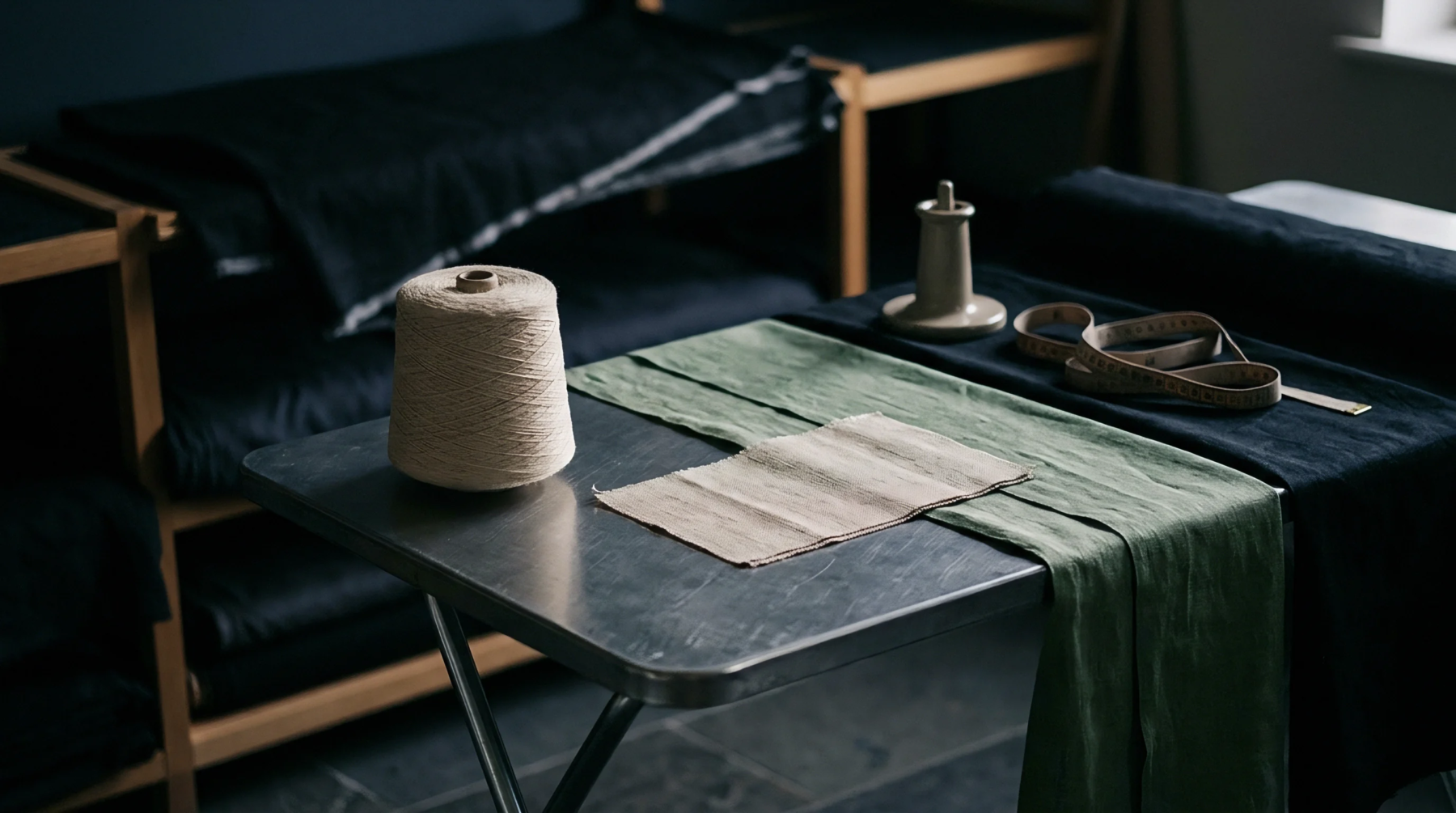
Coil Production
The process of wrapping a continuous strand of yarn onto a reel of specific circumference produces a loose coil suitable for relaxed wet processing or testing. In the production of high-quality linen, skein winding is often used before bleached or dyed batches are prepared. This method allows the yarn to contract and relax, which is essential for developing the full bulk and hand of the flax fibers.
The resulting skeins are easily penetrated by processing liquors because they are not compressed like yarn on a cone.
Processing Function
Automated tensioners control the spacing of the yarn turns to build a structurally stable skein that will not tangle during processing. A crisscross pattern is used to keep the coil open and allow the dye or bleach to circulate freely through the bundle. In linen mills, this step is particularly important for achieving even colors on yarn destined for fine table linens or apparel.
After the wet treatments, the skeins are dried under low tension to preserve the natural strength and sheen of the fiber.
Quality Verification
Skeins of precise dimensions are also wound to measure yarn count and tensile strength in the laboratory. The weight of a standard length of yarn from the skein determines the tex or lea value. Consistent winding conditions are necessary to ensure that the tension does not stretch the yarn and distort the test results.