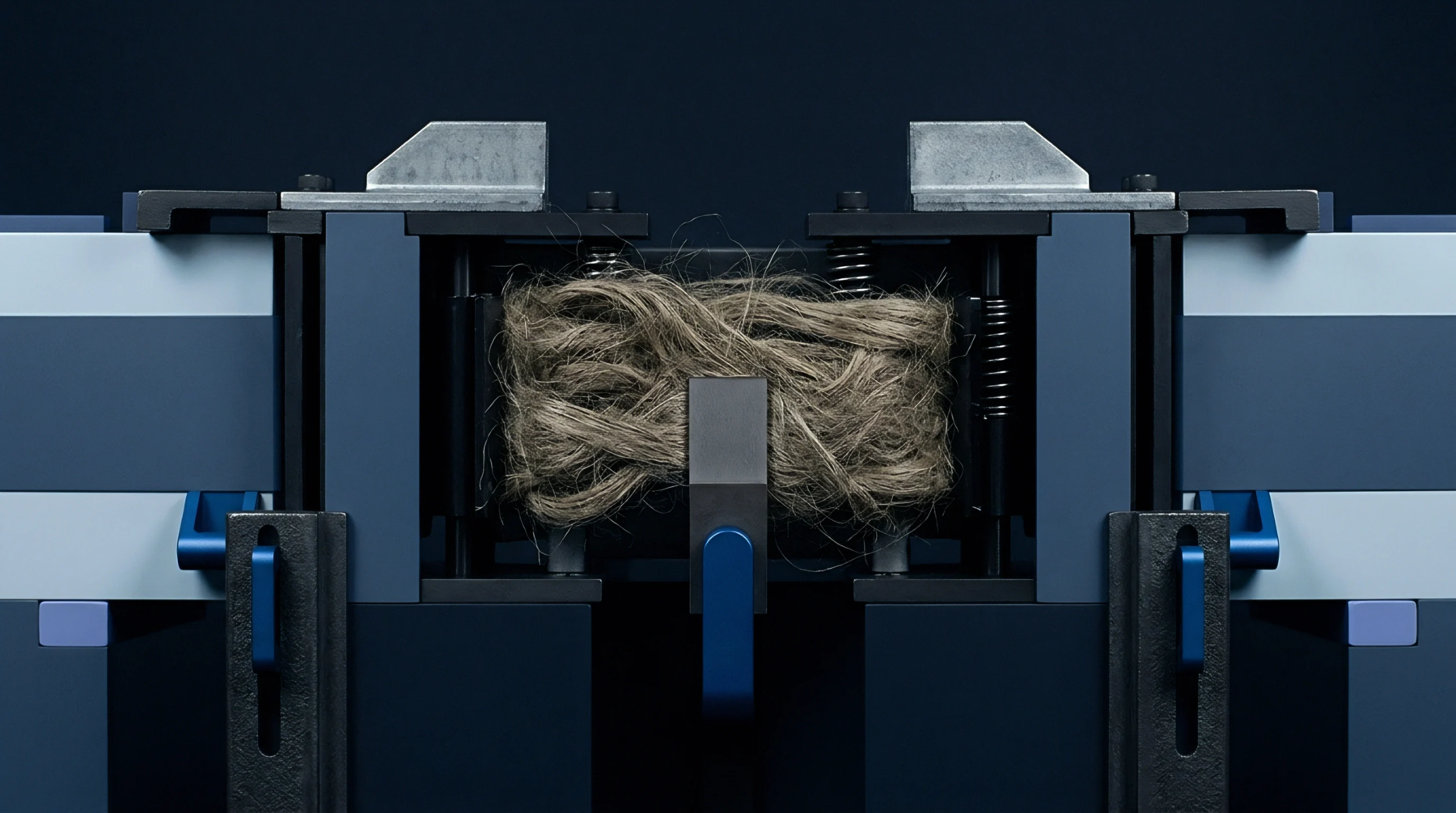
Tensile Verification
A length measurement procedure determines the linear density and break strength of spun flax yarn by reeling a fixed amount onto a frame. A skein test provides the data points necessary to verify if the yarn lot meets the count specifications established during the spinning process. Operators wrap the yarn around a standard circumference reel until the machine reaches a predefined number of revolutions, producing a loop known as a skein.
Weighing this loop on a precision balance allows for the calculation of the yarn count, while applying force until rupture provides the breaking load value. This process yields quantitative proof of product consistency across the batch.
Reeling Protocol
Technical staff at the spinning mill perform this evaluation to satisfy internal quality management requirements before moving finished yarn to the weaving stage. The protocol mandates that the yarn remains under a specific tension during the winding process to prevent stretching, which would distort the final measurement. Each skein undergoes conditioning in a climate-controlled room to reach moisture equilibrium before the technician records the mass.
Dry mass measurements ensure that fluctuating humidity levels do not create artificial variations in the results.
Compliance Benchmarking
Buyers of linen fabric and yarns request this verification to enforce contractual obligations regarding the physical properties of the delivered goods. A variance between the laboratory findings and the mill specifications serves as grounds for a lot rejection or a price adjustment if the yarn fails the strength requirements. Differences in fibre quality or spinning machine settings result in disparate tensile values, making the documentation produced by this check a primary record for supply chain traceability.
Consistent deviation from the target metric indicates a failure in the mechanical adjustment of the spinning frames.