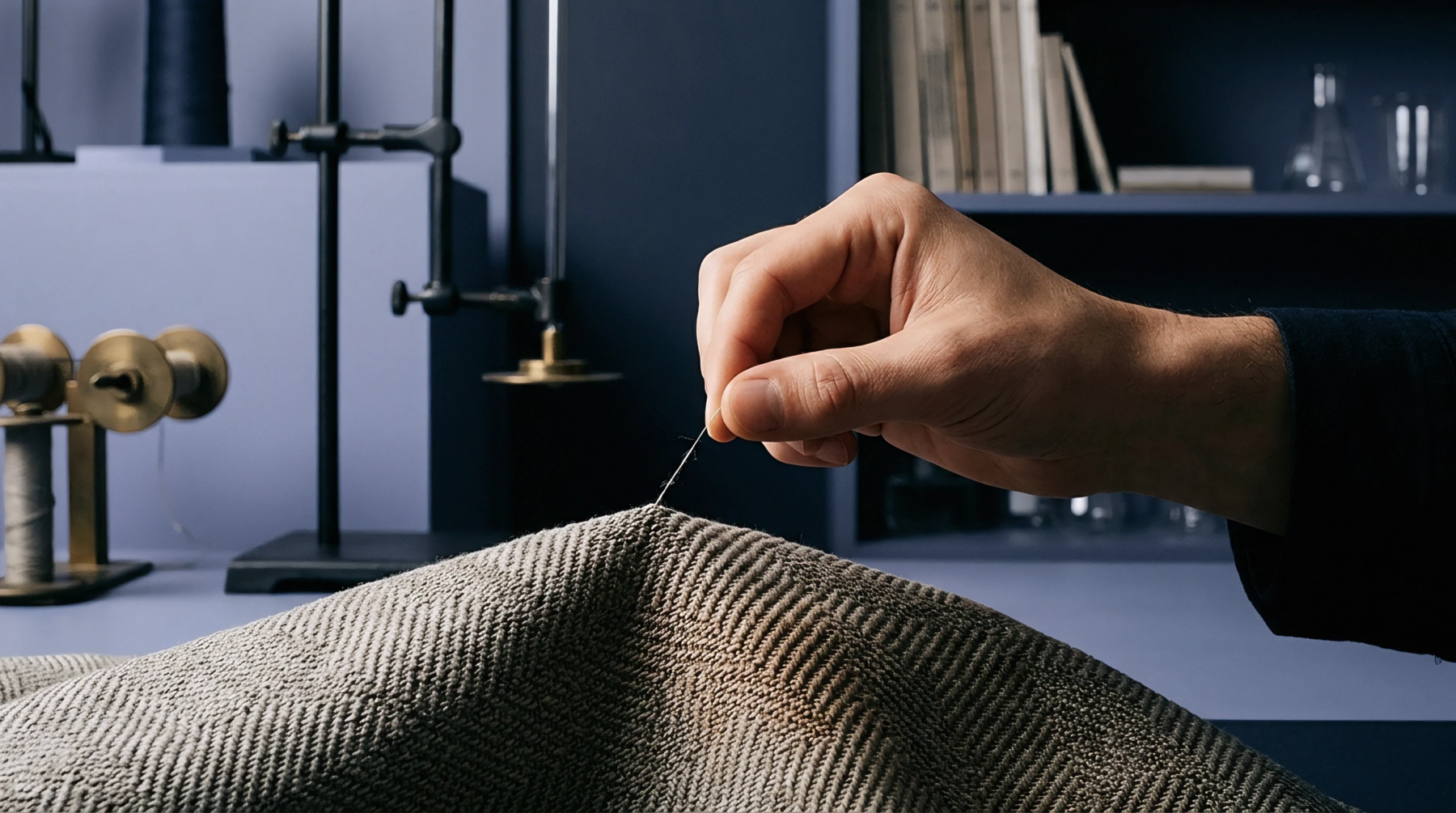
Yarn Imperfection
Unwanted accumulations of woody stem fragments in spun flax yarn create thick, irregular patches that disrupt the uniform texture of the textile. These shive slubs occur when the scutching and carding processes fail to remove all the core tissue from the flax fibre. The resulting yarn has lower tensile strength and is prone to breaking during the high-tension weaving process.
Spinning mills must monitor yarn quality to minimize these defects before the yarn is sent to the weaving room.
Mechanical Mitigation
Advanced yarn clearing devices on automatic winding machines help to detect and remove thick spots during processing. When the sensor detects shive slubs, the machine cuts the yarn, removes the defective segment, and splices the ends back together. This electronic yarn clearing is the primary defense against weaving defects and ensures a high-grade final fabric.
However, excessive splicing can reduce the overall strength of the yarn, so mills strive to improve the pre-spinning cleaning of the flax. This involves optimizing the settings of the carding and combing machines to remove as much woody debris as possible before the spinning stage. By doing so, they reduce the workload on the winders and maintain a higher yarn productivity.
Fabric Grading
The presence of woody particles in the finished woven cloth reduces its aesthetic value and commercial grade. While some buyers accept a small number of shive slubs as a natural characteristic of linen, high-end fashion brands require a smooth, fault-free surface. If the fabric contains too many of these slubs, it is downgraded to a lower quality class, resulting in a lower price for the weaving mill.
The control of these defects is therefore a key factor in the profitability of linen manufacturers.