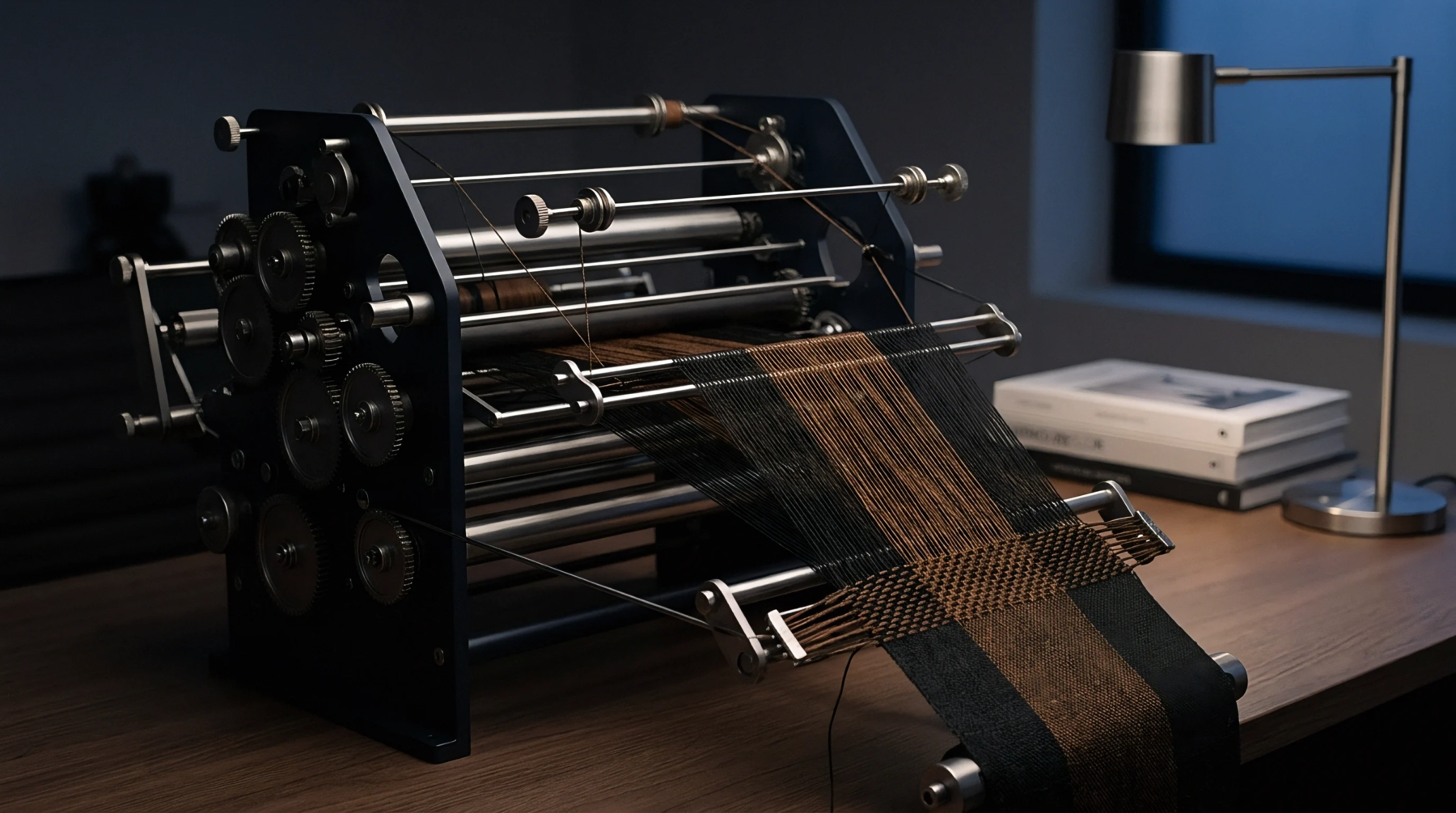
Mill Inspection
Shaoxing textile mills operate inside a regional processing network where raw flax fibre arrives from northern agricultural provinces for wet spinning into fine linen yarn. Operating protocols demand continuous monitoring of relative humidity inside the production floor during drafting and twisting phases to prevent filament breakage. Laboratory technicians record breaking tenacity and evenness metrics on daily quality control dockets before authorizing yarn transfer to loom sheds for warp preparation.
Weaving Parameter
Loom speed settings and warp tension calibrations determine whether woven grey fabric meets the density specification stipulated in commercial contracts. Production supervisors adjust heald frame motion and reed spacing to accommodate the inelastic nature of flax yarns during high speed projectile insertion. Fabric density logs capture warp and weft counts per centimeter alongside dimensional stability measurements taken after standard relaxation cycles.
Export Clearance
Finished cloth undergoes physical inspection for surface defects and colourfastness prior to baling and issuance of the mill test certificate required for customs release. Buyers verify these delivery batches against agreed acceptable quality limits, rejecting lots that exceed permissible fault points per hundred square meters of material. Final packing lists match physical roll lengths to commercial invoices before cargo leaves the loading bay for port transit.