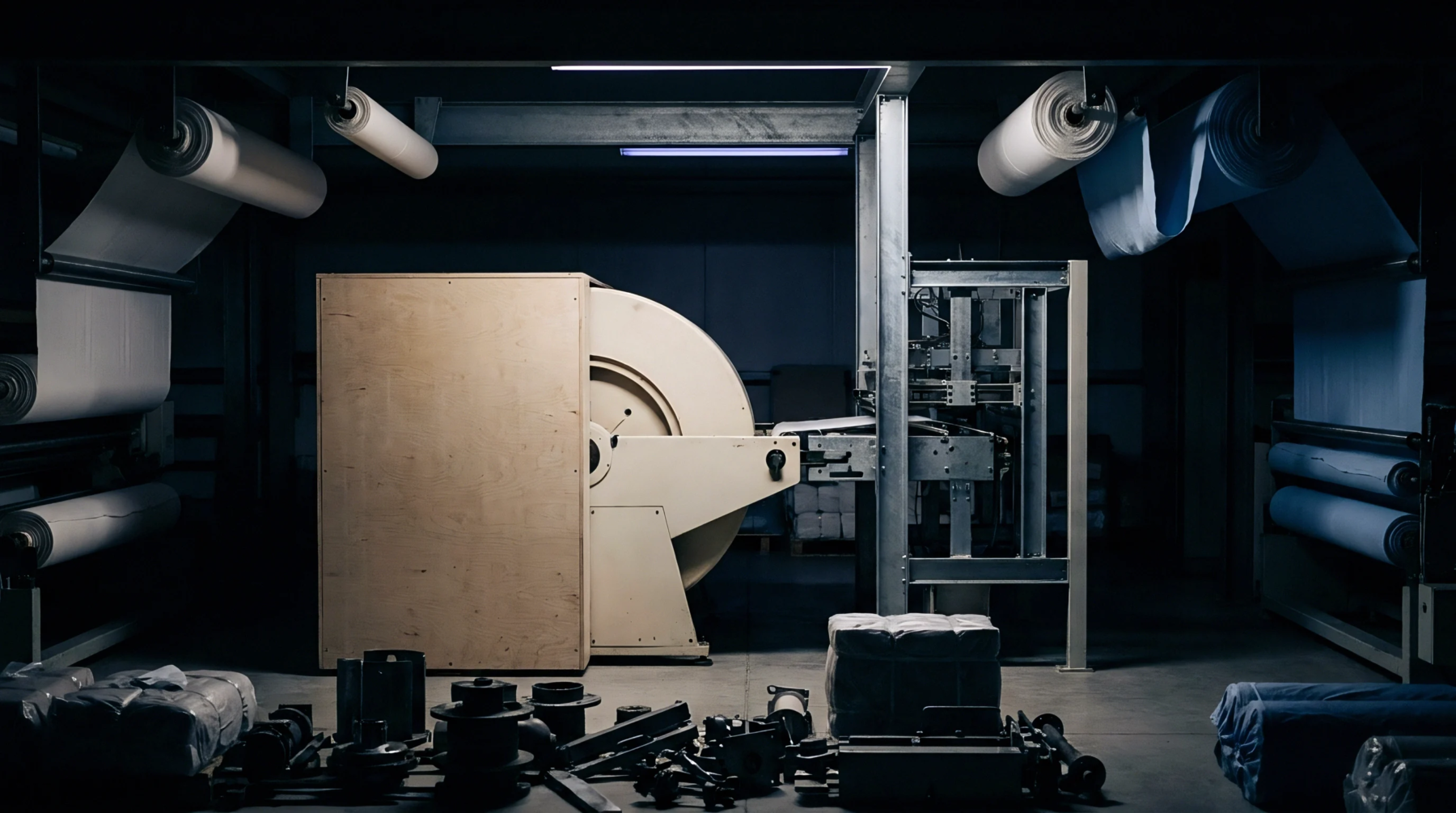
Mechanical Calibration
Mechanical adjustment refers to the exact clearance distance between the drafting rollers inside a flax drawing frame during the preparatory spinning stage. Mill operators use reach setting values to control how drafting mechanisms pull unspun flax slivers forward without breaking the long bast fibres. Chinese linen mills record these millimeter adjustments on the machine routing sheet accompanying every production batch from preparation to wet spinning.
A fibre grade determination depends directly on these mechanical clearances because incorrect roller spacing tears natural flax strands prematurely. Buyer acceptance criteria differ from internal mill standards when contractual tensile strength limits demand tighter roller tolerances than standard output requires. Flax fibres undergo progressive drafting stages where roller distances shorten sequentially to match decreasing sliver mass.
Roller Alignment
Draft distribution depends entirely on how mill technicians calculate the gap between consecutive pairs of spinning rollers. Longer flax staples require wider roller separations to prevent fibre rupture during high speed drawing operations. Mill supervisors document these spacing parameters inside daily quality control logs to maintain consistent yarn counts across multi shift operations.
Fabric grades tested downstream rely on the uniformity achieved during this preparatory drafting phase.
Drafting Tolerances
Tolerance limits govern how much mechanical variation remains acceptable before sliver unevenness compromises final yarn integrity. Operators measure roller separation distances using precision feeler gauges during routine shift change inspections. A mill specification document outlines these allowable millimeter deviations for every spinning frame currently processing wet spun flax yarns.
Export quality standards for woven linen cloth trace structural defects back to improper roller settings recorded during initial drawing operations.