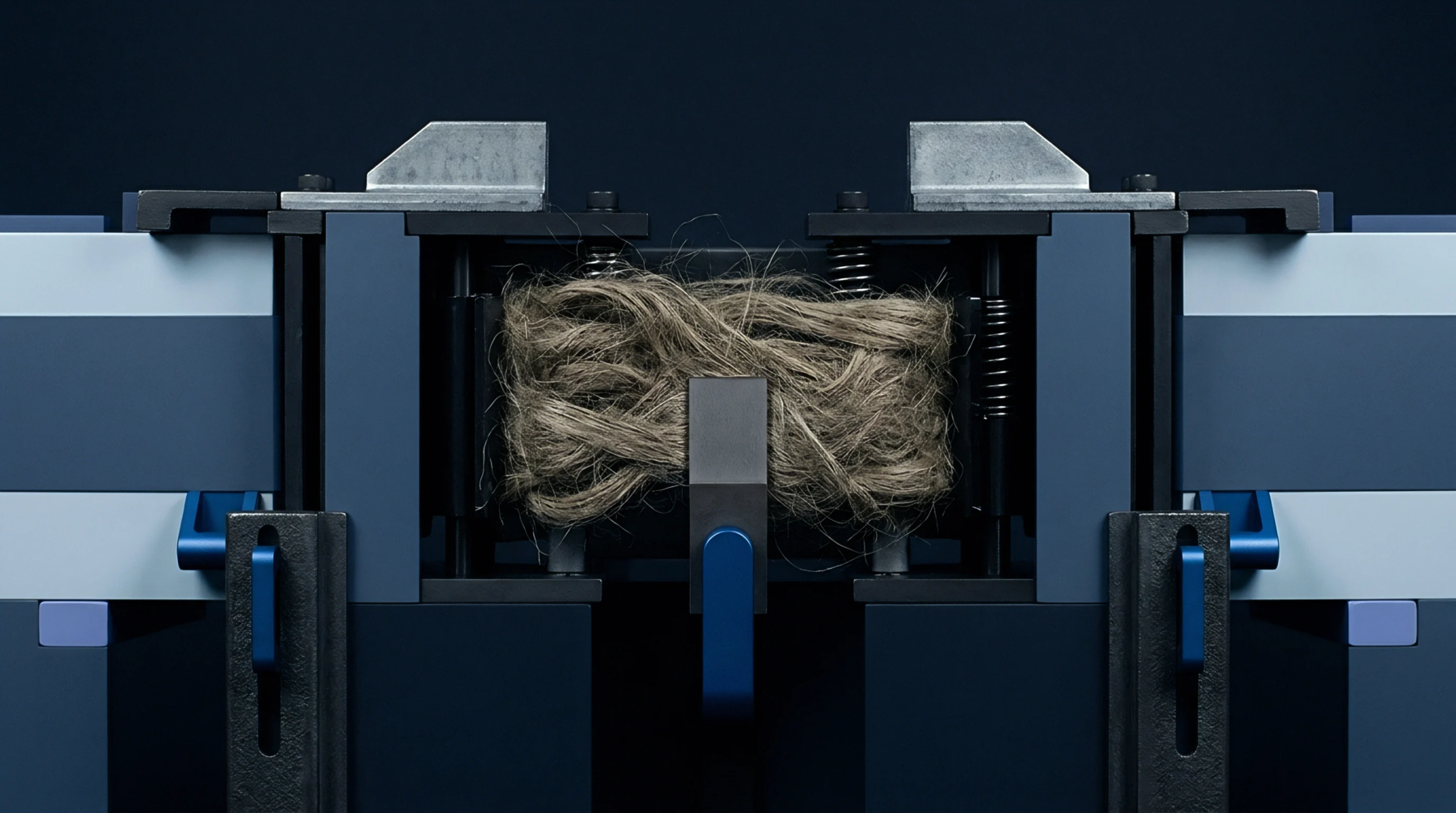
Fibre Matrix
Raw bast material arrives at the mill gate with variable botanical constituents, so ramie blend identification establishes the exact proportion of Boehmeria nivea within a cellulosic mixture prior to industrial carding. Technicians apply chemical dissolution methods to separate stubborn bast strands from accompanying cotton or synthetic filament, weighing the dry residues on analytical balances to establish mass ratios. Acceptance criteria differ sharply from final fabric tolerances because raw fibre standards measure breaking tenacity per tex and surface lignin content, while finished cloth standards regulate tear resistance and dimensional stability after washing.
The mill issues an internal technical dossier upon completion of the laboratory assay, recording lot percentages for spinning floor management.
Yarn Specification
Spinning mills adjust drafting rollers and twist multipliers according to the validated cellulosic proportions, ensuring even structural integrity along the continuous strand. Short staple components require higher twist angles to compensate for lower natural cohesion, whereas long bast ribbons demand wider roller settings to prevent fibre breakage during drafting. Mill production sheets log these mechanical parameters alongside ambient humidity readings, creating a verifiable link between raw material composition and final linear density.
Quality control inspectors compare bobbin samples against contractual thresholds, verifying that actual composition matches the spinning order before issuing release documentation for the weaving floor.
Export Verification
Finished textile sheets undergo final physical evaluation before commercial dispatch, confirming that fabric composition matches buyer specifications stated in the purchase contract. Independent testing laboratories examine random cutting swatches under polarized light microscopes, measuring birefringence angles to confirm bast purity and detect undeclared synthetic substitutions. Customs authorities inspect the accompanying commercial invoice and laboratory certificate during port clearance, matching declared fibre percentages against statutory classification codes for international tariff assessment.
Correct documentation prevents regulatory delays at the border, securing legal compliance for shipments entering global apparel supply chains.