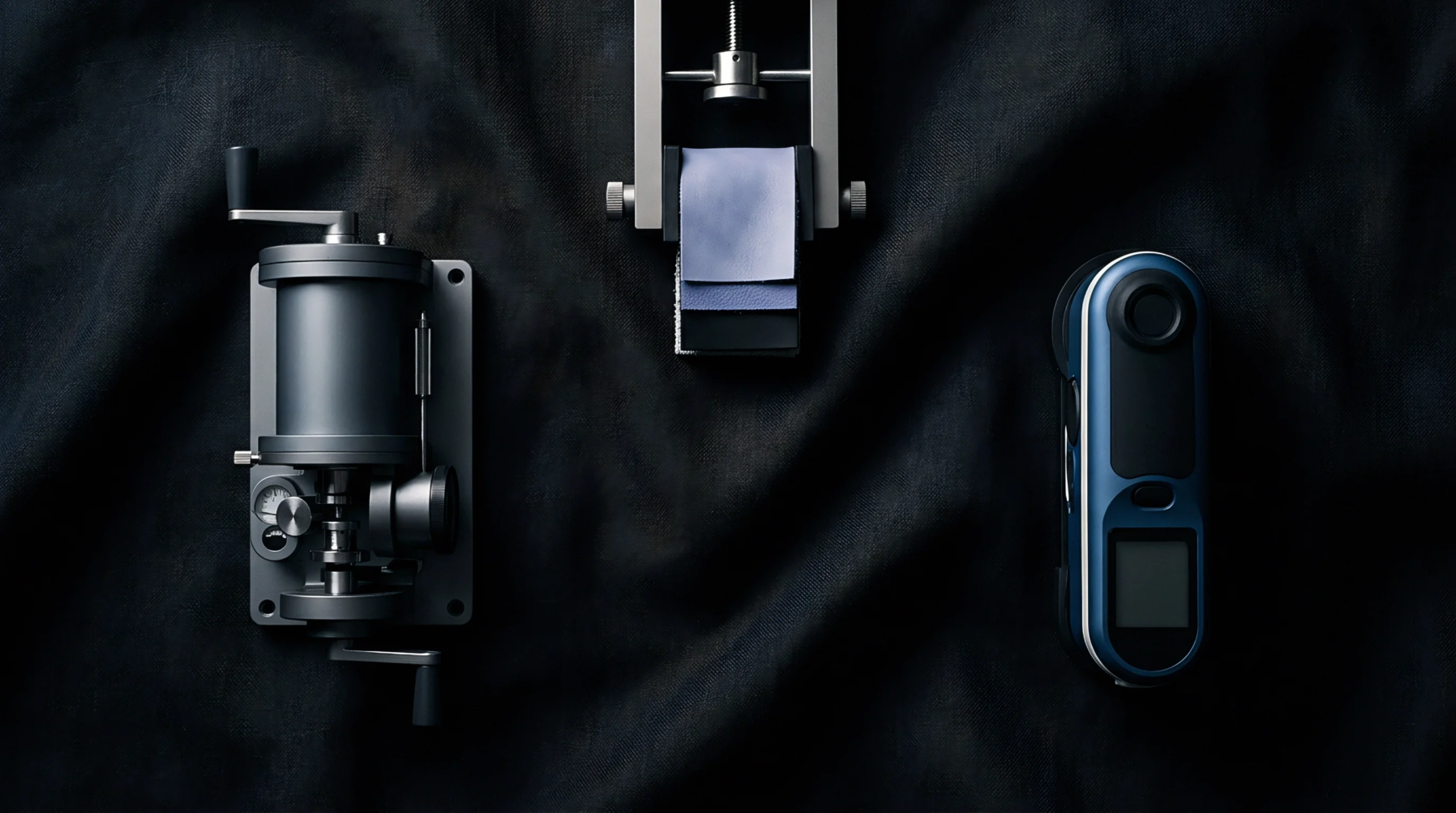
Chemical Component Analysis
Standardized chemical testing methods dissolve specific fiber components out of blended textile specimens to calculate the percentage weight of each remaining fiber. Laboratory technicians apply quantitative solvent dissolution to determine exact fiber blend ratios in mixed yarn and fabric samples. The method governs tariff classification accuracy, label compliance, and raw material verification.
Testing ceases when all soluble components are completely extracted.
Separation Technique
Chemical procedures select selective solvents that dissolve one fiber type while leaving co-blended fibers completely intact. During quality testing of Chinese linen-blend fabrics, quantitative solvent dissolution isolates flax from cotton, viscose, or polyester components. Technicians first perform non-fibrous matter extraction to remove sizing and wax, then treat the dry specimen with concentrated reagents such as sulfuric acid or zinc chloride formic acid under controlled temperatures.
The insoluble fiber residue is washed, dried, and weighed to compute component percentages based on oven-dry mass baseline figures. Test certificates generated from this process serve as definitive legal proof during customs tariff reclassification disputes.
Method Boundaries
Chemical dissolution cannot separate fibers that possess identical chemical solubility characteristics, such as distinguishing flax from hemp. Executing quantitative solvent dissolution requires pre-identifying fiber species through microscopic analysis before selecting reagent systems. Mechanical fiber damage during drying alters final mass calculations.