Void Proportion
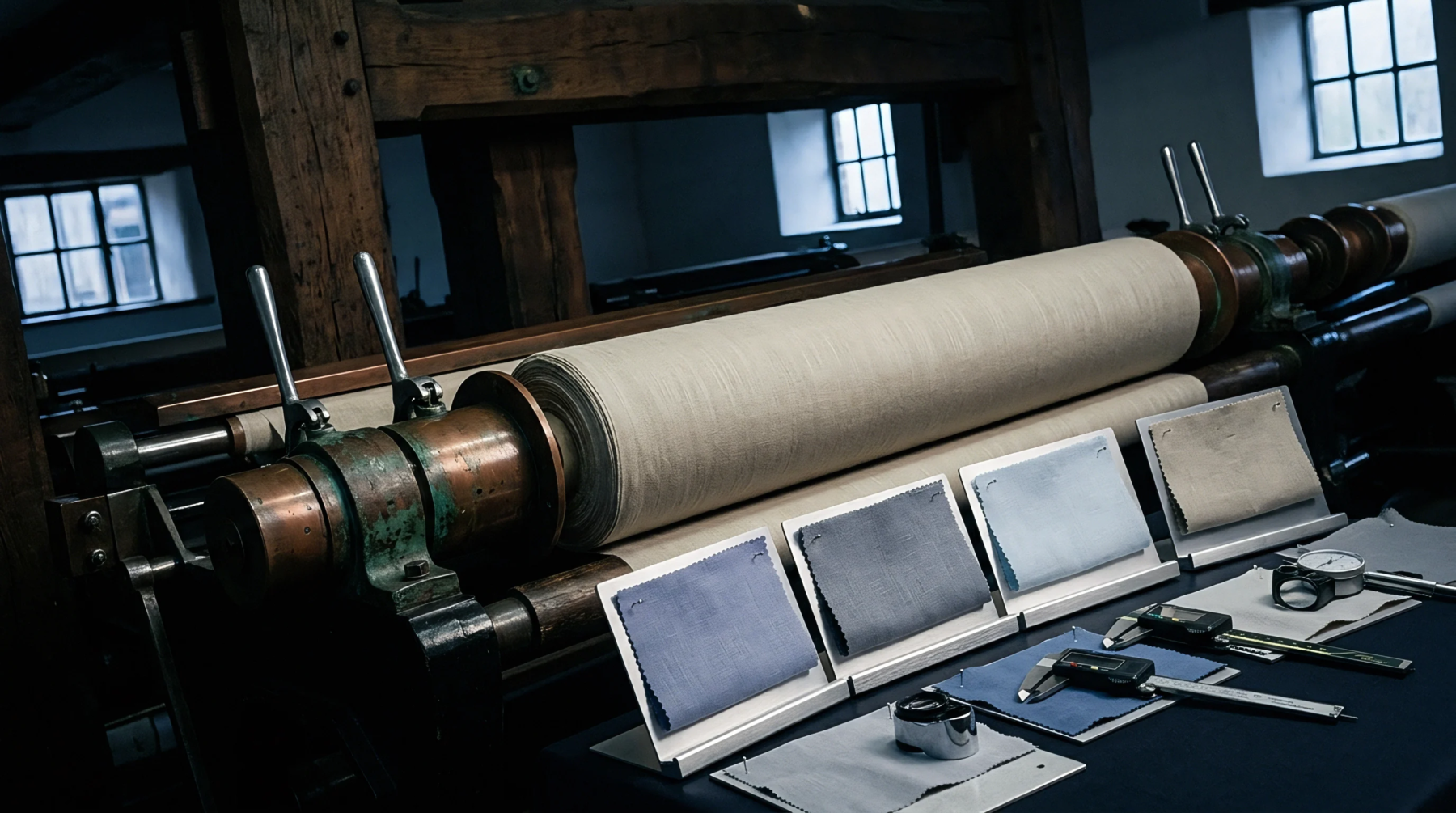
Physical volume measurements of the empty space between fibers or threads determine the insulation and liquid absorption capacity of a textile. The porosity represents the percentage of the total volume of a linen fabric or yarn that is occupied by air rather than cellulose. This property changes significantly between the loose roving stage and the final pressed cloth.
Fabric Breathability
Air permeability in a finished garment is a function of the size and distribution of the voids within the weave. A high degree of porosity in a linen shirt allows for better convective cooling and moisture transport away from the body. Laboratory tests using air flow or liquid displacement provide the data needed to grade the comfort level of different weave structures.
Sorbent Capacity
Absorbency for dyes and finishing chemicals depends on the available internal space within the fiber bundle. Flax fibers have a naturally high porosity because of their hollow lumen and the gaps created during the retting process. During the dyeing stage, these voids must be fully saturated to ensure a deep and even color throughout the cross-section of the yarn.
Measuring the change in this volume after mechanical finishing helps to predict the final hand and performance of the fabric in consumer use.