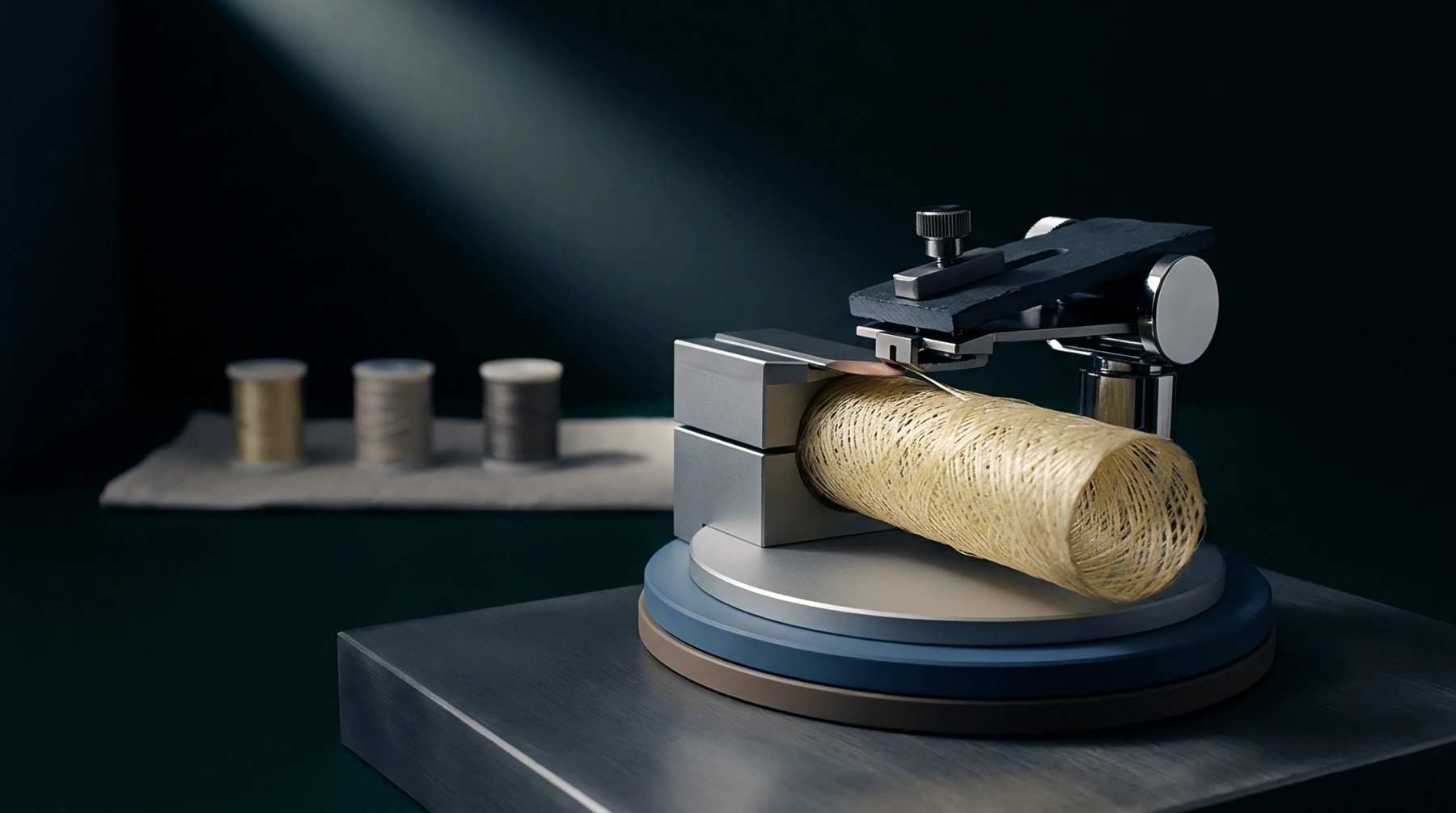
Mechanical Force
Regulated energy applied to the carrier during the traversal of the shed determines the consistency of the crosswise yarn orientation in linen production. Pick insertion tension establishes the required pull exerted on the weft by the rapier or air jet mechanism to ensure the yarn lands flush against the fell of the cloth. Maintaining this load within defined mill tolerances prevents excessive narrowing of the fabric width during the weaving stage.
Proper control limits the frequency of breaks caused by snapping yarns when the motor speed exceeds the structural limit of the flax fibre.
Feedback Calibration
Technicians adjust the feed rate based on the elasticity of the specific line of flax being processed through the loom. Sensors monitor the deviation from the target Newton value and trigger automatic compensations to the drive timing. Sudden spikes in force signal a blockage or a snag in the yarn path that necessitates an immediate cessation of the mechanical cycle.
This real-time regulation protects the integrity of the selvedge by preventing uneven loops at the fabric edge. High speed operation demands frequent recalibration of these sensors because the thermal expansion of metal parts alters the resistance readings.
Production Outcome
Stable settings during this part of the weaving sequence minimize the density variance across the final bolt of cloth. Deviations from the calibrated baseline manifest as visible striping or structural weakness that auditors identify during the grey fabric inspection before any finishing steps occur. Mills maintain logs of these settings to ensure traceability back to the specific loom and shift.
Correct force application prevents the need for width compensation during the tentering phase of finishing. Uniformity in this measure represents the baseline requirement for achieving a consistent grade of export quality linen that meets the stringent dimension standards of international buyers.