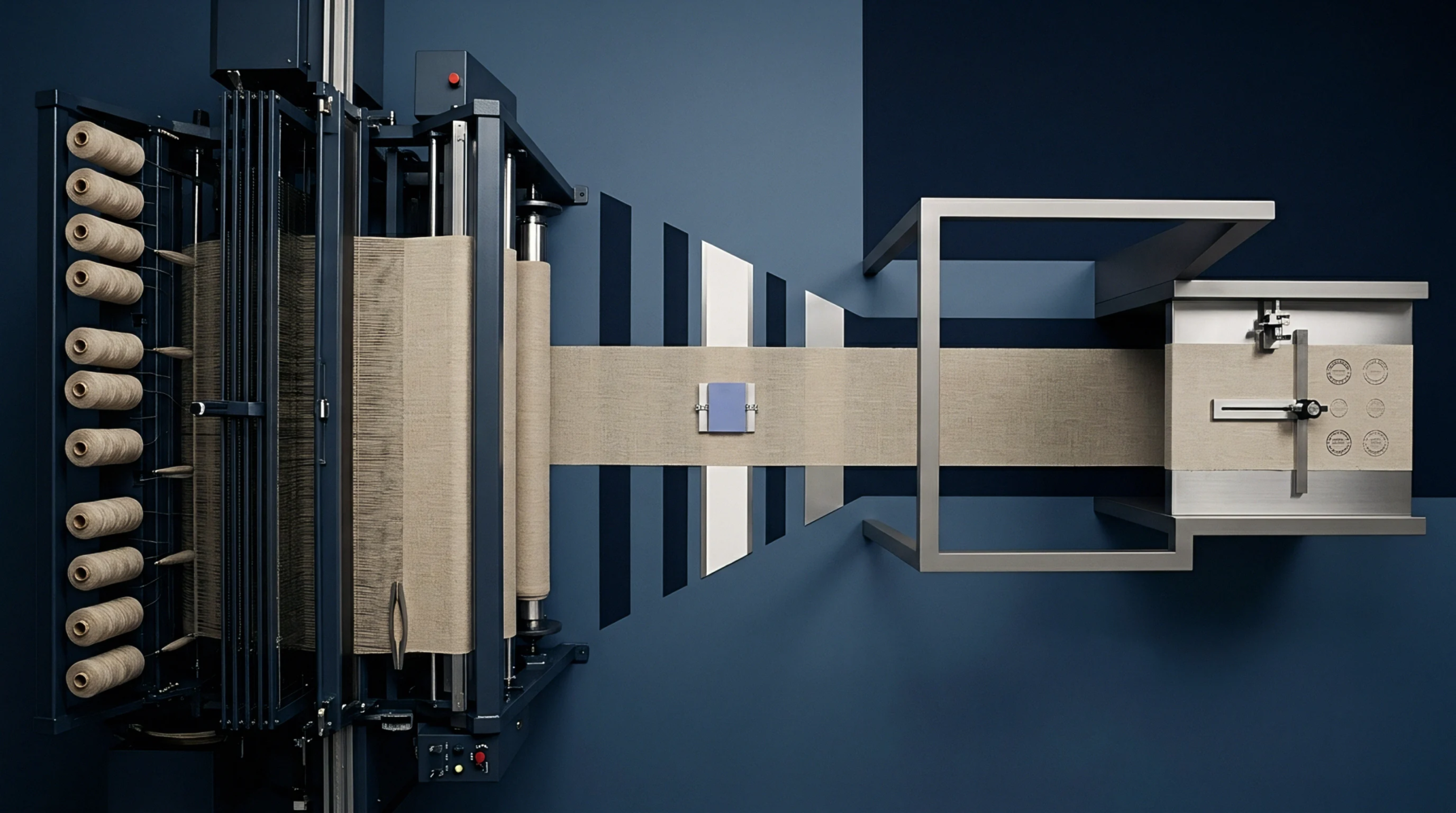
Weaving Regulation
Mechanical adjustment of the loom beat up frequency determines the number of horizontal yarns per unit of fabric length. Implementing pick density control ensures that the cloth meets the specific weight and opacity requirements set by the buyer. This process involves synchronising the let off motion of the warp beam with the take up motion of the cloth roll.
Adjustment Mechanism
Managing the insertion rate requires the operator to set the gears or electronic drive of the loom to a specific picks per centimetre value. Effective pick density control prevents the formation of thin spots or heavy bars that occur when the yarn tension fluctuates. If the weft yarn is thicker than the previous batch, the loom must be recalibrated to maintain the same cloth thickness and hand feel.
Modern air jet looms use sensors to monitor the yarn diameter and adjust the beat up force automatically to keep the density within a narrow tolerance.
Fabric Limit
Quantifying the density is finalised after the fabric is removed from the loom and allowed to relax. Because the pick density control only manages the physical placement of the yarn, subsequent shrinkage during the scouring and dyeing process will alter the final count of the finished linen.