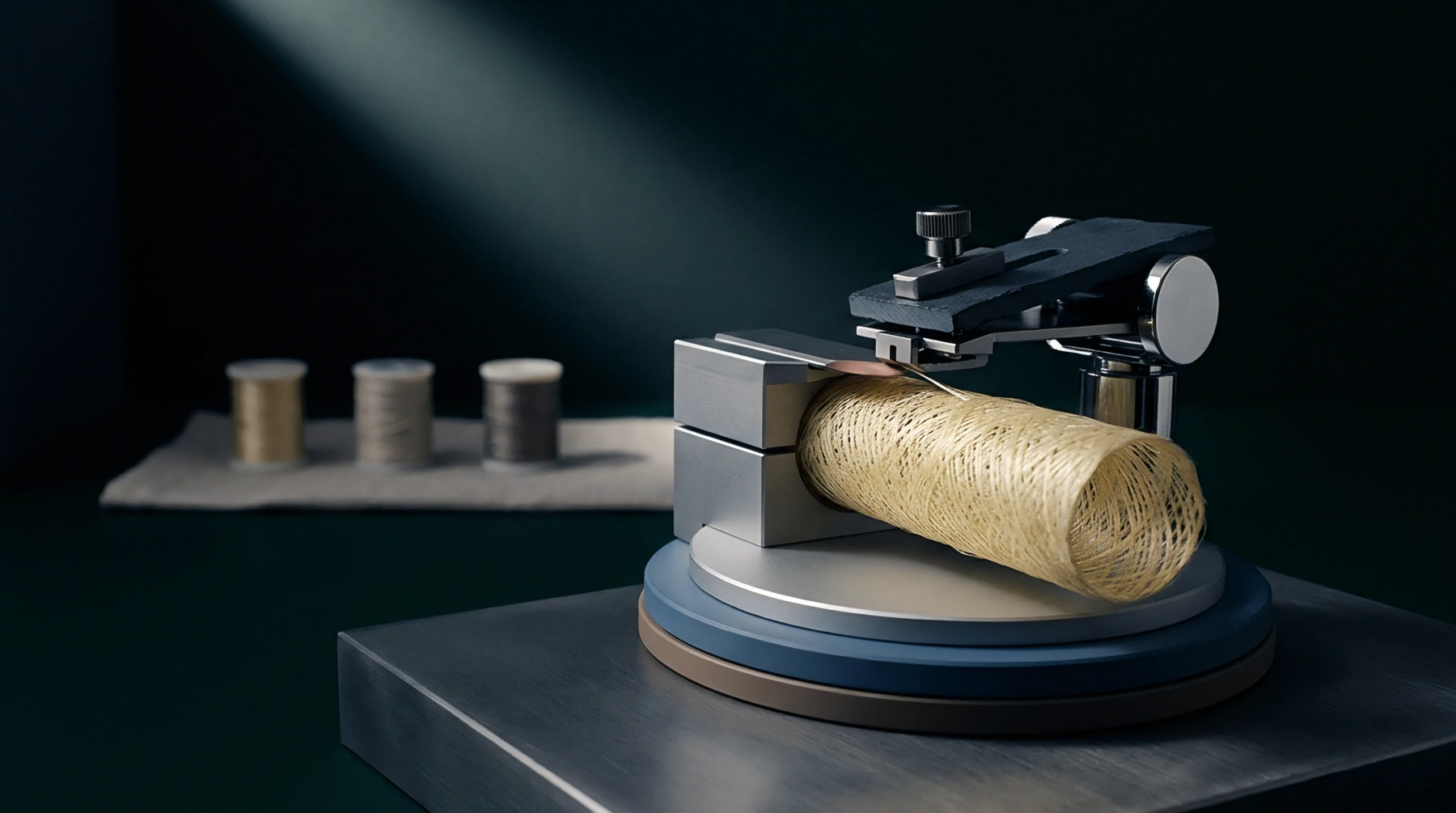
Imaging Representation
Digital reconstruction provides a non-destructive pathway for analyzing the internal architecture of flax fibres. An optical cross section allows researchers to inspect the internal cell walls and lumen shape without physically slicing the specimen. By utilizing light polarization and focus stacking, the system creates a high-contrast profile of each individual fibre in the bundle.
This computerized approach reduces the preparation time required to evaluate a shipment of raw linen. The resulting database represents a reliable record of the physical attributes of the batch before any mechanical processing begins. Technicians can use these digital records to trace the quality of imports from different global growing regions.
Scanning Protocol
Automated scanning systems focus through the depth of the fibre bundle to capture multiple planes of focus. The software generates the optical cross section by combining these images into a single sharp representation of the transverse plane. In modern Chinese mills, this method replaces mechanical microtomy for routine daily inspections.
It eliminates the risk of tissue deformation caused by blade pressure, leading to more accurate geometric measurements.
Grading Metric
Fibre fineness and roundness calculations rely directly on the dimensions extracted from the digital profile. When the optical cross section shows high uniformity across the sample, the lot is graded for premium warp yarns. Irregular or flattened profiles suggest immature flax, which is diverted to coarser fill yarns.
This categorization protects the efficiency of the textile looms by matching fibre quality to specific yarn requirements.