Fibre Deposition
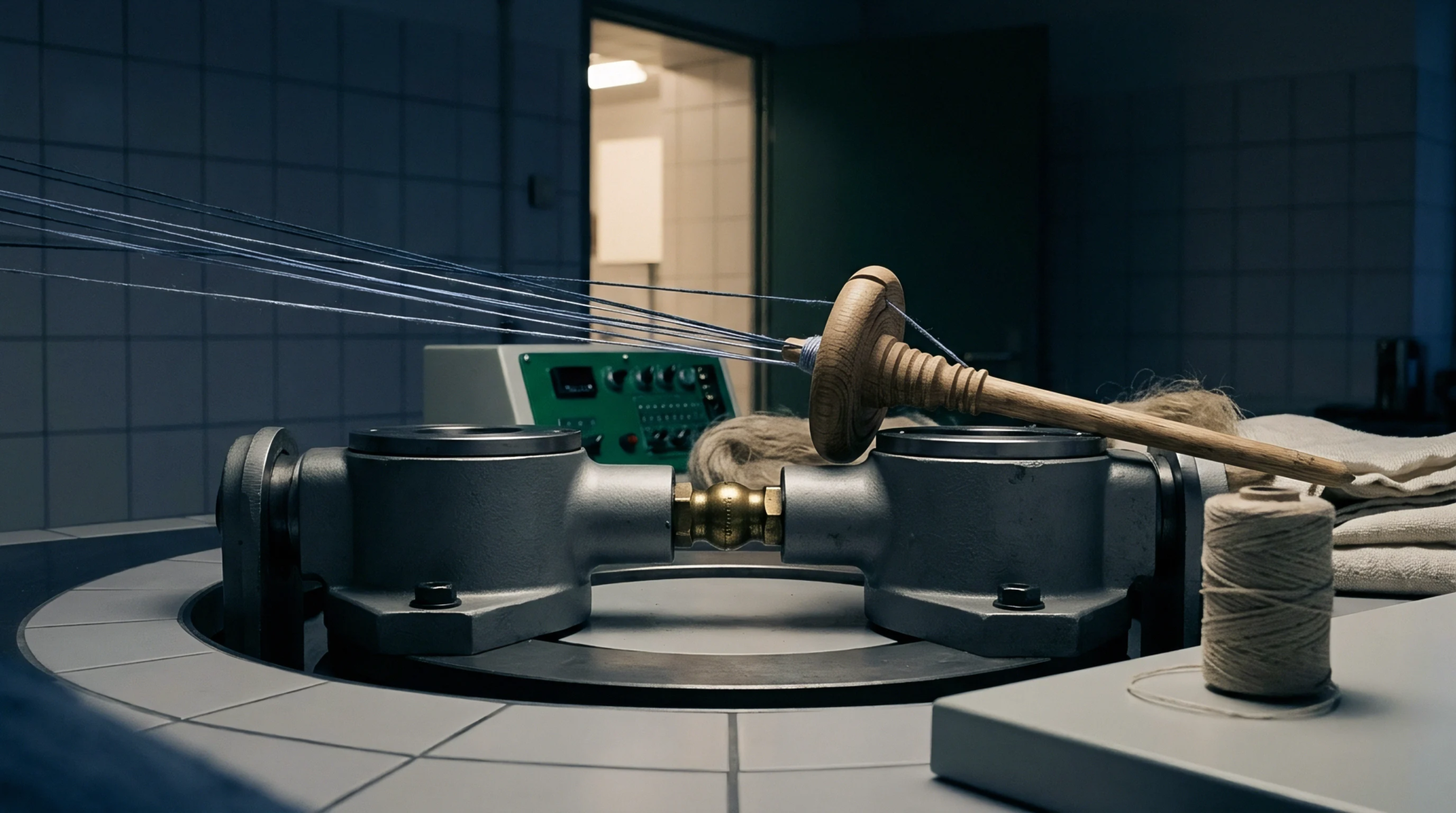
Particulate waste deposition consists of airborne flax microfibres and dusty debris settling onto machinery surfaces and structural elements within textile mills. Excessive lint accumulation occurs during hackling, carding, wet spinning and dry spinning operations where friable flax stems shed short fibre fragments. Overhead travelling cleaners use targeted air blasts to prevent fly from settling on drafting rollers and yarn paths.
Uncontrolled airborne dust settles on machinery, creating yarn slubs and operational fouling. Mill filtration systems extract floating particles to maintain air quality and equipment reliability.
Waste Hazard
Fibre buildup on electrical motors creates thermal insulation that leads to equipment overheating and fire hazards. Heavy lint accumulation inside ring spinning frames causes slubs when stray fibre clumps get drawn into the active drafting zone with raw roving strands. Routine cleaning schedules specify manual suction and compressed air blowing at scheduled shift changeover intervals.
Mill Management
Shift maintenance reports record filter differential pressures and cleaning cycle frequencies across spinning and weaving sheds. Heavy lint accumulation degrades yarn quality by introducing loose fibre slubs into spun yarns, leading to fabric defects during weaving. Dust extraction systems collect fine waste into pneumatic cyclones for compacting and disposal.
Facility safety audits evaluate dust concentration levels to ensure compliance with occupational health and fire prevention standards. Mill managers optimize air suction volumes in carding rooms to balance energy consumption with clean operating conditions.