Fibrous Assembly
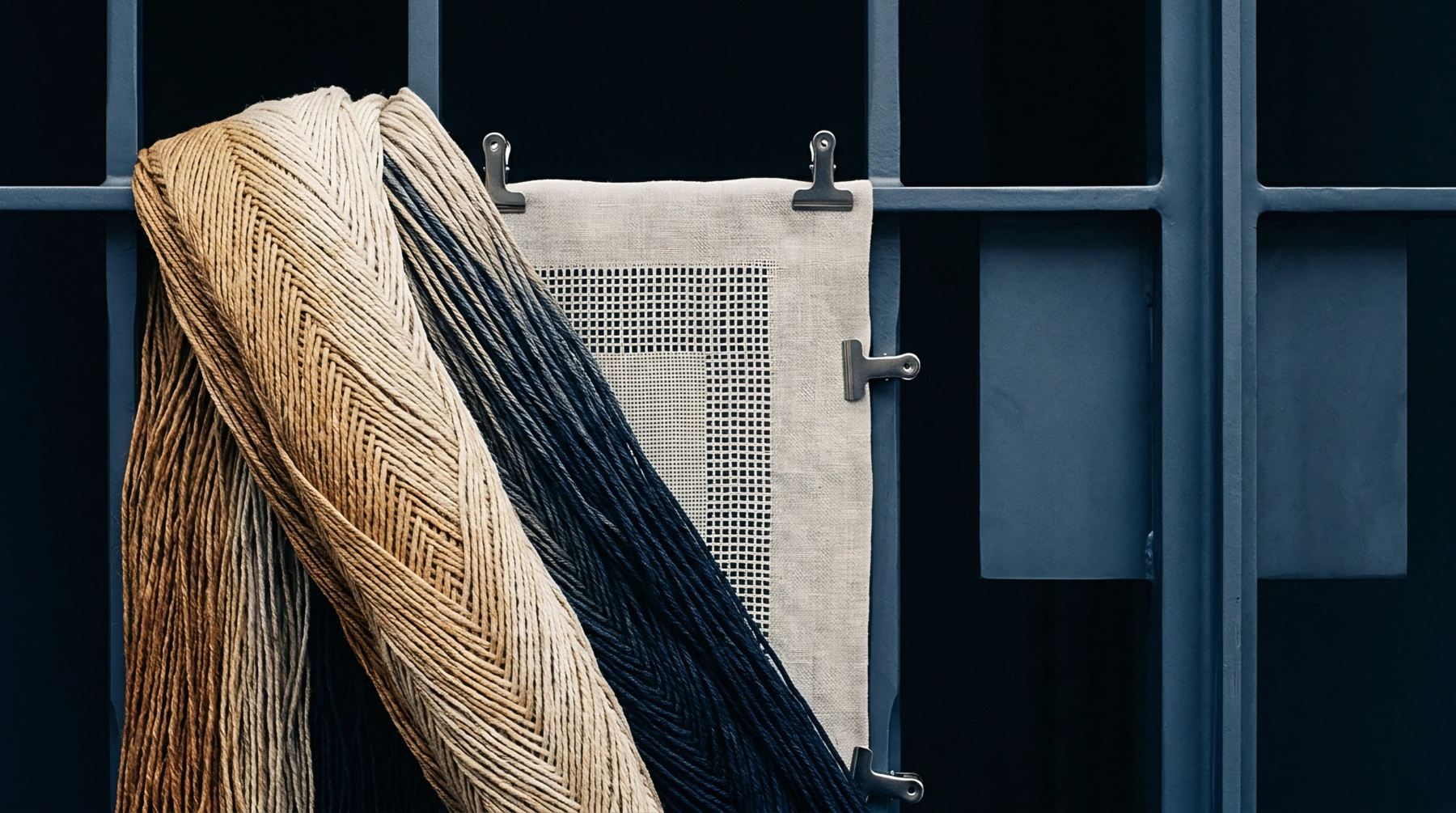
Continuous untwisted strands of long, parallel flax fibres represent the primary input for spinning high-quality linen yarns. A typical line flax sliver is formed after hackling, where the long fibres are aligned and grouped together while the shorter tow fibres are removed. This strand must possess a uniform linear density to ensure consistent drafting on the spinning frame.
Processing Route
Drawing frames combine and reduce multiple strands to improve the blending and reduce mass variation. During this process, the long fibres are drafted by rollers and controlled by faller pins to maintain their parallel orientation. This repeated blending ensures that any localized variations in the raw flax are distributed evenly throughout the final yarn.
Quality Assessment
Mill operators inspect the weight per unit length and the fibre alignment to ensure the strand meets the spinning specifications. Excessively thick regions or poorly aligned fibres can lead to draft failure or yarn breakage during the wet spinning process. This careful testing at the preparation stage determines the tensile strength of the woven linen cloth, as any remaining defects would create weak points in the fabric.
Consequently, strict limits are enforced on mass variation before the strand is allowed to proceed to the spinning room.