Mechanical Wear
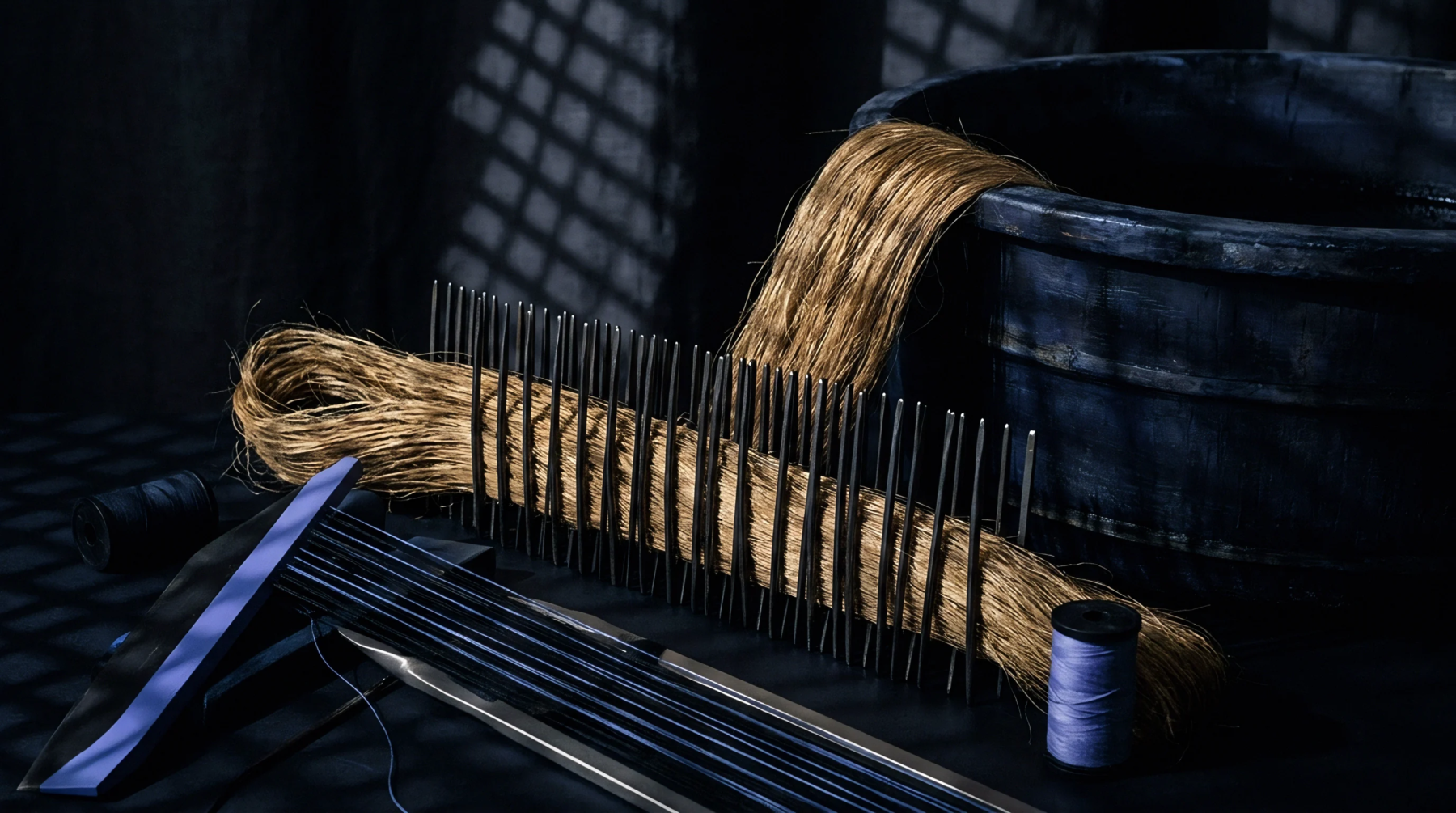
Structural deformation within the metallic orifice of a loom component occurs through repetitive cyclical tension during high speed textile production. Heddle eye strain manifests as physical distortion of the wire loops through which the warp yarn passes during the creation of linen cloth. This degradation alters the internal geometry of the guidance system and necessitates regular mill inspection to prevent yarn breakage.
Process Consequence
Increased abrasion against the irregular surface of a damaged eye reduces the tensile strength of flax fibres as they travel through the shed. Friction causes localized fuzzing and eventual snapping of the warp which forces the loom to stop for manual repair. Operators identify these failures by observing systematic defects in the grey cloth that match specific loom positions.
Frequent production downtime results from neglecting the replacement of worn metallic components that no longer provide a smooth channel for moving filaments.
Measurement Protocol
Periodic inspection cycles rely upon magnification tools to assess the polish and contour of the metal aperture against established mill quality standards. Technicians record the clearance and smoothness of each eye during the routine maintenance of the weaving harness. Deviations from the specified gauge lead to the removal of damaged parts to maintain the integrity of the fabric output.
Precise alignment of the guidance aperture remains the primary requirement for consistent industrial linen fabrication.