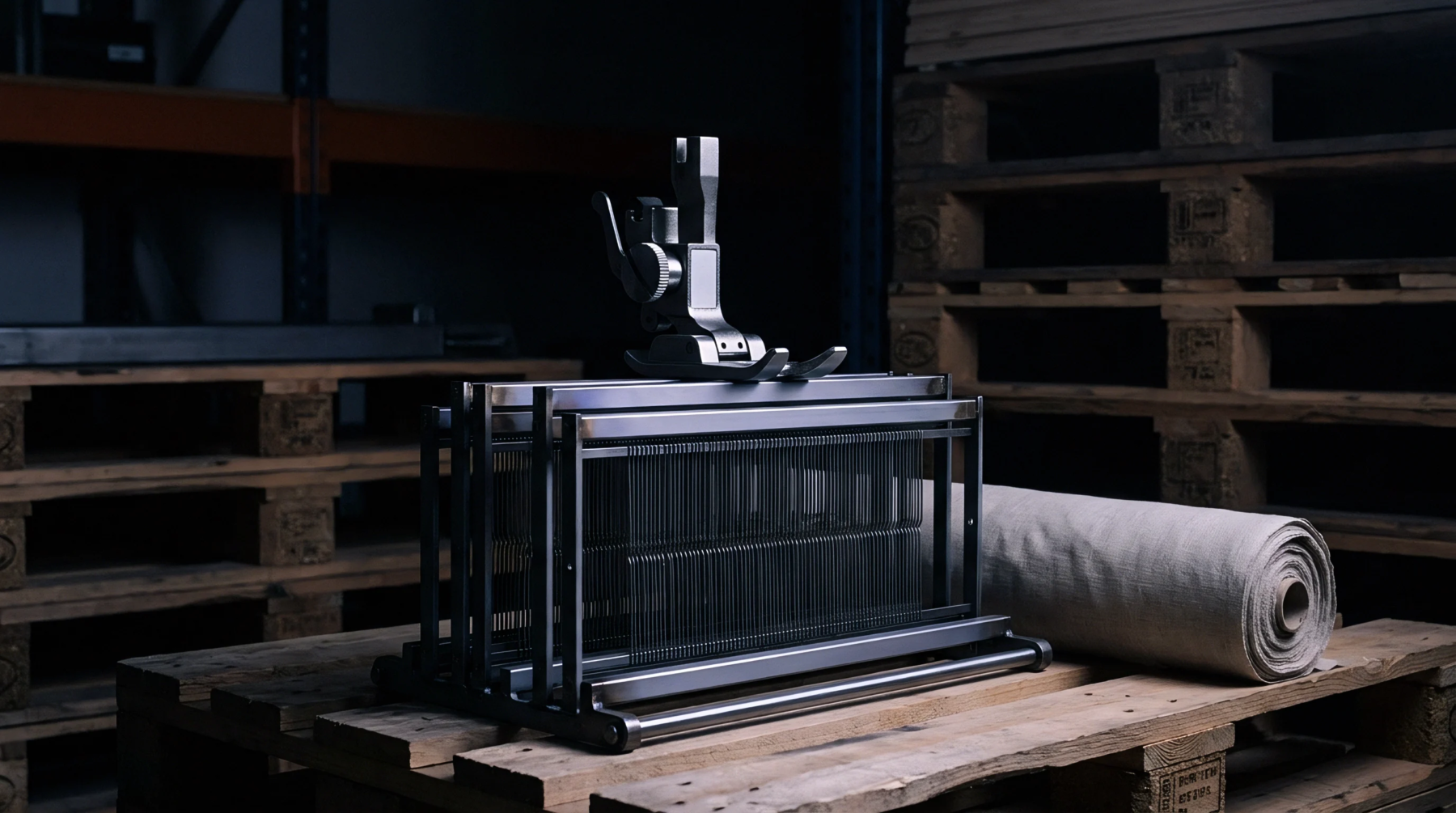
Loom Configuration
Mechanical hardware settings dictate the distribution of lifting harnesses across the shedding machine of a mechanical loom. Heald frame allocation determines the sequence and count of shafts necessary to produce specific warp patterns in woven linen cloth. Each shaft carries a series of needles designed to raise or lower individual yarn ends according to the programmed design.
Correct distribution prevents excessive strain on high density warp sections by spreading the mechanical load across available shedding members. Engineers calculate the required shaft count based on the complexity of the weave structure and the total number of warp ends in the setup.
Pattern Compatibility
Operational requirements for flax production necessitate precise alignment between the draft plan and physical shaft capability. Heald frame allocation provides the technical constraint for how many harness groups operate within a single cycle. Weavers designate specific shafts to control the movement of binding ends versus decorative floating yarns.
Inconsistent harness distribution causes uneven tension across the fabric width during the beat up sequence. Improper settings produce visible defects in the finished linen rolls that show as horizontal streaks or broken patterns.
Supply Audit
Export documentation for high quality fabric frequently includes a summary of the mechanical parameters used during production. Buyer acceptance criteria often demand verification that heald frame allocation matches the technical specifications defined in the initial purchase agreement. Auditors examine these records to ensure that the physical harness arrangement supports the requested thread density and interlacing complexity.
Proper documentation of this distribution proves that the mill maintained the structural integrity of the cloth throughout the entire production run. Accurate harness control establishes the boundary for the geometric patterns achievable on a standard production line.