Overhead Clearance
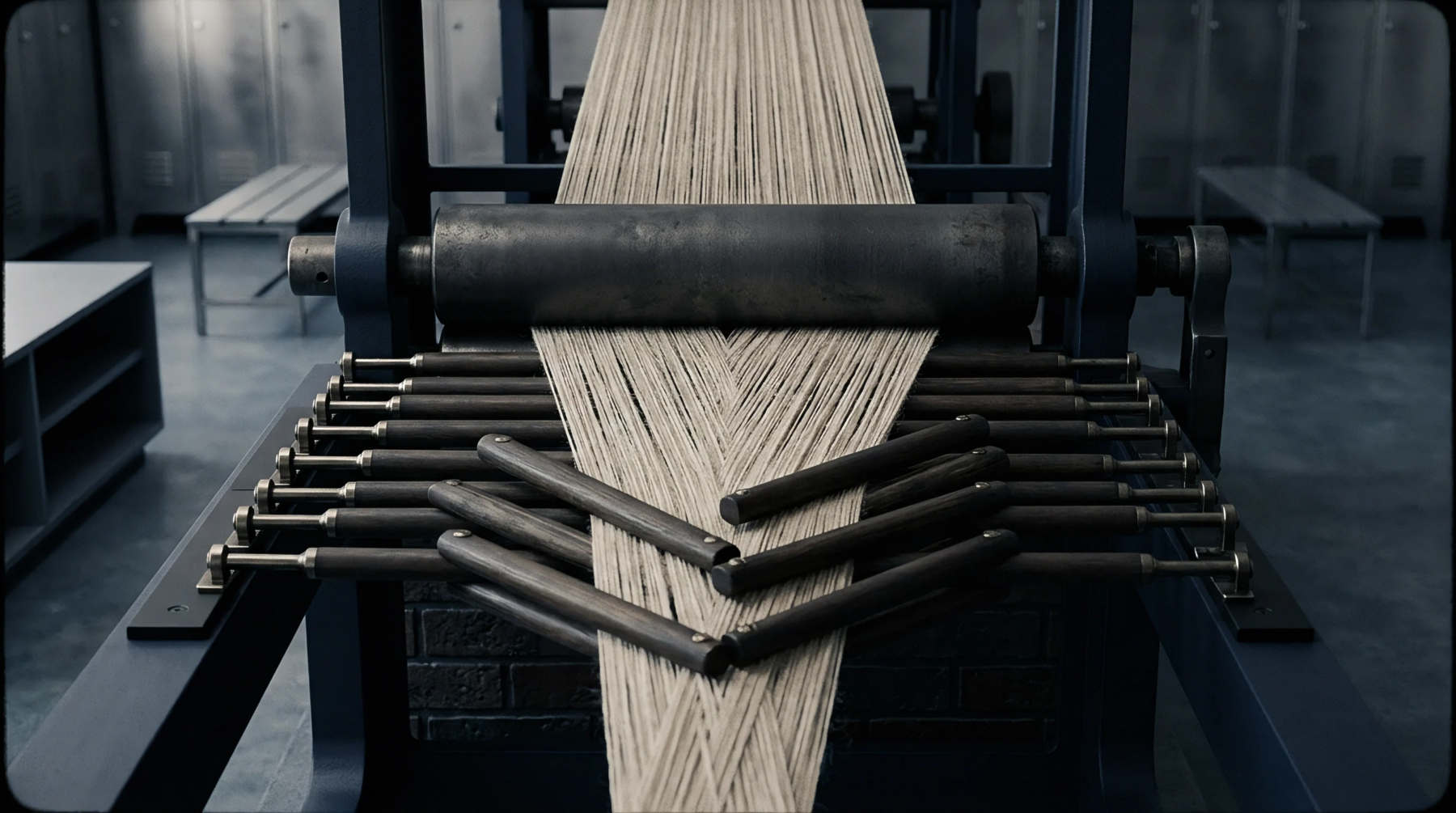
Overhead clearance height measured between the floor level of a loom and an overhead shedding mechanism dictates the spatial path of harness cords. Setting appropriate gantry elevation dictates the angular convergence of harness cords descending through the neck board down to the comber board. Proper physical positioning prevents acute angles in outer cords, which otherwise magnify frictional drag against guide apertures and distort linen shed openings.
The term stops applying to floor-mounted mechanical components, bearing strictly upon overhead structural heights.
Shed Geometry
Greater frame clearance softens the approach angle of harness cords extending toward the loom salvages. This broad clearance reduces abrasive rubbing between adjacent harness cords, curbing jacket fraying and harness cord breakage across wide linen fabric production beds. Lower clearances reduce overall structural vibration in the mill building, yet acute cord angles increase lateral wear on comber board perforations and generate uneven warp lift heights.
Alignment Adjustment
Structural engineering drawings and loom erection manuals define standard clearance heights tailored to specific reed widths and harness cord quantities. Technicians measure gantry elevation using optical laser levels and physical plumb lines during loom installation, locking overhead steel beams into rigid vibration-dampening brackets. Mill engineering logs record fixed clearance heights across production sheds to ensure identical shed geometry on parallel looms making identical flax fabrics.
Buyer audit teams review facility setup documentation to verify that loom geometry maintains pattern fidelity across wide-width linen damask and jacquard upholstery fabrics. Adjusting this overhead height remains impossible during production runs, necessitating complete loom stoppage and retying of harness assemblies whenever structural changes occur.