Airborne Material
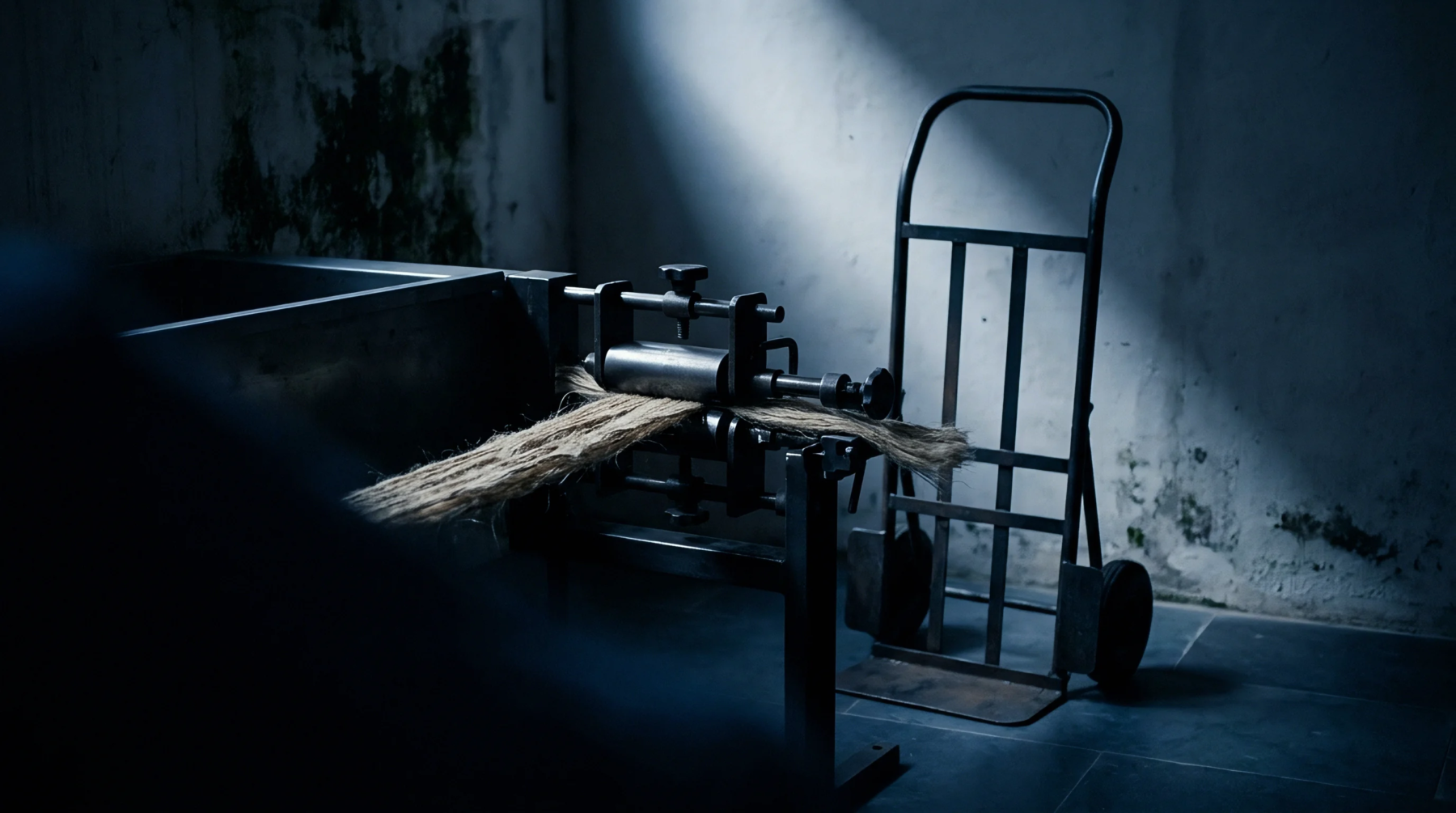
Short fiber fragments and dust that become detached during textile processing accumulate in the factory atmosphere and on machine surfaces. This material, categorized as fly waste, consists primarily of unspinnable flax elements and cortical cells released during dry spinning and combing operations. Its concentration in the air indicates the processing efficiency and fiber quality of the raw material.
Mechanical Origin
Friction between flax yarns and processing machinery releases these short particles under high-tension conditions. When dry yarn passes through guides and tensioners at high speed, the brittle linen fibers are prone to fracturing, which generates large volumes of fine debris. This problem is particularly acute in dry-spinning mills compared to wet-spinning environments where moisture helps bind the fiber structure together.
The resulting accumulation can interfere with the operation of delicate tension sensors and yarn clearers, leading to frequent machine stoppages and lost production time. To prevent machine clogging and maintain yarn cleanliness, factories install local suction systems near the winding and warping zones.
Collection Method
Capturing these airborne particles prevents contamination of the finished woven fabric. Automated overhead cleaners travel along spinning frames to blow fly waste away from specified working zones, where it is later collected by floor-level filtration units. Efficient extraction improves the working environment and prevents the formation of yarn defects caused by loose fibers being spun back into the yarn body.